
How to Nervous System Works and Heals
You're staring at your laptop before an important meeting, noticing your heart beating faster and your shoulders tightening. Later, you may feel exhausted, foggy, or unusually sensitive to a small comment. These reactions can feel confusing, but they often make more sense when you understand how the nervous system works. It isn't a fixed set of wires. It's a living network that continually interprets information, adjusts body functions, and learns from repeated experiences.
Why Your Nervous System Shapes Your Daily Life
Your nervous system helps coordinate far more than movement. It influences attention, emotion, digestion, breathing, heart activity, sleep, and the way you respond to other people. The brain and spinal cord form the central nervous system, while nerves throughout the body make up the peripheral nervous system. Together, they receive information, interpret it, and organize a response. Foundational nervous system anatomy describes neurons as the basic functional cells that receive, integrate, and transmit information.
Consider a person who enters a busy office already tired. A tense conversation, a demanding inbox, or an unexpected deadline may be interpreted as a threat. The body can respond before the person has consciously formed the thought, “I'm overwhelmed.” Their breathing may become shallow, their muscles may brace, and their attention may narrow toward problems. After hours of this mobilization, exhaustion can replace agitation.

Caption: Prolonged demands can leave the body alert, tense, and depleted.
A network that adapts
The nervous system doesn't just switch between “fine” and “not fine.” It continually adjusts based on context, past experience, current sensations, sleep, illness, and perceived safety. That adaptability protects you when action is needed, but it can also create patterns that remain active after the original pressure has passed.
This is why a racing heart before a presentation, irritability after a stressful day, or numbness during conflict isn't automatically a character flaw. Your body may be trying to protect you with the information and habits it has learned. Understanding the mind-body connection in therapy can help you notice these patterns without turning them into self-criticism.
A compassionate starting point: Your symptoms are meaningful signals, not proof that you're failing.
The nervous system also shapes relationships. When you're braced for danger, neutral facial expressions can seem critical, ordinary delays can feel rejecting, and problem-solving can become difficult. When your body has enough recovery, you're more likely to notice nuance, listen with patience, and choose a response instead of reacting automatically. Healing begins with recognizing that mental and physical experiences are connected parts of one adaptive system.
The Electrochemical Language Of Your Brain
To understand how the nervous system communicates, imagine a city with rapid roads, transfer stations, and messengers. A neuron is like a specialized communication unit. It receives incoming information through branching structures, integrates those messages, and may send an electrical signal along a long projection called an axon.
The process unfolds in a clear sequence:
Inputs arrive. A neuron receives signals from other neurons or from sensory systems.
The neuron integrates them. Excitatory and inhibitory inputs combine, influencing whether the cell reaches the level needed to fire.
An action potential begins. Sodium ion channels open, causing depolarization. Potassium-channel activity then supports repolarization.
The signal travels. The electrical event moves along the axon toward its terminal.
The message changes form. At the synapse, neurotransmitters are released into the synaptic cleft.
The next cell responds. Chemical information affects the receiving neuron, which can generate a new electrical response.
An action potential is an all-or-nothing electrical event. A neuron doesn't send a slightly larger version of the same basic spike because a feeling is stronger. Instead, networks represent information through patterns, timing, connections, and the combined activity of many cells. The National Center for Biotechnology Information explanation of action potentials and synaptic signaling details this conversion from electrical activity to chemical communication and back again.
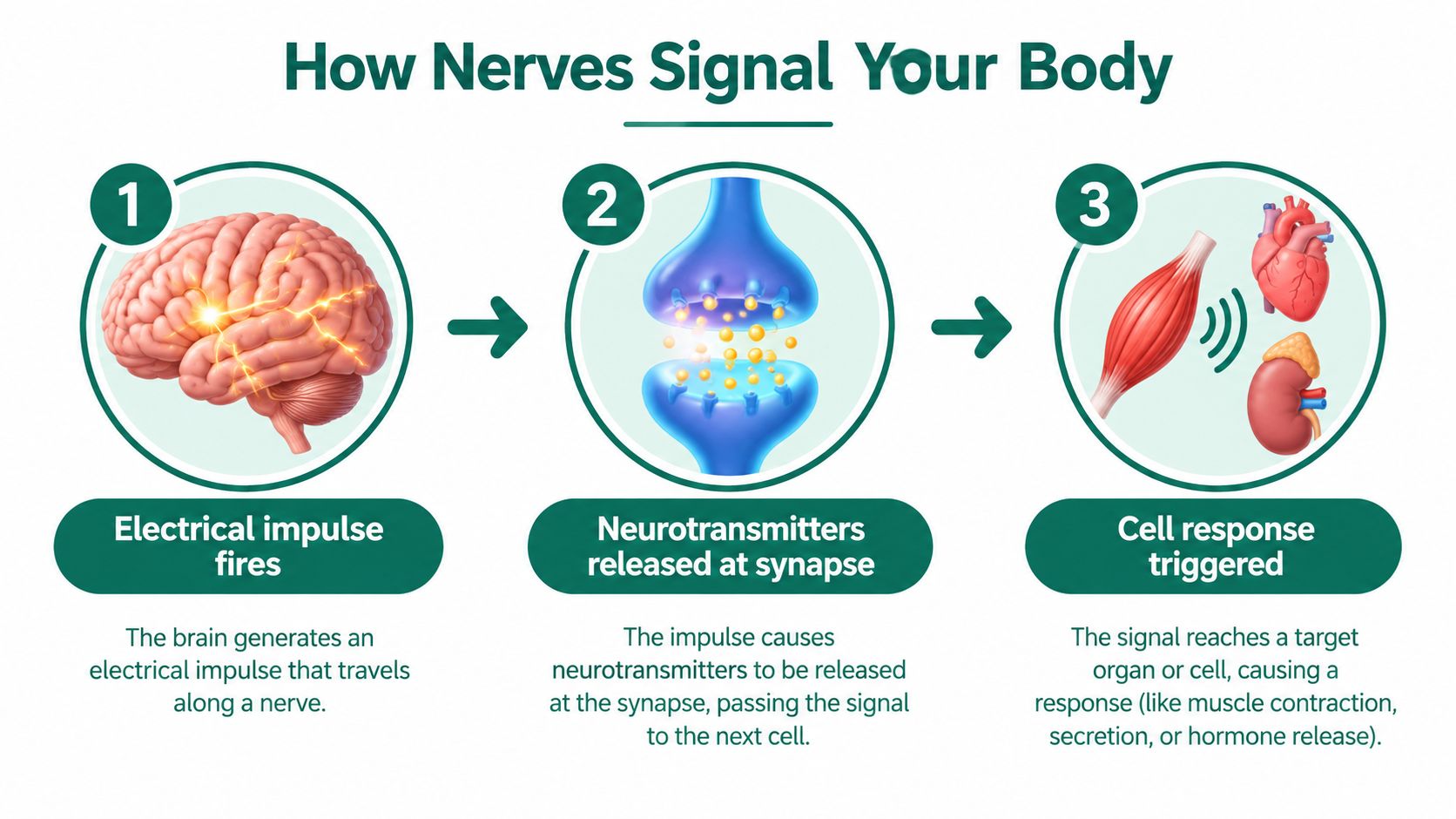
Caption: Nerve signaling moves through connected electrical and chemical steps.
Why the synapse matters
The synapse is more than a gap. It's a point where communication can be adjusted. Neurotransmitters, receptors, and the condition of the surrounding network influence whether the next cell becomes more or less likely to respond. That flexibility allows the nervous system to coordinate reflexes, thoughts, emotions, organ activity, and learning.
A typical human brain contains about 86 billion neurons, while some clinical resources still cite about 100 billion. It also contains around 1 quadrillion synapses, creating an immense communication network, as described in this overview of neuron structure and function. These figures help explain why a simple diagram can't capture the richness of lived experience.
The same signaling principles can affect pain, sleep, and muscle tension. For readers dealing with jaw discomfort or related nerve symptoms, the Pain and Sleep Therapy Center resource on TMJ and trigeminal neuralgia offers context about conditions involving facial nerves and pain pathways. Understanding the biology won't explain every symptom, but it can replace shame with curiosity. Your reactions are embodied communication, not imaginary problems.
Balancing The Autonomic Nervous System Branches
The autonomic nervous system manages involuntary functions such as heart rate, blood pressure, respiration, digestion, sweating, and temperature regulation. It works in the background while you read, speak, sleep, eat, or respond to an urgent situation. Its sympathetic and parasympathetic branches aren't enemies. They're complementary systems that help you mobilize and recover.
The sympathetic branch supports action during challenge. It contributes to the fight-or-flight response, helping the body direct energy toward immediate demands. The parasympathetic branch supports rest-and-digest functions, allowing resources to return toward digestion, restoration, and maintenance. The Cleveland Clinic explanation of the autonomic nervous system describes these branches as an opposing but complementary balancing system.
Body System | Sympathetic (Mobilize) | Parasympathetic (Restore) |
|---|---|---|
Heart and circulation | Supports increased readiness for action | Supports a return toward resting activity |
Digestion | Can become less central during immediate stress | Supports digestive activity and recovery |
Breathing | Helps meet the demands of mobilization | Supports calmer, more settled breathing |
Attention | Narrows toward urgent information | Allows broader awareness and reflection |
Muscles | Encourages bracing and movement | Supports release and restoration |
The relay behind automatic functions
The ANS has sympathetic and parasympathetic branches, along with the enteric nervous system. Its outgoing pathways generally use a two-neuron chain. A preganglionic neuron begins in the central nervous system, connects in a peripheral ganglion, and communicates with a postganglionic neuron that reaches the target organ. Clinical anatomy of the autonomic nervous system explains how this relay architecture helps regulate cardiovascular, gastrointestinal, endocrine, and glandular functions.
This relay also gives the body options. Preganglionic fibers commonly release acetylcholine onto nicotinic receptors in the ganglion, while downstream signaling differs according to the pathway and target. In plain language, the body can amplify, soften, or redirect an instruction rather than sending one undifferentiated command everywhere.
Modern life can keep the mobilizing side active for too long. Notifications, financial concerns, caregiving, conflict, pain, and unfinished tasks may repeatedly cue readiness. A person might feel restless but tired, have trouble digesting, or struggle to settle at bedtime. That doesn't mean the sympathetic system is bad. It means the body may need regular experiences of completion and recovery.
If you're exploring nervous-system language further, you can read this simple explanation of polyvagal theory. Whatever framework you use, the practical question remains grounded: Can you notice what state you're in, and can you offer your body a safe, manageable next step?
Recognizing Nervous System Dysregulation
Dysregulation often develops when the nervous system repeatedly prepares for danger without receiving enough recovery. Chronic stress, trauma, burnout, illness, disrupted sleep, and ongoing uncertainty can all shape the way a person responds. The result may look like anxiety, irritability, panic, low mood, emotional numbness, brain fog, digestive discomfort, muscle tension, or persistent pain.
These experiences don't mean a person lacks discipline. A protective system can become highly practiced at detecting threat. Once that pattern is established, a neutral event may trigger the same bodily response that was once useful in a difficult environment. The body is attempting to protect the person, even when the present moment no longer requires the same intensity.

Caption: Dysregulation can feel like being caught between withdrawal and the possibility of safety.
Look beyond the wiring diagram
A static wiring diagram shows connections, but it doesn't show recovery. The nervous system changes with sleep, aging, injury, and disease, and current discussions of nervous-system health increasingly draw attention to adaptive networks, feedback loops, repair limits, and the way communication between nerves and muscles may influence age-related strength loss. The ScienceDaily coverage of nervous-system research highlights why recovery deserves attention alongside transmission.
Sleep illustrates this distinction. Someone may spend enough time in bed and still wake feeling unrefreshed. That experience invites a broader question than “How many hours did I sleep?” It asks whether the nervous system had the conditions needed for restoration.
Dysregulation can also move between body systems. A person under prolonged pressure may clench their jaw, lose appetite, experience digestive changes, or feel constantly startled. Another person may shut down, avoid connection, and struggle to identify what they feel. These patterns can look opposite, but both may reflect an adaptive response that has become difficult to shift.
A useful therapeutic frame is to observe patterns without diagnosing yourself from a checklist:
Activation: You feel keyed up, hurried, tense, restless, or easily startled.
Depletion: You feel flat, exhausted, disconnected, or unable to initiate tasks.
Rapid shifts: Your energy and emotional state change quickly in response to small cues.
Slow recovery: Your body stays affected long after a stressful event ends.
The window of tolerance explanation can offer language for understanding these shifts. Professional support matters when symptoms are severe, persistent, worsening, or medically unexplained. Regulation practices can complement care, but they shouldn't replace medical evaluation for new or concerning physical symptoms.
Practical Regulation Strategies For Healing
Regulation isn't forcing yourself to be calm. It's giving the brain and body clear, repeatable information that the current moment can be approached safely. Small practices work best when they're comfortable, consistent, and adapted to your health rather than treated as tests of willpower.
Start with one tool and observe its effect. If a practice increases panic, dizziness, pain, or distress, stop and seek guidance from an appropriate professional.
Build a modest toolkit
Breathwork: Let the exhale become slightly longer than the inhale without straining. You might try a gentle rhythm for a short period, keeping your attention on the feeling of air moving rather than trying to produce a perfect result. The aim is to reduce urgency, not to win a breathing challenge.
Grounding: Name what you can see, hear, feel, smell, and taste. This shifts attention from an imagined future or painful memory toward present sensory information. Keep your eyes open if that feels safer.
Movement: Choose slow stretching, a walk, or relaxed shaking of the hands and shoulders. Gentle movement can help you notice bracing and reconnect with physical cues. If you're recovering from injury or illness, work within professional recommendations.
Social connection: Send a brief message to someone trustworthy, sit near a supportive person, or share a simple observation. Connection doesn't need to involve a long conversation. A manageable positive interaction can interrupt isolation.
Temperature awareness: Rather than treating cold exposure as mandatory, notice how temperature affects you. A cool washcloth or comfortable change in room temperature may be enough to bring attention back to the body. Avoid intense exposure if you have a medical condition that makes it unsafe.
Caption: A daily regulation toolkit can combine breath, sensory awareness, movement, temperature, and connection.
Make the practice easier to repeat
Attach a tool to an existing routine. You might ground yourself before opening email, stretch after brushing your teeth, or take a slower breath before answering a difficult message. Repetition helps the practice become familiar, while choice preserves a sense of agency.
For a concise anxiety-oriented exercise, the Katy Teen & Family Counseling anxiety coping skill may provide another practical starting point. If you're interested in the biology and clinical use of body-based exercises, explore these vagus nerve activation techniques, while remembering that no single exercise works for every nervous system.
Try this brief sequence when you notice rising overwhelm:
Place both feet on the floor and identify one physical point of support.
Look around and name a few neutral details in the room.
Soften one area of unnecessary tension, such as your jaw or hands.
Take a comfortable breath and let your exhale happen without force.
Choose one small next action, such as drinking water, stepping outside, or asking for help.
Practical rule: Choose the smallest practice you're willing to repeat, then let consistency matter more than intensity.
Embracing Neuroplasticity And Professional Support
The nervous system can learn defensive patterns, but it can also learn new responses. This capacity for change is often called neuroplasticity. New learning doesn't require pretending that painful experiences didn't happen. It involves creating enough safety, awareness, and repetition for the brain and body to discover alternatives.
That process may include noticing an old reaction, staying connected to the present, and practicing a different response in manageable steps. Over time, a person may become better at recognizing early signs of activation, communicating needs, resting without guilt, or returning to connection after conflict. Progress is usually less about never becoming stressed and more about recovering with greater support and flexibility.
Therapy can make this work safer and more personalized. A trauma-informed therapist may help you connect bodily sensations with emotions, identify patterns without judgment, and choose practices that fit your history, relationships, culture, and current capacity. The nervous system regulation therapy resource describes a mind-body approach that can support this kind of exploration.
Professional care is especially important when trauma symptoms, depression, anxiety, chronic pain, sleep disruption, or relationship distress interfere with daily life. An approach can include reflection, body awareness, grounding, movement, and practical coping skills while respecting the need for medical or psychiatric care when appropriate. You don't have to understand every signal before asking for support.
Be Your Best Self & Thrive Counseling, PLLC offers compassionate individual and couples counseling for anxiety, depression, trauma, stress, and life transitions, using evidence-informed mind-body-spirit care. Visit Be Your Best Self & Thrive Counseling, PLLC to explore personalized support and schedule a free initial consultation about your goals.