
Vagus Nerve Activation Techniques That Calm You Down
You know the feeling. Your shoulders are up by your ears, your jaw is tight, and your mind won't stop replaying a text, a meeting, or a symptom you can't quite name. You're tired, but your body still acts like something needs to be handled right now. That's the moment vagus nerve activation techniques can be useful, not as a miracle fix, but as a way to help your system downshift.
The vagus nerve is one of the body's main pathways for parasympathetic regulation, the branch of the nervous system that supports rest, digestion, recovery, and a steadier internal state. The clinical history matters here, too. Implanted vagus nerve stimulation (VNS) was first approved by the FDA in 1997 for drug-resistant epilepsy, and later work expanded the field into non-invasive approaches such as transcutaneous auricular VNS (taVNS), which grew into a substantial research area by the early 2020s, including 41 randomized controlled trials across 38 publications in a 2021 review from the clinical literature on vagus nerve stimulation. If you want another practical angle on how people frame this work, a useful resource is improve HRV through vagus stimulation.
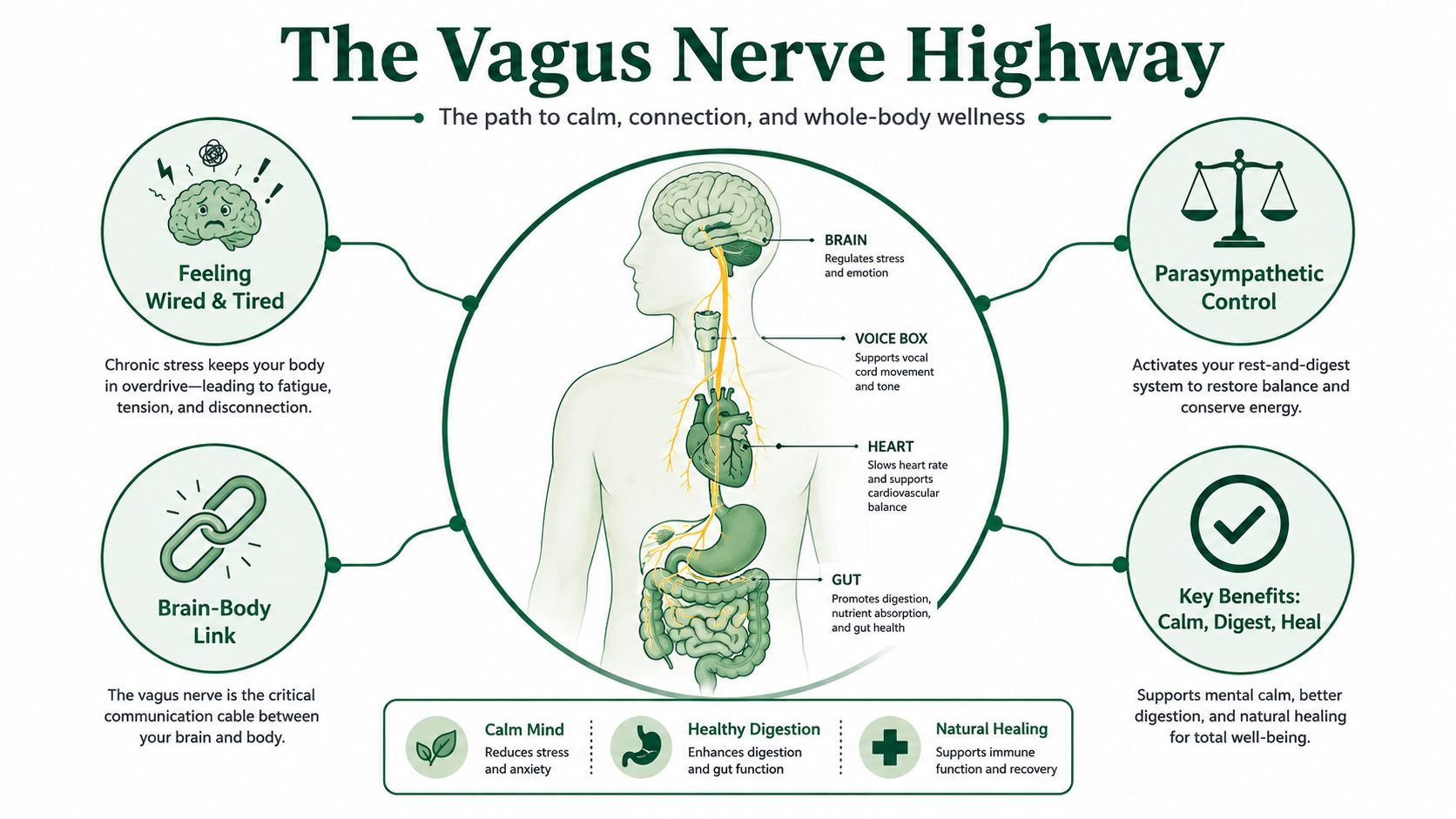
A helpful way to think about this is as a brain-body communication highway. The vagus nerve links the brain, heart, gut, and voice, so small inputs like breathing, humming, movement, or sensory stimulation can influence how safe or settled your body feels. If you're newer to the broader nervous-system conversation, a plain-language companion piece is polyvagal theory for beginners and understanding your body's stress response, though the practical work here stands on its own without jargon.
Gentle repetition tends to matter more than dramatic effort. A single intense session rarely changes the whole pattern, but a few steady minutes done often can help your body recognize that recovery is available. That's why the techniques below focus on breath, voice, temperature, touch, movement, and connection, because those are the levers you can use at home tonight.
What the Vagus Nerve Does and Why Activation Helps
The vagus nerve is the body's long, wandering messenger for calm. It runs from the brainstem down through the neck and toward the chest and abdomen, and it helps regulate heart rate, breathing, and digestion as part of the parasympathetic system. When people say they feel “settled,” “grounded,” or able to eat again after stress, the vagus nerve is often part of that shift.
That is why vagus nerve activation techniques can help when you feel wired but depleted. A nervous system stuck on high alert does not need more force, it needs cues that safety is available. The work began as a medical intervention for severe neurological illness, then expanded into non-invasive approaches used in stress and autonomic research, as the clinical literature on vagus nerve stimulation techniques describes as the clinical literature describes.
Practical rule: if a practice makes you feel more regulated, you are probably titrating it well. If it makes you dizzy, panicky, or spaced out, the dose is too strong for now.
That dose question matters more than people think. Some bodies settle with a short breathing exercise, while others need a gentler start, or need to skip a technique altogether on a hard day. If you want a broader frame for why this kind of work is so individual, the plain-language guide to polyvagal theory for beginners and understanding your body's stress response can help without turning the process into jargon.
The most useful vagus nerve activation techniques are the ones you can repeat without bracing for them. That means choosing gentle inputs that fit real life, not forcing a perfect routine. Breathing with a longer exhale, humming, brief cold water exposure, light self-massage, walking, restorative shapes, and social connection all fit that approach.
For people who like a practical comparison point, a review linked to improve HRV through vagus stimulation is another way to see how these methods are often framed in everyday wellness work. The safety picture is also more grounded than many articles suggest. In a 2022 systematic review and meta-analysis of taVNS, 44 of 177 studies (24.86%) reported at least one adverse event, while the pooled analysis of 35 studies found no increased risk versus control stimulation, with a risk difference of 0.013 and 95% CI −0.003 to 0.028 in the European Heart Journal review. That does not make every technique right for every person, but it does support careful, low-dose stimulation as a reasonable self-regulation tool.
Breathing and Vocalization Techniques You Can Start Today
Breathing is the easiest place to begin because you don't need equipment, privacy, or special skills. The key is the longer exhale, not a huge inhale. When the out-breath stretches a little longer than the in-breath, many people notice a quieter chest, slower pacing, and less urgency in the body.
Start with one simple pattern
Try diaphragmatic breathing for 5 to 10 minutes, especially if you can use the abdomen more than the chest. Inhale through the nose for about 4 to 6 seconds, then exhale for 6 to 8 seconds. If you want a structure you can count easily, aim for about 30 breaths over 5 minutes with that 4-second inhale and 6 to 8-second exhale rhythm a commonly used clinical benchmark in self-regulation contexts.
If you're anxious before a meeting, do this in the car before you walk in. If you're overstimulated after a hard email, step away and do one short round before replying. Keep the breath small and smooth.
Keep the breath slow, complete, and easy. If you chase a giant inhale or force the exhale, you're more likely to get dizzy than calm.
Add voice when breath alone isn't enough
Humming, chanting, and slow singing can be surprisingly effective because they pair vibration with a controlled exhale. Try humming a single comfortable note for 5 to 10 breath cycles, or sing one slow verse of a familiar song while you're standing in the kitchen. A soft chant works too, especially if you feel better with steady repetition than with silence.
If you want one practical routine, combine a few minutes of paced breathing with a low hum on the exhale. That pairing is often easier to tolerate than breathwork alone, especially for beginners or for people who feel worse when they focus too intensely on the body. For a more anxiety-focused breath practice, you can also explore easy yogic breathwork for anxiety.
A slow sung sigh is another good option before bed. Inhale gently through the nose, then let out a long, audible sigh on a quiet tone. It sounds almost too simple, but that's part of why people keep using it.
Cold Exposure, Face Splashing, and Vagal Massage
Temperature and touch can create a fast reset, but the dose matters more here than with breathing. A brief cold cue can feel organizing, while too much cold can feel shocking, activating, or flat-out unpleasant. That difference matters if you're trauma-exposed, migraine-prone, or easily overwhelmed by sensory input.
Use cold as a cue, not a challenge
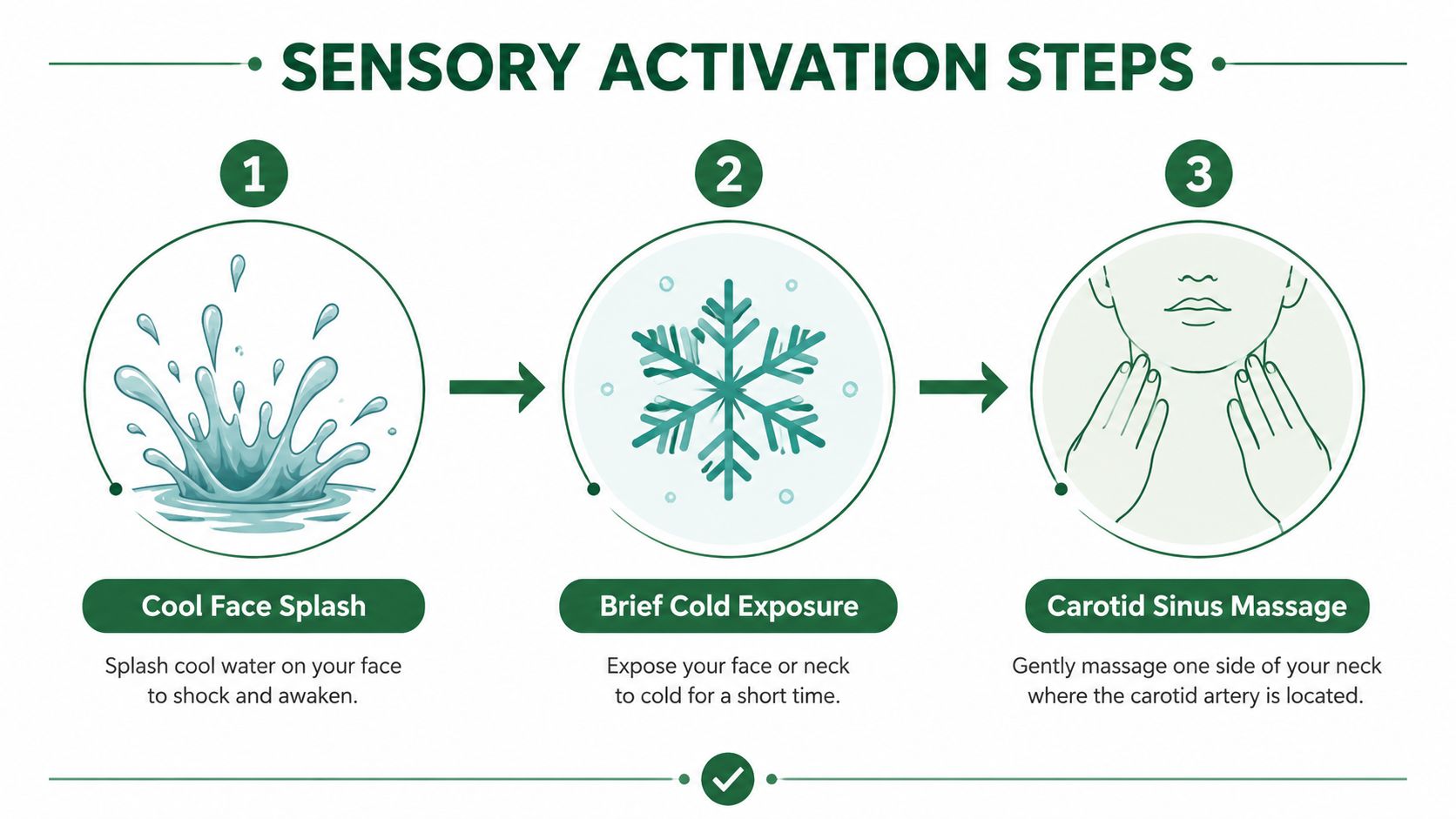
Try splashing your face with cool water for a few seconds after a tense conversation or before you shift into another task. You can also hold a cool cloth over the face or back of the neck briefly, then pause and notice how your body responds. The point is a quick, tolerable signal, not a long endurance test.
A cold rinse on the face works well when you feel mentally overheated, especially after screen time or a stressful commute. If you're tempted to push into an ice bath because wellness culture makes it sound heroic, skip that impulse unless you already know your body handles it well. For many people, a few seconds is enough.
Keep massage gentle and local
For self-massage, stay light. Use your fingertips on the sides of the neck muscles, not deep pressure on the front of the throat. Around the ear, small circular strokes on the outer ear, including the tragus and cymba conchae, can feel calming without being intense. Do this for 30 to 60 seconds on each side, then stop and check in.
If the practice creates dizziness, throat tightness, or a “too much” feeling, back off immediately and switch to a calmer input like slow exhale breathing.
This is a good desk or car routine because it doesn't require gear. If you're curious about how people frame bath-based relaxation in a broader wellness context, Himalayan salt bath benefits offers a useful contrast between soothing ritual and actual vagal input. The useful distinction is simple, the body responds best when the sensation is manageable and not overwhelming.
Movement, Yoga, and Social Connection Practices
Not every vagus-friendly practice is still or silent. For some people, stillness makes the nervous system louder, not quieter, and that's a real clinical pattern, not a failure of discipline. Gentle motion and safe connection can be the more regulating choice.
A five-minute walk after lunch is one of the most practical options for desk workers. Keep it easy enough that you can breathe through your nose and notice your surroundings without hurrying. If walking feels inaccessible, a few rounds of rocking, swaying, or light shaking can also give the system a clear message that the body is moving out of freeze.
Restorative yoga shapes work best when they're short and supported. A child's pose with a bolster, legs-up-the-wall, or a reclined twist can be enough if you stay there long enough to soften but not so long that you drift into numbness. If you want a guided, trauma-aware approach, yoga therapy for anxiety is a helpful related resource.
Social input matters too. Eye contact with someone safe, laughing with a friend, singing in a group, or spending a few minutes with an animal can all shape the nervous system in a different way than solo breathing. If you're isolated, a weekly choir night, a walking buddy, or a brief visit with a pet may be more powerful than a fancy self-care app.
For travel or retreat settings, people often look for elegant movement routines that still feel grounded. If that's your style, Tulum wellness retreat tips from Irie Tulum is a good example of how yoga can be woven into a restorative environment without turning into a performance.
Safety, Contraindications, and When to See a Clinician
Safety is the part most wellness content skips too quickly. That leaves people guessing when a calming practice is too much for their system, or when a technique that helps one day starts feeling activating the next. Vagus nerve activation techniques work best as personalized nervous-system care, not as a fixed routine you force on every body. The 2022 taVNS meta-analysis, as noted earlier, showed that adverse events were reported in a meaningful share of studies, while the pooled analysis did not show a clear increase in risk versus control. That is a good reminder to start gently and pay attention to response, not just technique.
Who should be careful
Use extra caution, and check in with a clinician if needed, if you have cardiac history, pregnancy, Raynaud's, uncontrolled asthma, an active eating disorder, complex trauma, or a seizure disorder. That warning matters most for cold exposure, forceful breathwork, neck-focused massage, and any electrical stimulation device. If a device is marketed with bold claims but without meaningful medical oversight, leave it alone.
The risk is not abstract. For someone already prone to shutdown, a technique that is meant to settle the system can tip into dizziness, panic, headache, chest tightness, numbness, or a rising sense of alarm. Stop there, return to normal breathing, and choose something gentler. If you want a clearer sense of what nervous system overwhelm can look like, what is nervous system dysregulation is a useful companion read.
What healthy activation feels like
Healthy activation usually feels subtle. The chest may feel a little more open, the breath a little steadier, and the mind a little less sticky after a few minutes.
Dysregulation feels sharper, narrower, or flooded. If a practice leaves you spaced out, shaky, or emotionally overwhelmed, that is a sign to reduce the dose or stop for now. Some people need a very small stimulus, a short exhale, a light hum, or a brief walk, before their system can tolerate anything more.
A technique that calms one person can overstimulate another. Titration is the skill here, not intensity.
Bring these techniques into therapy or medical care when you want help tailoring them, especially if you have a complex history or if your symptoms change when you try them. That conversation is often where the most useful personalization happens.
Building a Personal Vagal Care Routine
The best routine is the one you'll repeat when life gets messy. That usually means one short morning reset, one mid-day regulation break, and one evening downshift rather than a long list of practices you never have time to finish. The goal is to match the tool to the moment.
For an anxious professional, a practical week might look like this, a 3-minute paced breathing break before the first meeting, a 5-minute walk after lunch, and humming on the exhale while doing dishes at night. For a trauma-sensitive caregiver, the same week might include a cool face splash on waking, a few supported yoga shapes after the kids are asleep, and a short sit with a pet or trusted person instead of forcing silent meditation.
You can stack techniques without making them complicated. Humming during a slow exhale in a forward fold is one easy example. So is a brief neck self-massage after walking, or a short sung sigh before bed.
Morning reset: 2 to 5 minutes of nose breathing with a longer exhale.
Mid-day break: one brief walk, a face splash, or a few rounds of humming.
Evening wind-down: a restorative shape, soft singing, or a slower self-massage routine.
A simple way to track results is to notice what happens in the next 10 to 20 minutes, not to build a spreadsheet. Ask yourself whether your jaw loosened, your breathing slowed, or your mind became less sticky. If the answer is yes, keep that practice. If the answer is no, adjust the dose or try a different category.
Small, consistent inputs train the system more reliably than occasional intensity. That's true for breath, movement, connection, and sensory regulation alike. The body learns from repetition, not from perfection.
Common Questions About Vagus Nerve Activation Techniques
How long does it take to feel something? Sometimes a few breaths is enough to notice a shift, but for many the benefit is subtler and builds with repetition. Think in terms of minutes today and patterns over weeks, not instant transformation.
Are electrical ear clips worth it? They may be appropriate in some research or clinical contexts, but they're not the first thing I'd suggest for home use. If you're considering any device, especially with a cardiac history, seizure disorder, pregnancy, or a complicated symptom picture, bring it to a clinician first.
Can these practices fit with EMDR, somatic therapy, or medication? Yes. They often work best as supports around treatment, not replacements for it. A calmer body can make therapy more tolerable, but these techniques shouldn't be used to override what your clinician has recommended.
Can kids and teens use them? Gentle breathing, humming, walking, and supportive movement are usually the safest place to start, with adult guidance. I'd be more conservative with cold exposure, neck massage, or anything that changes how a child feels in the body too quickly.
What if a practice backfires and feels activating? Stop right away, return to ordinary breathing, and choose a milder input. If the reaction is strong, recurring, or tied to trauma, pain, or panic, that's a good reason to discuss it in therapy or with a medical professional.
If you want help making nervous-system care feel practical instead of overwhelming, Be Your Best Self & Thrive Counseling, PLLC offers trauma-informed support that can help you choose grounding tools that fit your body and your life. If vagus nerve activation techniques keep helping in small but meaningful ways, visit Be Your Best Self & Thrive Counseling, PLLC to explore support that's compassionate and grounded in real-world healing.