
How to Help Anxiety at Night: A Calming Guide
You're exhausted, but your mind has chosen the middle of the night to review the conversation from yesterday, forecast tomorrow's problems, and search for every possible reason you might fail. You check the clock, calculate how much sleep is left, and feel your body become more alert with every minute. The harder you try to make yourself sleep, the more awake and frightened you feel.
Learning how to help anxiety at night isn't about forcing calm or pretending everything is fine. It's about helping your brain and body stop treating bedtime as a work shift for threat detection. The most useful approach combines nervous system regulation, practical behavioral changes, and compassionate attention to the experiences that may be keeping you on guard.
Understanding The 2 AM Worry Cycle
At 2 AM, a manageable daytime concern can feel like an emergency. During the day, work, conversation, movement, and ordinary tasks compete for your attention. At night, those distractions disappear. You're left with a quiet room, a tired brain, and no immediate way to solve most of the problems appearing in your thoughts.
That doesn't mean you're weak or irrational. Your mind may be trying to protect you by scanning for danger, unfinished tasks, social rejection, financial threats, health symptoms, or reminders of past experiences. The problem is that the alarm system has become active in a setting where you need recovery, not analysis.
A compassionate reframe: Your nighttime anxiety is a protection response happening at the wrong time. It isn't evidence that you're failing at sleep.
The bed can gradually become associated with monitoring. You lie down and anticipate another bad night. Then you notice your heartbeat, review the clock, assess how tired you'll be tomorrow, and interpret wakefulness as proof that something is wrong. After enough repetitions, the mattress can begin to cue alertness instead of rest. This is conditioned arousal, and it can happen even when you desperately want to sleep.
The cycle often looks like this:
A worry appears: You remember an unresolved problem or anticipate tomorrow.
Your body mobilizes: Muscles tighten, breathing changes, and your attention narrows toward threat.
Sleep becomes a performance task: You start trying to make sleep happen.
Wakefulness feels dangerous: You calculate the consequences of being awake.
The brain learns the association: Bedtime begins to predict vigilance and frustration.
National U.S. data for 2024 found that 30.5% of adults slept fewer than 7 hours on average, while 15.4% had trouble falling asleep and 18.1% had trouble staying asleep. These figures describe a widespread sleep problem, not a personal defect, and they help explain how worry can delay sleep while insufficient sleep makes emotional regulation more difficult. The CDC's national sleep data provides the broader context.
Some people also lie awake because pain keeps the body on alert. If physical discomfort is part of your nights, a resource on pain-related sleep issues may help you understand why sleep disruption and pain can reinforce each other. Anxiety can also show up as racing thoughts without a single obvious trigger, and this guide to anxiety and racing thoughts offers another way to recognize that pattern.
The immediate goal isn't to eliminate every anxious thought. Thoughts may still arrive. The goal is to stop treating each thought as an instruction, emergency, or problem that must be solved before you're allowed to rest.
Rewiring Your Brain With Stimulus Control
The most useful response to prolonged wakefulness is often counterintuitive: leave the bed when you're awake and increasingly anxious. This isn't a punishment, and it doesn't mean you've failed. It prevents the bed from becoming the place where you rehearse fear, monitor the clock, answer emails, or argue with your thoughts.
Stimulus control is a core component of Cognitive Behavioral Therapy for Insomnia, or CBT-I. The American Academy of Sleep Medicine strongly recommends multicomponent CBT-I for chronic insomnia. Its guidance describes stimulus control as using the bed primarily for sleep and leaving it when you can't sleep, within a structured intervention commonly delivered across 4 to 8 sessions. The AASM clinical guideline explains why structured treatment is more appropriate for persistent insomnia than sleep tips alone.
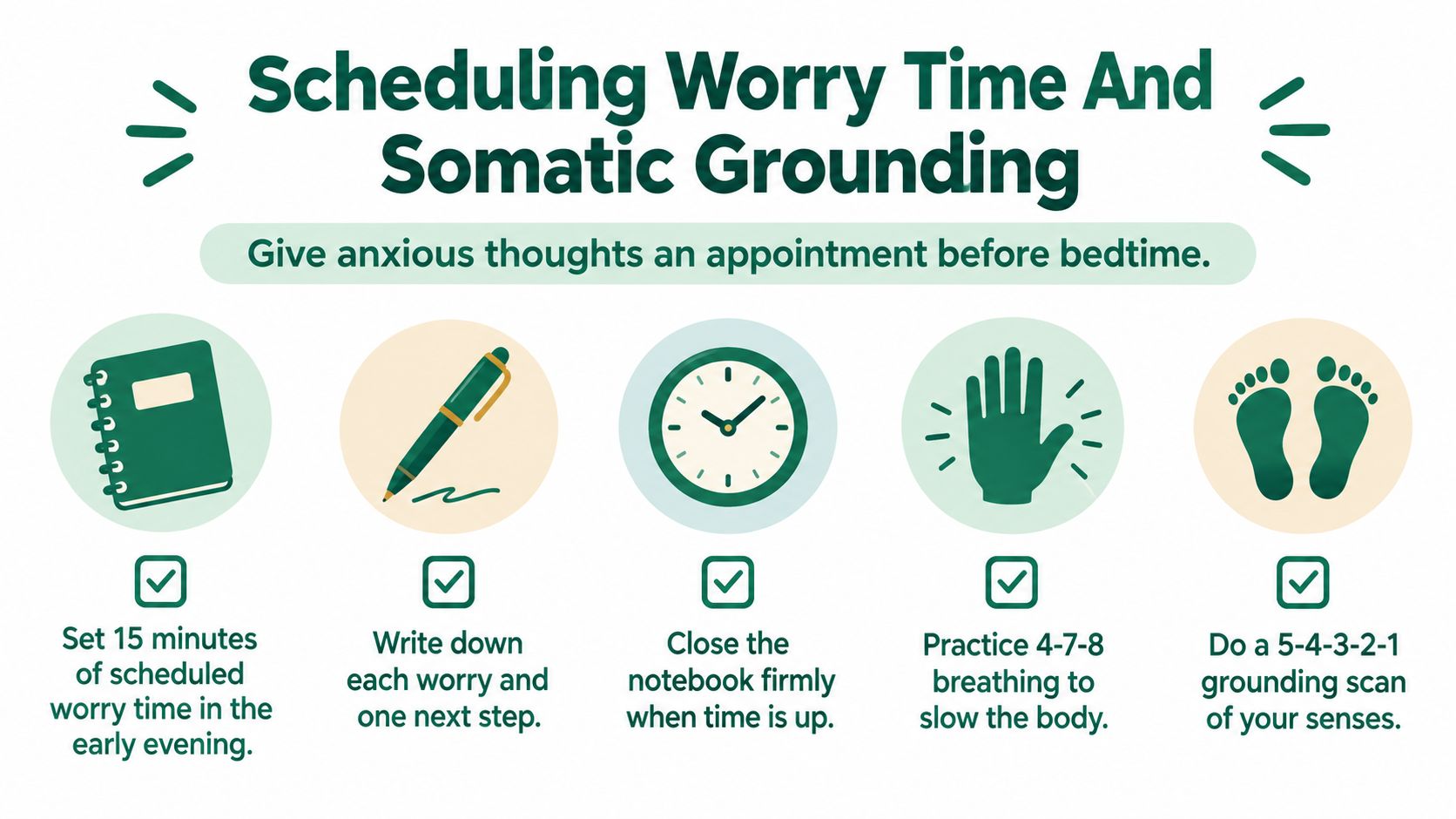
Caption: Scheduling Worry Time And Somatic Grounding can give anxious thoughts a defined place before bed and offer the body a concrete path toward settling.
Follow the leave-the-bed protocol
When you notice that wakefulness is turning into frustration, get up. You don't need to wait until you're furious, panicked, or certain the night is ruined. Use a quiet, dimly lit area and choose an activity that's boring, familiar, and emotionally neutral.
You might read a few pages of a calm book, listen to gentle audio, fold laundry, or sit with a warm, non-caffeinated drink. Avoid work messages, distressing news, intense entertainment, and anything that encourages you to keep checking the time. Return to bed when you feel sleepy rather than when you decide you've spent an appropriate amount of time away.
This process teaches your brain a new contingency: bed is for sleep, not for struggling to sleep. It may feel inconvenient at first, especially if you're already depleted. The inconvenience is temporary, while repeatedly remaining in bed during anxious wakefulness can strengthen the very association you're trying to change.
Protect the wake time
Choose a consistent wake time and keep it as steady as you reasonably can, including after a difficult night. Sleeping in can feel like the obvious repair strategy, but it may reduce the sleep pressure that helps you feel sleepy the following evening. A regular morning anchor also gives your body a predictable rhythm.
Keep a 1 to 2-week sleep diary if you're trying to understand the pattern. Record your approximate bedtime, estimated time to fall asleep, awakenings, final wake time, naps, and daytime sleepiness. The purpose isn't to grade yourself. It's to identify patterns that anxiety tends to distort.
Avoid turning stimulus control into a rigid test of willpower. If leaving the bed feels unsafe because of trauma, mobility limitations, caregiving responsibilities, or your home environment, adapt the principle with professional guidance. You might move to a chair beside the bed, change the lighting, or shift your posture while keeping the activity quiet and non-stimulating.
Scheduling Worry Time And Somatic Grounding
Many people try to suppress worry as soon as they get into bed. That often backfires. The mind interprets suppression as a demand to keep checking whether the unwanted thought has disappeared, which gives the thought more attention.
A better approach is to give worry a defined appointment earlier in the evening. Set aside a brief period when you're awake, clothed, and able to take practical action. Write each concern down in plain language, then add one next step if a next step exists. If there's nothing useful to do tonight, write when you'll revisit it.
For example, “I'll never catch up at work” becomes “Review the project list tomorrow and identify the first task.” “What if my medical symptom gets worse?” becomes “Write down the symptom and contact the appropriate healthcare professional during office hours.” The point isn't to reassure yourself that nothing bad can happen. It's to separate problem-solving from repetitive threat rehearsal.
Close the notebook when the scheduled period ends. If the worry returns in bed, remind yourself that it has already been recorded and has an appointment. You're not dismissing it. You're declining to process it in the place and state where your nervous system is most vulnerable to escalation.
Use the body without forcing it
Slow, comfortable breathing or guided relaxation can reduce physiological arousal, but breathing exercises aren't universally comfortable. Some trauma survivors, people with panic symptoms, and some neurodivergent adults become more anxious when they focus closely on breath, chest movement, dizziness, or air hunger.
Choose the method that makes your body feel more settled, not the method that looks most advanced. Options include:
Progressive muscle relaxation: Gently tense and release one muscle group at a time, starting with the hands, shoulders, jaw, or feet. Keep the effort mild. The release is more important than creating strong tension.
Sensory orientation: Name what you can see, hear, feel, smell, and taste. A textured blanket, cool water, or the pressure of your feet against the floor can offer a neutral anchor.
Rhythmic movement: Slowly rock, walk, stretch, or tap one hand and then the other if alternating sensations feel regulating. Stop if the movement increases agitation.
Guided relaxation: Use a familiar recording with a calm voice and minimal dramatic music. If instructions make you feel watched or evaluated, choose silence instead.
External focus: Notice the weight of your body against the mattress, the support of the chair, or the temperature of the room without trying to change the sensations.
A practical approach supported by AASM guidance is to schedule worry earlier, write down concerns and next actions, then use slow breathing or guided relaxation in bed to lower arousal rather than trying to erase anxious thoughts. The AASM overview of behavioral and psychological treatments also reinforces an important limit: relaxation can be useful, but sleep hygiene alone isn't a complete treatment for chronic insomnia.
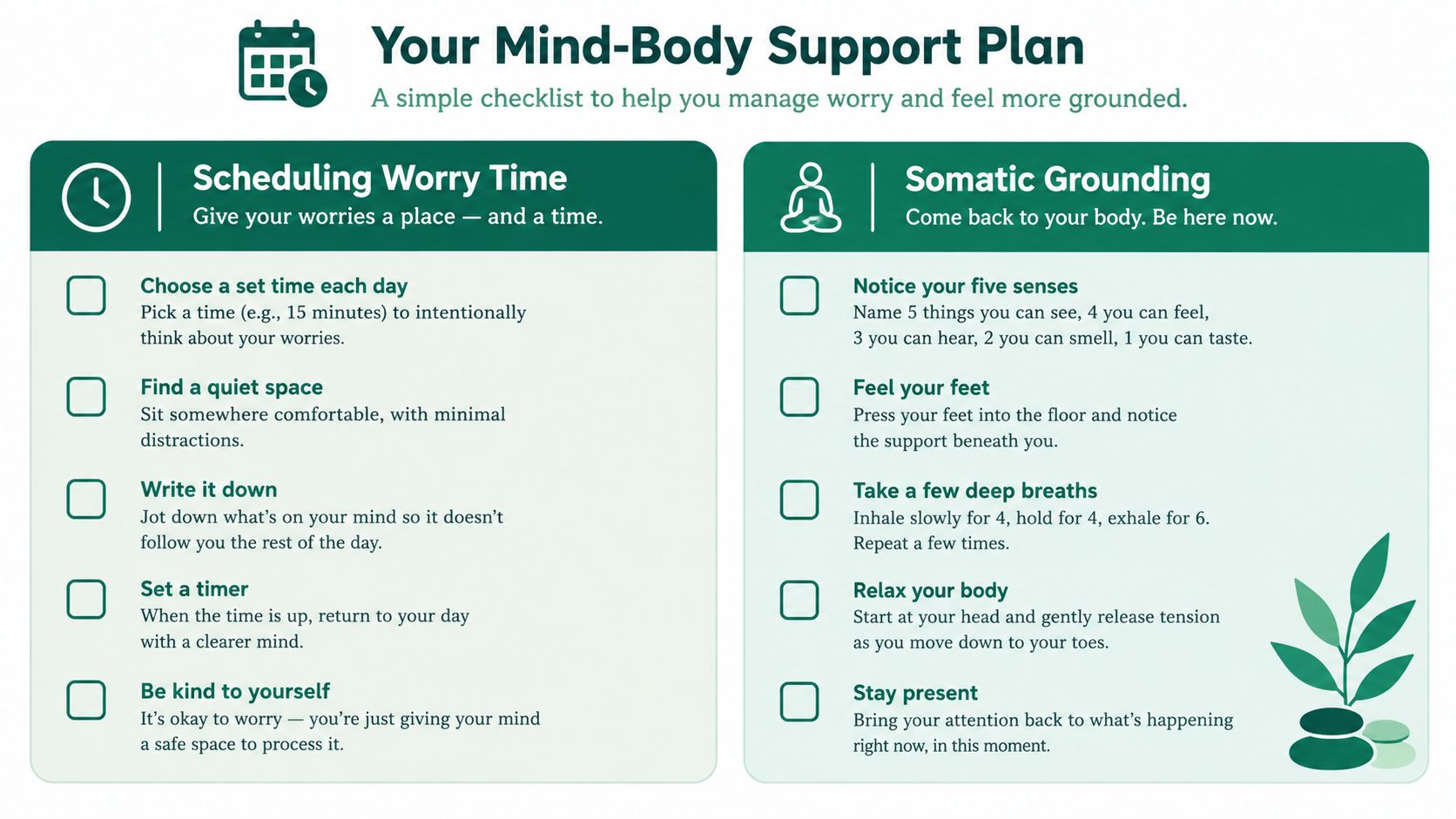
Caption: A mind-body support plan can pair written problem-solving with grounding choices that respect your sensory preferences.
You can also explore grounding techniques for anxiety and notice which exercises help you feel more present. A technique that increases disconnection, panic, or sensory overload isn't the right technique for that moment. Trauma-informed care makes room for choice.
Designing A Sensory-Friendly Wind Down Routine
Sleep hygiene matters, but it's often presented as if a dark room and an earlier bedtime can resolve chronic insomnia by themselves. They can reduce avoidable stimulation, yet they don't directly address conditioned arousal, fear of sleep, trauma reminders, or catastrophic thinking.
The more useful question is: What sensory signals tell your brain that the day is ending safely? For an ADHD brain, an unstructured evening may create a last-minute burst of activity. For an autistic adult, an irritating fabric, unpredictable noise, or harsh light may keep the body activated. For a highly sensitive person, emotionally intense media may linger long after the screen is off.

Caption: A sensory-friendly bedroom can reduce friction by combining gentle lighting, comfortable textures, and easy access to calming essentials.
Build a bridge instead of demanding an abrupt shutdown
A wind-down routine should be a transition, not another performance project. A 45-minute example might begin with lowering the lights and putting the phone on a charger outside the bed area. You could then spend time washing, changing into comfortable clothing, preparing the room, reading something predictable, and finishing with a body-based practice.
The exact sequence matters less than its repeatability. If a long routine becomes another source of pressure, shorten it. If silence feels uncomfortable, use steady background sound. If darkness feels unsafe, use a warm, low lamp rather than forcing yourself into a room that triggers vigilance.
Try matching the environment to your sensory profile:
For light sensitivity: Use warm, dim lighting and reduce bright overhead fixtures. Keep screens away from the bed when possible.
For sound sensitivity: Try earplugs, a fan, or consistent white noise. Avoid sounds that change unpredictably or contain emotionally activating content.
For tactile sensitivity: Choose bedding and sleepwear that don't itch, trap heat, or restrict movement. A weighted blanket may feel comforting for some people and confining for others.
For attention regulation: Use a visible checklist with only the essential steps. Automation, such as scheduled lights or a repeated audio track, can reduce decision-making.
For interoceptive sensitivity: Keep water nearby and avoid practices that demand intense focus on heartbeat, breathing, or internal sensations if those cues increase alarm.
CDC guidance recommends a consistent sleep schedule, a bedroom that's quiet, dark, relaxing, and comfortable, and removing light-emitting devices from the bedroom. It also advises avoiding large meals, nicotine, alcohol, and caffeine before bed. These environmental choices can support a broader plan, while the AASM cautions against treating sleep hygiene as the sole intervention for chronic insomnia. The CDC's sleep guidance offers practical foundations without suggesting that they solve every cause of nighttime anxiety.
Scent can be part of a routine if you enjoy it and tolerate it well. Keep it subtle, avoid assuming that a particular scent will make you sleep, and stop using it if it causes headaches, nausea, respiratory symptoms, or sensory discomfort. For ideas about choosing scents thoughtfully, you can review these evening aromatherapy tips. A body scan may also help you notice tension without fighting it, and this explanation of body scan meditation benefits can help you decide whether that practice fits your needs.
Breaking The Fear Of Sleep And Seeking Support
Sometimes the central fear isn't tomorrow's meeting or an unfinished task. It's sleep itself. You may dread lying down because you expect another long night, another exhausted morning, or another day when you can't function as you need to.
Cleveland Clinic describes sleep anxiety as fear or worry about going to sleep. The daytime and evening concern about sleeping poorly can increase arousal, make sleep more difficult, and create another poor night. Cleveland Clinic's explanation of sleep anxiety captures the cycle without blaming the person caught inside it.
Sleep anxiety creates performance pressure. You monitor whether you're relaxed enough, sleepy enough, or close enough to falling asleep. Each check becomes another form of stimulation. The more urgently you demand sleep, the more wakefulness feels like a threat.
Try tracking patterns without turning the record into a nightly verdict. A sleep diary can show whether your estimates change with anxiety, whether naps affect your evening sleepiness, and whether your wake time varies. It can also give a clinician useful information. Don't use it to decide whether you were “good” or “bad” at sleeping.
Know when self-help has reached its limit
Persistent symptoms deserve evaluation rather than being attributed only to poor sleep habits. Chronic insomnia is generally defined by sleep difficulty occurring at least 3 nights per week for 3 months or longer, and this pattern is appropriate to discuss with a qualified clinician.
Seek individualized support if you experience:
Dangerous daytime sleepiness: Don't self-prescribe sleep restriction if driving safety, work safety, or basic functioning is affected.
Possible sleep-disordered breathing: Snoring, gasping, witnessed breathing pauses, or morning symptoms may require medical assessment.
Trauma-related distress: Nightmares, flashbacks, fear of vulnerability, or a sense that sleep is unsafe may benefit from a trauma-informed therapist.
Panic or severe mood changes: Repeated panic episodes, unusually high energy, profound depression, or thoughts of self-harm require prompt professional attention.
Complex health factors: Bipolar disorder, seizure disorders, untreated sleep apnea, significant medical illness, medication effects, and substance use can change which sleep strategies are safe.
CBT-I is a strong behavioral option for persistent insomnia, whether or not a person also has a psychiatric or medical condition. Digital CBT-I may improve access, but it is not automatically equivalent to individualized care. In pooled randomized-trial data involving adults aged 65 and older, digital CBT-I was associated with greater improvements in insomnia and anxiety than control conditions, with insomnia remission of 60% versus 16%. The PubMed record for this evidence also reflects why the practical question is not which app to download. It's whether self-guided care fits your symptoms, privacy needs, culture, neurodivergence, trauma history, medication context, and level of impairment.
A therapist can help distinguish ordinary bedtime rumination from a broader anxiety, trauma, or mood pattern. If you're unsure what beginning therapy involves, this guide to a first session with a therapist may make the decision feel more concrete.
Releasing The Pressure To Sleep Perfectly
Sleep is a biological process, not a task you can complete through force. You can create conditions that support it, reduce behaviors that maintain wakefulness, and address the fear surrounding bedtime. You can't command your brain to become unconscious on demand.
The most important practices are simple, though they aren't always easy:
Keep a dependable wake time: Let the morning provide structure, even after a rough night.
Leave the bed when frustration grows: Move to a quiet space and return when sleepiness returns.
Treat the body as an ally: Use sensory grounding, gentle movement, or relaxation without turning the exercise into a test.
Record rather than judge: Look for patterns across nights instead of declaring one difficult night a disaster.
Escalate care when needed: CBT-I, trauma therapy, medical assessment, or psychiatric support can address problems that routines cannot.
Self-compassion isn't a decorative extra. Shame increases threat, while a less judgmental response gives your nervous system fewer reasons to remain on alert. You don't have to approve of your symptoms to stop attacking yourself for having them.
If perfectionism is driving the demand to sleep correctly, therapy for perfectionism may help you examine the larger pattern. Rest becomes easier to approach when you're no longer treating every imperfect night as evidence that you're losing control.
Nighttime anxiety often improves gradually. You're building trust through repeated experiences of waking without catastrophe, leaving the bed without panic, and returning to rest without demanding certainty. Professional support is a valid part of that process, not a sign that you should have solved it alone.
Be Your Best Self & Thrive Counseling, PLLC offers compassionate counseling for anxiety, trauma, stress, life transitions, and neurodivergent experiences, with practical mind-body approaches that can support racing thoughts and sleep-related distress. Visit Be Your Best Self & Thrive Counseling, PLLC to learn about services and schedule a free initial consultation to discuss your goals and fit.