
Empty Nest Depression: Signs, Causes, and When to Get Help
Getting a hobby isn't always the right answer to empty nest depression. Before filling the calendar, it helps to ask what's hurting: missing your child, losing a daily role, struggling without practical help, or experiencing depression that needs care. Those problems can overlap, but they don't call for identical responses.
You don't have to celebrate every quiet evening, and you don't have to treat sadness as evidence that something is wrong. The useful starting point is what changed, how you're functioning, and whether you feel safe.
What Empty Nest Depression Means For Different Parents
The kitchen is quiet the week your last child leaves. You reach for another plate, remember you don't need it, and feel a hollow ache. Then you notice that nobody needs the car tonight, and you feel relief.
Both reactions belong in the same kitchen. Pride, freedom, sadness, and uncertainty can arrive together without adding up to a mental health disorder.
Empty nest depression describes a possible adjustment-related mood problem after children leave home. It isn't a formal diagnosis, and it doesn't mean helping your child become independent went wrong.
A changed role isn't a lost relationship
The phrase has a long history: an account of its origins identifies Dorothy Canfield's 1914 book Mothers and Children as an early publication that popularized “empty nest,” while distinguishing a smoother post-parental transition from the identity disruption, isolation, and depressive symptoms associated with empty nest syndrome (historical and clinical discussion).
The distinction matters because a role can change more abruptly than a relationship. Your child still loves you and may still need your advice, but the familiar work of meals, rides, reminders, and everyday company has ended or shifted.
It can feel like a job ending overnight while your love for the people involved remains unchanged. Missing that work doesn't mean you want to prevent your child from growing.
You can be glad your child is ready to leave and still grieve the family routine you're losing.
The concept map below separates a possible mood problem from a verdict on your parenting.
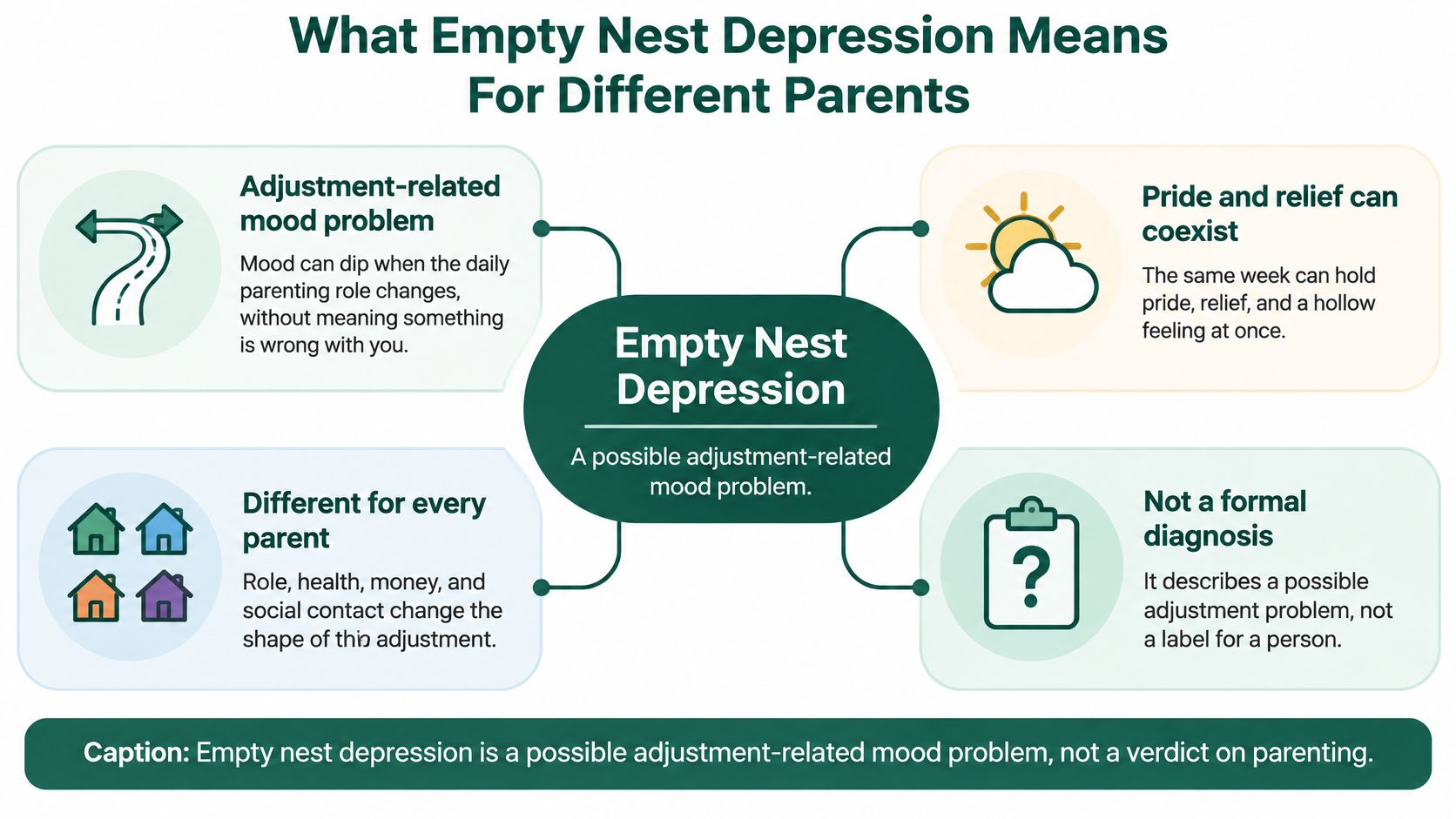
Three households can share an empty bedroom and need three different responses.
Three households, different needs
Consider a father who misses hearing his daughter practice music but enjoys having his weekends back. He reconnects with friends and feels less socially confined. His relief isn't avoidance, and his daughter's departure isn't evidence that he's depressed.
Now consider a mother whose days revolved around school runs and meals. A month after the move, she stops cooking for herself and can't describe who she is on an ordinary Tuesday. Her difficulty deserves attention, but her gender alone doesn't explain it.
These scenarios resemble an initial pattern in the German Ageing Survey: men's loneliness decreased modestly, while women's depressive symptoms increased before adjustment (b = 0.48, p = 0.05); after accounting for potential confounders, the transition was no longer significantly associated with changes in depressive symptoms or loneliness (longitudinal study abstract). Health, relationship quality, employment, money, and social networks help put those experiences in context. The result doesn't support assuming that mothers will become depressed or that fathers will feel liberated.
A third household needs a different response altogether. Say a widowed parent's adult child migrates for work, taking with them the usual help with clinic rides and household bills. The urgent question isn't which hobby would be enjoyable. It's how the parent will get medication, attend appointments, and remain safe at home.
Before choosing a label, ask:
What ended? Daily caregiving, companionship, practical assistance, or several things together?
What remains? Friendships, work, partnership, faith, interests, and reliable help may offer different starting points.
What was difficult already? A longstanding low mood shouldn't automatically be attributed to the move.
When the central experience is mourning a chapter of family life, grief and loss therapy can offer space to name that loss without treating your child's independence as a problem. A launch can be going well while the parent needs support.
Signs That Separate Grief From Depression
Grief, Adjustment, Depression, or a Safety Concern
Pattern | Typical timing | What it looks like | What to do |
|---|---|---|---|
Brief sadness | Days to a few weeks, in waves | Tears, nostalgia, and pride, with work, sleep, and some enjoyment still intact | Keep ordinary routines and recheck if the waves stop lifting |
Harder adjustment | Weeks tied to role loss and loneliness | Identity questions, a quiet house, less structure, and couple tension that eases with contact or activity | Monitor sleep, appetite, and withdrawal and add support if daily life narrows |
Depressive episode | Most of the day, nearly every day, for two weeks or more | Low mood or lost interest plus sleep or appetite change, fatigue, guilt, poor concentration, or hopelessness, with impaired functioning | Seek counseling or a medical evaluation rather than waiting for the house to feel normal |
Safety concern | Any duration | Thoughts of suicide or self-harm, or being unable to stay safe | Contact 988 in the United States or local emergency services immediately |
Use timing, daily functioning, and safety, not the empty house alone, to decide the next step.
Notice whether the sadness lifts
With brief sadness, a reminder may bring tears, but a conversation or enjoyable activity can still reach you. You may miss your child intensely at dinner and enjoy a walk afterward. Intensity alone doesn't establish depression.
A harder adjustment can be less dramatic but more disruptive. You may drift through evenings, argue about small household decisions, or avoid friends because you don't know what to talk about. Moments of connection still help, but your daily life needs more support and structure.
A depressive episode is more than missing someone at particular moments. Low mood or loss of interest becomes persistent, and ordinary tasks begin to feel unmanageable. The timing in the table is a prompt for assessment, not a rule requiring you to struggle alone until a deadline.
Symptom scores aren't diagnoses
In a cross-sectional study of rural older adults in Liuyang, China, major depressive episodes occurred in 10.1% of empty nesters versus 4.6% of non-empty nesters, with higher loneliness and depressive-symptom scores among empty nesters and additional risk associated with lower income and physical illness (BMJ Open study). That finding makes depression worth recognizing, not inevitable.
A symptom questionnaire can identify distress that deserves follow-up, but a high score isn't interchangeable with a diagnosed major depressive episode. A clinician also considers functioning, previous mood episodes, physical health, substance use, and the circumstances surrounding the change.
For a fuller symptom vocabulary, this guide to signs and symptoms of depression can help you describe what's happening. If exhaustion predates the move, Acheloa Wellness's explanation of how burnout differs from depression offers another useful distinction, without replacing an evaluation.
Safety comes first: Thoughts of suicide or self-harm deserve immediate support, even if you're still going to work or caring for other people.
In the United States, call or text 988 for suicidal thoughts. If you've acted on those thoughts, face immediate danger, or can't stay safe, contact emergency services or go to an emergency department. The table is an orientation tool, not a diagnosis or a substitute for urgent care.
How Common Empty Nest Depression Is
Depression is a substantial concern in some empty-nest populations, but there isn't a single rate that applies to every parent. A meta-analysis of 46 observational studies involving 36,791 older adults found a pooled depression prevalence of 38.6%; across 19 comparative studies, prevalence was 44.2% among empty-nest participants versus 26.3% among adults whose children still lived at home, with a pooled odds ratio of approximately 2.0 and a 95% confidence interval of 1.4–2.8, alongside very high overall between-study heterogeneity (I² = 99.3%) (meta-analysis of older adults).
That's a substantial association, not proof that children leaving home directly causes major depressive disorder. An odds ratio also isn't a personal prediction about what will happen after your child moves.
Why the estimates differ
A 2023 meta-analysis of 10 studies involving 5,337 older adults in China living without their adult children estimated depression prevalence at 43%, with estimates of 38% among urban empty nesters and 36% among rural empty nesters, respective 95% confidence intervals of 24%–52% and 18%–55%, and an estimated detection rate of 41% in studies using the Geriatric Depression Scale (China empty-nester meta-analysis).
Those overlapping ranges don't establish a clear urban-rural ranking. They show why a headline percentage needs its population and measurement method attached.
In India, an analysis of 19,401 adults aged 60 and older found a 24% higher likelihood of depression among empty-nest older adults than comparable non-left-behind adults, with the adjusted association increasing to 1.40 after socioeconomic and living-arrangement factors were considered (study of older adults in India).
The same label covers very different rates once place and measurement change. Important differences include:
Who participated: An older adult with limited mobility faces different demands from a working parent whose child leaves for college.
What was measured: Self-reported symptoms, screening results, and clinical episodes aren't interchangeable.
What else was happening: Illness, income insecurity, bereavement, and access to care can shape distress.
The practical conclusion isn't that you should expect depression. It's that persistent symptoms deserve assessment, while population averages should never substitute for understanding your household.
Life Changes That Raise the Risk
An analysis using the China Health and Retirement Longitudinal Study found that 40.2% of empty-nest older adults had depressive symptoms, with the protective and higher-risk associations summarized below (analysis of depressive symptoms and associated factors). The rate isn't one cause, and the factors describe associations rather than guarantees.
Factors Linked With Empty Nest Depressive Symptoms
Factor | Linked direction | What it changes day to day |
|---|---|---|
Higher education | Protective | More routes into new roles and information |
Having a spouse | Protective | Companionship and shared decisions at home |
Living in an urban area | Protective | Easier reach to services and other people |
Better self-rated health | Protective | More energy for a rebuilt routine |
Frequent contact with children | Protective | The bond continues without them living at home |
Higher life satisfaction | Protective | Meaning is wider than the parenting role |
Having a pension | Protective | Less fear when household costs shift |
Being female | Higher risk | Caregiving identity may carry a heavier load |
Difficulty with daily activities | Higher risk | Practical help may have left with the child |
Chronic disease | Higher risk | Illness can add to isolation |
Physical pain | Higher risk | Pain can restrict activity and mobility |
Short sleep | Higher risk | Poor rest can make coping harder |
Frequent drinking | Higher risk | Alcohol can mask grief and worsen mood |
Impoverished household | Higher risk | Money strain isn't a mindset problem |
The same move-out is harder when health, money, sleep, or contact are already strained.
The everyday explanations in the final column suggest questions to explore. They aren't proof that a particular factor works through the same pathway for everyone.
Look beyond the empty bedroom
Daily caregiving can disappear along with its built-in structure. Without the school calendar, a parent may have fewer reasons to leave home or speak with familiar people. Another parent may feel fine about the separation but struggle with retirement or a painful health condition happening alongside it.
Partnership can become more complicated, too. Unequal household labor may become harder to overlook when children no longer organize the day. A couple might discover that their conversations have mostly involved transport, meals, and schedules rather than friendship.
These overlapping pressures are easier to see together than to reduce to a single cause.
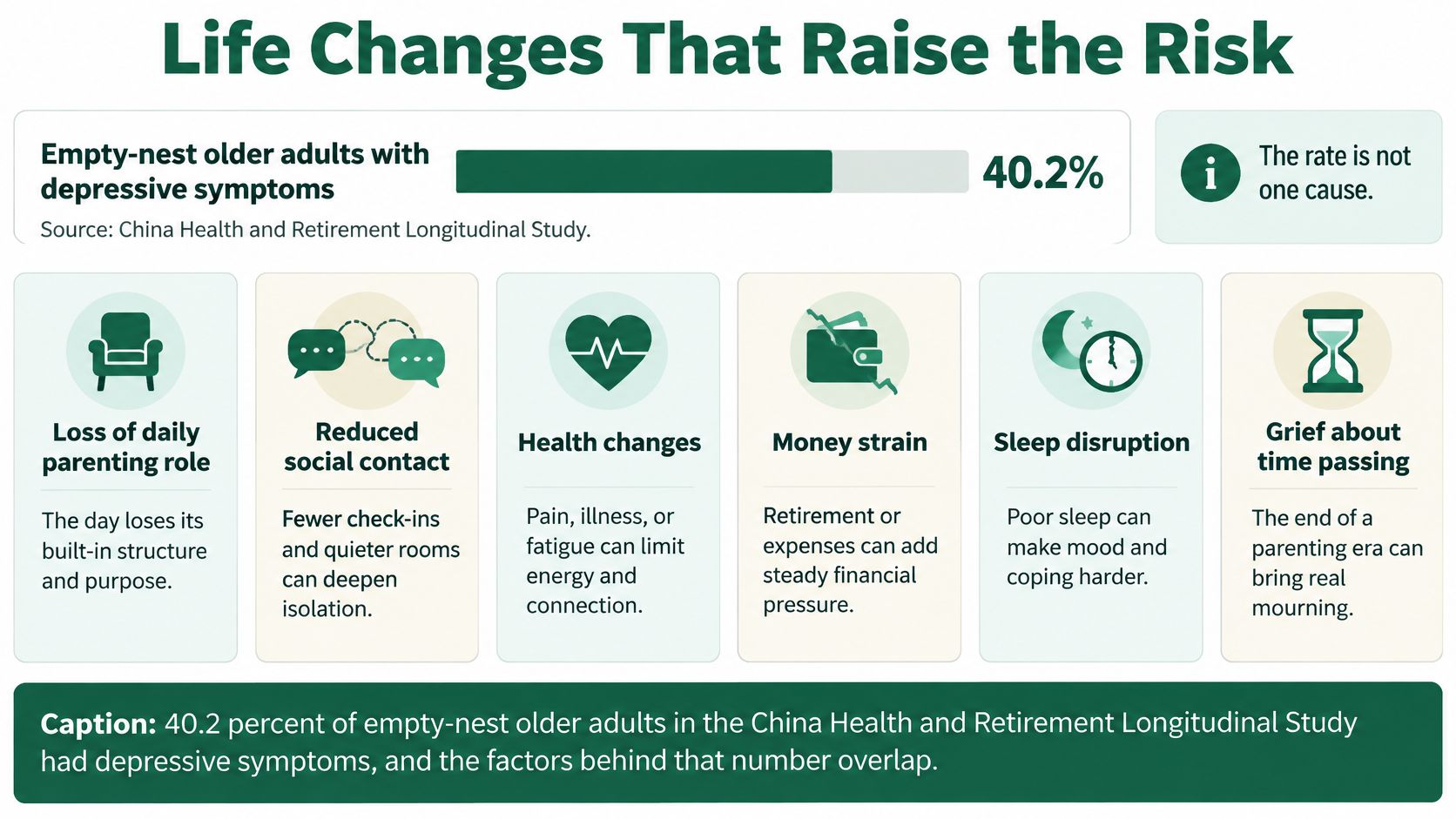
Health, money, social contact, and changes in role can overlap, so support should address the actual gaps.
Match support to the missing resource
A video call can offer warmth, but it can't provide a ride or prepare a meal. Disability, chronic illness, digital exclusion, and cultural expectations about family obligations can change what separation means. Advice to think positively won't resolve an unsafe living arrangement.
A useful self-check is to circle the factors in the table that already apply, then name the hardest part: grief, missing practical support, money, health, or the relationship. If several overlap, choose the most urgent or concrete need first.
This guide to counseling for life transitions can help you think about emotional support. Bring the circled factors into that conversation so the plan fits your circumstances rather than an idealized version of the empty nest.
Ways to Rebuild Routine Connection and Purpose
These steps are for brief sadness and harder adjustment, not a safety concern. They can also support professional treatment, but they shouldn't become a test you must pass before asking for help.
Think of the old parenting calendar with its newly blank squares. Unplanned time can become hours of replaying memories or checking your phone. You don't need to redesign your whole life, just give the week a few dependable points of contact.
Start with a manageable week
Compare before and after. Write down how sleep, interest, energy, and social contact felt before the move and how they feel now. This helps you avoid treating a longstanding difficulty as a completely new reaction.
Choose an anchor. Put a walk, class, worship service, or volunteer shift on the same three weekdays. Choose something you can realistically attend, including on a low-energy day. A reliable commitment is more useful than an ambitious schedule you dread.
Arrange contact beyond your child. Schedule two real conversations this week with friends, relatives, neighbors, or community members. Agree on a comfortable contact rhythm with your adult child, while giving yourself other places to find company.
Name a role you want to reclaim. Try saying gardener, colleague, learner, artist, or community volunteer out loud, then choose one small action that fits. If you're unsure what interests you, Litter Caterpillars' explanation of how intrinsic motivation fuels purpose offers a starting point for separating personal interest from obligation.
Protect basic care. Keep a consistent wake time and try a short daily walk or accessible movement. Notice whether alcohol is becoming the default way to get through an evening, and bring that pattern into a healthcare conversation rather than hiding it.
Renegotiate life together. If you have a partner, discuss one household routine and one point of friendship or intimacy. For example, decide who cooks on which evenings and set aside time to talk without discussing family logistics. Don't assume you both want the same amount of togetherness.
Replace missing practical help first. If the move removed rides, medication assistance, or bill-paying help, contact a clinic, senior service, faith community, or trusted neighbor. Ask for the specific task you need covered, not general support.
Fill the blank squares of the old parenting week before judging the whole transition.
Let action be small enough to repeat
An approach called behavioral activation for depression uses planned, meaningful activity rather than requiring motivation to arrive first. The point isn't to stay busy enough to avoid feeling. It's to keep some access to connection, accomplishment, and ordinary pleasure.
The visual checklist offers simple places to begin.
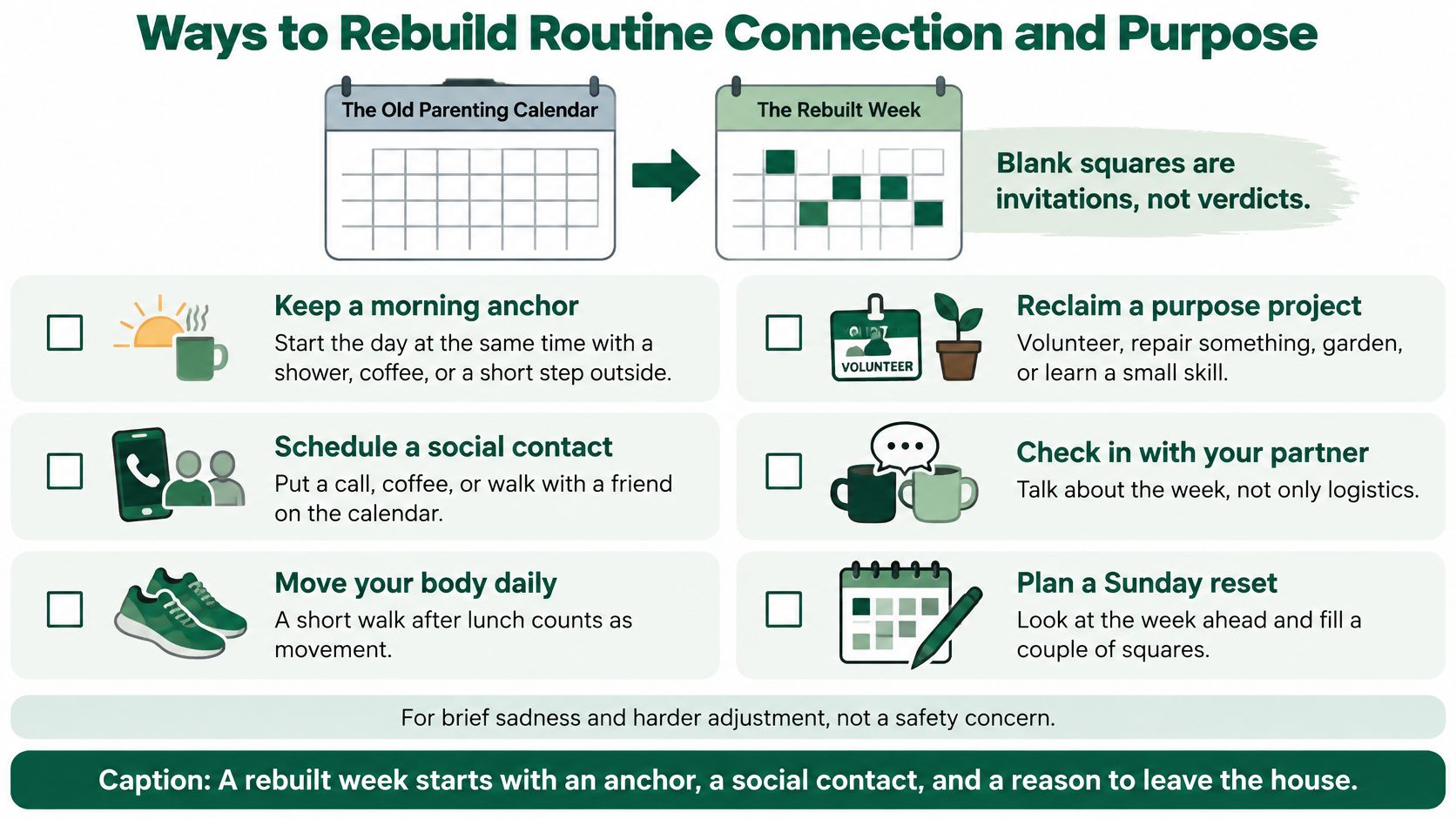
A rebuilt week starts with an anchor, a social contact, and a reason to leave the house.
These actions won't erase grief. If despair or lost interest is taking over most days, don't keep expanding the checklist instead of seeking an assessment.
When Counseling or Other Support May Help
Choose counseling or a medical evaluation when your mood is no longer just painful but is restricting your life. Missing work, neglecting meals, withdrawing from people, or struggling to manage ordinary responsibilities are reasons to reach out. You don't need to prove that the child's departure caused the problem.
Support can also help when grief becomes tangled with anxiety, trauma, burnout, or a painful marriage. A conversation with a professional can separate those concerns without forcing all of them into the empty-nest label.
Choose the right starting point
A primary-care visit is especially useful when pain, chronic illness, alcohol use, or a possible medication effect could be contributing. Bring a list of medications, changes in sleep or appetite, and examples of tasks that have become difficult. A clinician can consider medical contributors alongside emotional ones.
If the immediate problem is transport, meals, bills, or safety at home, pursue practical assistance alongside any counseling. Therapy can help you ask for support and manage feelings about needing it, but it shouldn't be offered as a replacement for the help itself.
Couples counseling may fit when the quiet house has exposed criticism, persistent silence, or emotional distance. The purpose isn't to decide which partner is adjusting correctly. It's to help both people describe their needs and make workable agreements.
A useful first goal: Tell the clinician what you want to be able to do again, not only what you want to stop feeling.
What thoughtful care can include
Good care begins with your history, current symptoms, safety, and priorities. Practical depression treatment goals might involve returning to regular meals, reconnecting with a friend, or managing a workday, while leaving space to explore identity and meaning.
At our St. Petersburg practice, Be Your Best Self & Thrive Counseling, PLLC, we offer individual and couples care for depression and life transitions, with a free initial consultation to explore fit and goals. Alongside talk therapy, our team may explore nutrition and lifestyle changes, yoga and meditation, mindfulness training, spiritual practices, and life purpose and meaning, according to the person's needs and preferences.
Holly Case's listed focus areas include anxiety, depression, burnout, trauma, life transitions, chronic illness, and attachment wounds. Our wider team's areas of focus include grief and loss, boundaries, relationship issues, and marriage strain. That range matters when the concern isn't only sadness, but a painful question about who you are when you're no longer needed in the same daily way.
You can bring that question without having an answer. You can also say that a spiritual approach doesn't fit you, that movement is limited by pain, or that your first priority is sleep rather than deeper exploration. Whole-person care should remain personal, not become another list of things you're supposed to do.
If safety is in doubt, contact crisis support now. Otherwise, book a consultation or primary-care visit and bring the factor you circled, along with a concrete example of how it affects your day. You don't have to arrive with a diagnosis or a demand that you feel fine.
Be Your Best Self & Thrive Counseling, PLLC offers compassionate individual and couples counseling for depression, changing family roles, and life transitions. If the empty nest has left you feeling stuck, visit Be Your Best Self & Thrive Counseling, PLLC to arrange a free initial consultation and discuss support that fits your needs.