
Signs and Symptoms of Depression: What to Look For
Could depression be present even when someone keeps meeting deadlines, rarely cries, and insists they're just tired? Yes. The signs and symptoms of depression aren't limited to visible sadness. Irritability, exhaustion, withdrawal, and a loss of enjoyment can be easier to notice, especially when someone continues functioning in public.
The useful question isn't whether you feel sad. It's whether your mood, thinking, habits, or physical wellbeing have changed in a persistent way that's making life harder. Understanding that pattern can help you seek an assessment without assuming that every difficult week, sleepless night, or unexplained ache means depression.
Core Signs of Depression Across Four Areas
Depression appears as a cluster of changes across emotional, cognitive, behavioral, and physical areas, not sadness alone. The National Institute of Mental Health's depression guide describes symptoms that affect feelings, thinking, daily activities, and bodily functioning. These areas overlap, so someone may notice exhaustion before recognizing hopelessness.
Emotionally, depression can feel like sadness, emptiness, irritability, or a persistent sense that nothing will improve. For example, a normally patient parent might snap at minor interruptions, then feel ashamed afterward. Loss of pleasure can be equally important: something that used to feel rewarding now feels flat.
Depression signs grouped by domain
Domain | Common Signs | How It Often Looks in Daily Life |
|---|---|---|
Emotional | Persistent sadness, emptiness, hopelessness, irritability | Feeling flat most days or snapping at small things |
Cognitive | Poor concentration, memory lapses, indecision, guilt or worthlessness | Rereading the same email several times or struggling to finish routine work |
Behavioral | Social withdrawal, reduced activity, missed work or family duties, more substance use or risk-taking | Cancelling plans, staying in bed, or working late to avoid people |
Physical | Fatigue, sleep changes, appetite or weight change, unexplained aches or stomach problems | Waking early, feeling tired after a full night, or frequent headaches with no clear cause |
Cognitive changes can make ordinary decisions feel unusually difficult. Someone might spend an afternoon rereading a message, unable to choose a reply, while interpreting that difficulty as personal failure rather than a symptom.
Behavioral changes are often more visible to other people. A business owner might stop answering friends' messages while continuing to respond to clients. When drinking or drug use also increases, Addiction Resource Center LLC's guide to recognizing depression alongside addiction offers context for discussing both concerns together.
Look for a change from your usual self
Physical symptoms deserve attention without being automatically attributed to mood. Someone might skip meals, struggle through meetings, and feel exhausted despite sleeping, yet never describe themselves as sad.
Irritability and exhaustion can be especially noticeable in men and people who maintain outward productivity, but neither proves depression. The combination, persistence, and effect on everyday life matter more than any isolated sign. Note which changes you recognize in yourself or someone close, along with roughly when they began.
The Two-Week Rule and How Many Signs Count
A major depressive episode requires a particular symptom pattern, not just a difficult day. The diagnostic criteria summarized in the NCBI Bookshelf require at least five of nine symptoms during the same two-week period, representing a change from previous functioning, with depressed mood or markedly reduced interest or pleasure included.
Clinical threshold: Count a sustained combination of symptoms, including a core mood or interest change, rather than adding up unrelated bad days.
The diagnostic symptom set covers mood, interest, appetite or weight, sleep, observable agitation or slowing, energy, guilt or worthlessness, concentration or decision-making, and thoughts of death or suicide. These aren't interchangeable with every item in a general wellness checklist. A clinician also considers how often symptoms occur and whether they're present for much of the day.
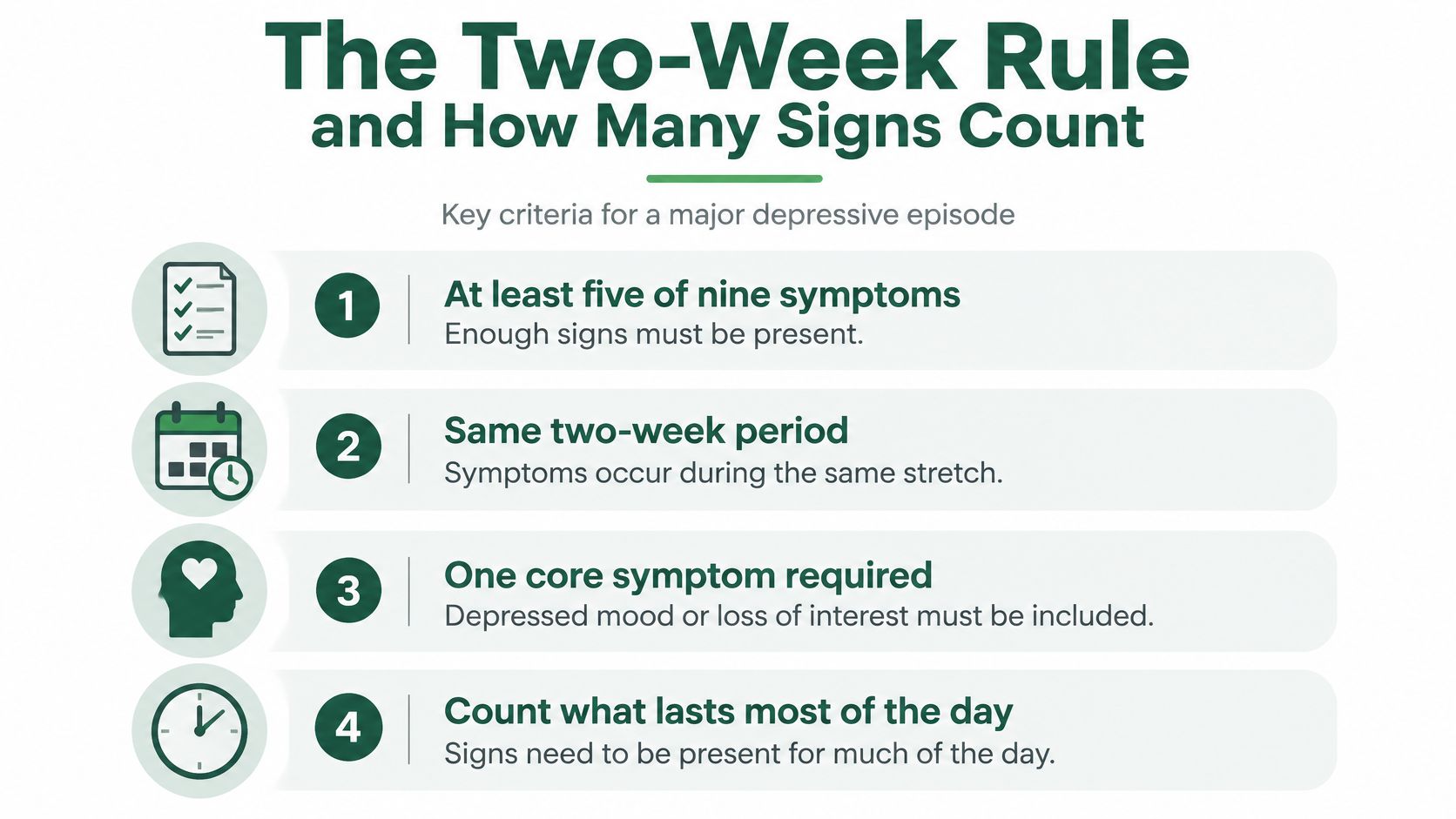
The checklist highlights symptom count, a shared time period, a required core symptom, and persistence. A change in functioning also needs clinical assessment.
Why symptom counting isn't enough
Say someone has experienced three weeks of low energy, poor sleep, and no interest in work. That pattern warrants attention, but those three reported symptoms alone don't establish the required symptom count. A professional would ask about other changes, impairment, medical history, and safety.
By contrast, sadness lasting four days after a breakup generally doesn't meet the episode's duration requirement. That doesn't make the distress unimportant, and severe symptoms or safety concerns always justify earlier help.
The Cleveland Clinic's clinical depression guide emphasizes meaningful difficulties at work, school, home, or in relationships, while also considering medical conditions, substances, medications, and a history of mania.
Prepare a record with:
The symptom: Describe what happens in ordinary language.
The timing: Record its start date, frequency, and whether it lasts much of the day.
The impact: Include missed meals, unfinished tasks, conflict, or abandoned activities.
The context: Note medication changes, illness, substance use, and major events.
A checklist can organize information. It can't diagnose depression.
Depression Signs in Men, Older Adults and Teens
Population averages don't tell you how depression will look in a particular person. The World Health Organization estimated depression prevalence in 2023 at 6.2% among adult women and 4.1% among adult men, but age, health, circumstances, and symptom expression also matter.
Men and older adults
In men, irritability, anger, heavier substance use, risk-taking, or working excessively may attract attention before sadness does. These behaviors aren't proof of depression, but a marked change deserves a conversation rather than a character judgment.

Depression in men may involve private distress, irritability, or withdrawal. An expression or photograph alone can't establish a diagnosis.
A Norwegian study of community-living older adults found clinically significant depressive symptoms in 8.4% of women and 11.5% of men aged 70 and older, rising to 14.4% and 16.6%, respectively, among those aged 80 and older. Loneliness and perceived poor health were important correlates, while impaired functioning had a stronger association with symptoms in men.
These findings concern depressive symptoms in a particular population, not universal diagnostic rates. For families, the practical signals include declining self-care, loss of initiative, withdrawal, appetite changes, and new cognitive complaints.
How depression presentations shift by group
Group | How It Often Appears | Commonly Mistaken For |
|---|---|---|
Men | Irritability, anger, risk-taking, working longer hours, heavier substance use | Stress or a bad temper |
Older adults aged 70 and older | Withdrawal, loss of initiative, worsening self-care, cognitive complaints | Normal aging or early dementia |
Teenagers | Irritability, falling grades, social withdrawal, sleep changes | Typical teen moodiness |
Women | Sadness with fatigue, sleep or appetite changes, guilt | Burnout or life pressure |
Teenagers need a change-focused conversation
For teens, ask what has changed rather than assuming irritability is ordinary moodiness. Falling grades, disrupted sleep, and withdrawal from friends become more concerning when they appear together and persist.
Older adults can ask themselves whether managing meals, appointments, or friendships has become harder. Relatives can ask what support would make those activities manageable. Medical evaluation is a sensible starting point for older adults and teens, particularly when physical or cognitive symptoms are prominent. Loneliness and functional decline shouldn't be dismissed as inevitable aging.
Depression Versus Burnout, Grief and Medical Causes
The same sign can have several causes, and more than one cause can be present. Primary-care guidance from the American Academy of Family Physicians emphasizes that fatigue, concentration problems, and bodily complaints require assessment of medical conditions, acute stress, and other psychiatric explanations.
Lookalike causes for common depression signs
Common Sign | Possible Alternative Cause | Distinguishing Clue |
|---|---|---|
Persistent fatigue | Burnout or thyroid disease | Burnout may ease with time away from work; thyroid problems can be assessed with blood tests |
Sleep changes | Sleep apnea or another sleep disorder | Loud snoring or gasping during sleep points toward a sleep disorder |
Low mood after a loss | Normal grief | Grief often comes in waves and includes memories of the person; its course isn't linear |
Irritability and low energy | Medication side effect or substance use | Symptoms began after a new prescription or a rise in drinking |
Mood swings with high-energy periods | Bipolar-spectrum disorder | Periods of unusually high energy, little need for sleep, or racing thoughts |
Concentration problems | Anxiety or ADHD | Worry-driven restlessness or attention difficulties present since childhood |
Fatigue connected mainly to work may suggest burnout, particularly if distance from work brings relief. The distinction between stress and burnout can help you describe that context, but improvement during a break doesn't rule depression out. Persistent exhaustion also warrants consideration of physical causes, including thyroid disease.
Sleep changes need their own history. Someone who snores loudly, wakes gasping, or remains unrefreshed may need assessment for sleep apnea rather than an assumption that mood explains everything.
Grief can include deep sadness, disrupted sleep, and reduced appetite. It often arrives in waves connected to reminders, but there's no simple emotional timetable, and grief and depression can coexist.
Bring the timeline, not a self-diagnosis
Medication effects and substance use become easier to evaluate when you know what changed first. Record when a prescription started, when drinking increased, and when irritability or fatigue appeared. Don't stop prescribed medication on your own.
Periods of unusually high energy, racing thoughts, or little need for sleep require a bipolar-spectrum assessment. Tell a prescriber about these experiences before starting an antidepressant, because treatment choices differ and antidepressant treatment alone may be inappropriate.
Concentration problems may reflect worry or longstanding ADHD rather than a new depressive episode. Bring your symptom log to a doctor and request a medication review and consideration of thyroid testing when appropriate. Timing and clinical history help separate overlapping explanations.
How Depression Shows Up in an Ordinary Week
Consider this hypothetical scenario. A freelance designer still met every client deadline, but she spent her evenings on the sofa, stopped going to the gym she'd enjoyed, and left friends' messages unanswered. She snapped at her partner over small questions and assumed she needed a quieter schedule.
Her productivity concealed the change. She used most of her available energy for paid work and had little left for meals, relationships, or enjoyment.

The freelance designer scenario illustrates how someone can keep working while withdrawing from the rest of life.
Functioning includes more than employment
In another hypothetical scenario, a retired man stopped cooking, left bills unopened, and no longer attended his regular card game. His daughter first noticed the unopened mail, not a change in his mood.
Neither scenario establishes a diagnosis. Both show why clinicians ask about ordinary activities rather than judging wellbeing from appearance or employment alone.
In CDC data covering August 2021 through August 2023, among U.S. people aged 12 and older reporting depression during the previous two weeks, 87.9% reported difficulty with work, home, or social activities, and 31.2% reported extreme difficulty. Functional impairment is a major clue that a pattern needs assessment, although the person may still perform some roles well.
Compare your usual activities with your current ones
Create a simple before-and-now list using the past month as a memory aid, not as a reason to delay care.
What I used to do | What I do now |
|---|---|
Prepare meals I enjoyed | Skip meals or eat whatever is easiest |
Reply to friends | Leave messages unread |
Keep up with household tasks | Postpone essential chores |
Enjoy hobbies after work | Finish work, then disengage |
Include activities that take much more effort even if you haven't stopped them. Someone close may help identify changes you've gradually stopped noticing.
Being able to finish work doesn't mean the rest of your life feels manageable.
Several dropped activities, worsening self-care, or a sharp decline in participation justify reaching out for professional support.
How to Talk to Someone You Are Worried About
Start with what you've noticed, not a diagnosis. A person who rejects the label depression may still welcome help with sleep, exhaustion, meals, or an overwhelming appointment.
A calm sequence for checking in
Choose privacy and low pressure. Raise your concern during a quiet moment, rather than during an argument or while either of you is rushing.
Describe observable changes. Mention cancelled plans, missed meals, unpaid bills, or reduced self-care. Explain that you care and want to understand what's happening.
Ask directly about safety. Ask whether they feel hopeless or have thoughts of death or suicide. Asking directly doesn't plant the idea; it gives them an opening to answer in their own words.
Offer a manageable action. Help book a primary-care appointment, arrange transport, or sit with them while they contact a counselor.
Keep useful notes respectfully. With their knowledge where possible, record changes in meals, medications, and activities so a clinician has concrete examples.
Listen before trying to solve everything
Let the person finish speaking without immediately offering reassurance or comparing experiences. Avoid arguing that they have plenty to be grateful for, and don't make accepting your explanation a condition of receiving support.
Guidance on supporting a partner with depression can help you combine practical care with healthy boundaries. Your role is to help them access an assessment, not become their clinician.
If they mention suicide, a plan, or access to means, seek crisis support immediately. Don't promise secrecy about an immediate safety concern, and don't leave someone alone when you believe they may act on suicidal thoughts.
When Symptoms Need Immediate or Professional Help
If you're thinking about suicide or self-harm, contact crisis support now. In the United States, call or text 988, the Suicide & Crisis Lifeline. If there's immediate danger, a suicide attempt, or an inability to stay safe, call 911 or go to an emergency department. Elsewhere, use your local crisis service or emergency number. Stay with a safe person if possible.
You don't need to decide whether your symptoms qualify as depression before seeking urgent help. A suicide plan, access to a means, escalating self-harm, or feeling unable to control an urge requires immediate action.
When to arrange prompt professional care
Contact primary care or a licensed mental health professional promptly when symptoms prevent you from working, attending school, caring for children, or managing basic needs. Heavier drinking or stopping prescribed medication also warrants timely contact.
Aim to make contact this week rather than waiting for life to become completely unmanageable. If symptoms worsen while you're waiting, seek a more urgent assessment.
Ask yourself:
Mood: Have I felt down, empty, or unusually irritable most days for a sustained stretch?
Interest: Have I lost interest in things I usually enjoy?
Physical changes: Have my energy, sleep, or appetite changed substantially?
Daily life: Is this affecting my work, home, or relationships?
Answering yes to several questions supports having a professional conversation. It doesn't establish a diagnosis or tell you which treatment you need.
What an assessment may involve
A clinician may use a standard questionnaire such as the PHQ-9 alongside an interview to assess symptoms and track change. Be candid about substance use, past high-energy periods, medical conditions, and safety concerns, even if they seem unrelated.
Practical information on getting help for depression and anxiety can help you prepare for that conversation.
Safety comes first: Thoughts of suicide, even passing ones, shouldn't wait for a routine appointment.
You don't have to handle the decision alone. A crisis counselor can help assess what support is needed in the moment.
Treatment Options and What Tends to Help
Treatment depends on symptom severity, safety, medical history, previous responses, and your preferences. A useful plan names what you'll try and how you'll know whether it's helping, rather than offering an unexplained list of techniques.
Therapy and supportive routines
Cognitive behavioral therapy examines thought patterns and builds practical coping skills. Behavioral activation helps rebuild manageable routines and rewarding activities, particularly when waiting to feel motivated has left someone increasingly inactive. This guide to behavioral activation for depression explains that approach in everyday terms.
Interpersonal therapy focuses on relationship strain, role changes, and loss. The best starting approach should fit the problems you want help addressing, not just the technique with the most familiar name.
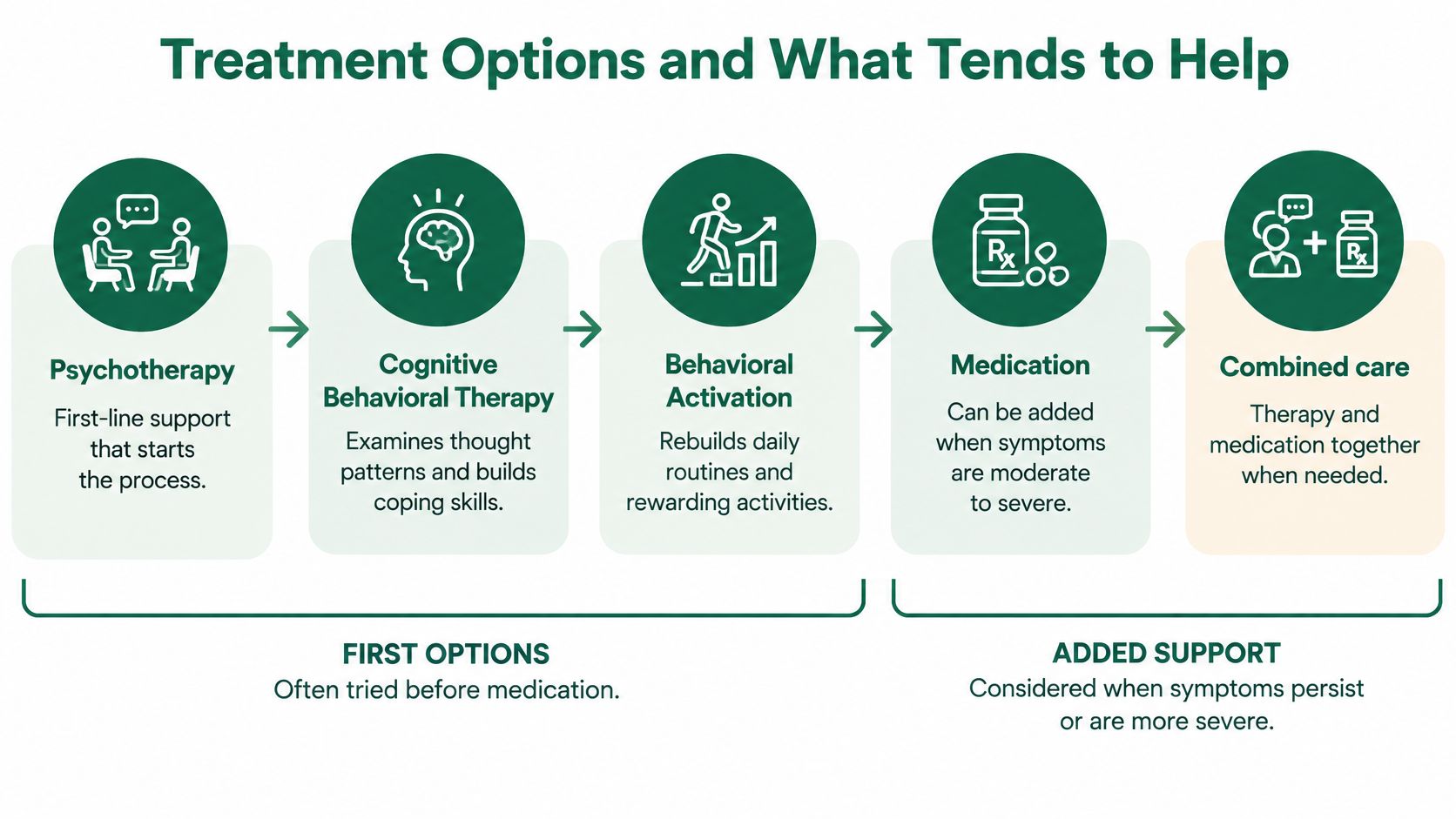
Treatment options include psychotherapy approaches, medication when appropriate, and combined care. Assessment and progress reviews guide the choice rather than a fixed sequence.
Breathing exercises, mindfulness, and gentle yoga can support coping alongside treatment. Regular meals, consistent sleep, manageable movement, and contact with others provide practical foundations, but they aren't substitutes for needed clinical care.
Medication and combined care
A prescriber can evaluate antidepressant options, possible side effects, and interactions. Antidepressants often take several weeks to show their full benefit, and you shouldn't stop them abruptly without prescriber guidance.
Milder symptoms may be addressed initially through psychotherapy and supported routine changes. Moderate to severe depression may call for medication and therapy together, with closer attention to safety and functioning.
Agree on follow-up: Establish a session schedule and a plan-review date with your clinician.
Track useful changes: Record enjoyment, sleep, energy, daily functioning, and side effects.
Discuss substance use: Alcohol and drug use can complicate mood and treatment.
Digital tools may help organize reflections between appointments, but they shouldn't diagnose depression or manage a crisis. ThriveXDNA's discussion of AI mood coaching apps in 2026 can help frame questions about their role and limitations.
At your first appointment, ask what the plan is, how progress will be measured, and when you'll review whether it needs adjusting.
Book a Professional Assessment This Week
You don't need certainty before asking for an assessment. Bring a clear account of what has changed, and let a professional help determine what it means.
Make the first contact manageable
Prepare your symptom log. Add start dates, frequency, and examples of how symptoms affect daily life. Include medications, supplements, and substance use.
Choose a starting point. Primary care is especially useful when physical symptoms dominate. A counselor can assess emotional and daily-life concerns and coordinate with medical care when needed.
Identify the format you need. Our practice offers online counseling, in-person counseling, workshops, group therapy, and workbooks. Ask which service fits your needs and availability.
Use secure contact channels. Don't contact our counselor through social networking messages. Those sites aren't secure, and messages may not be read promptly.
Act on safety concerns immediately. Use crisis or emergency support rather than waiting for a scheduled appointment.
Bring questions as well as symptoms
Jessica DeLeo's focus areas include depression, anxiety, stress and burnout, neurodivergence, entrepreneurs and creatives, women's and maternal mental health, and couples and marriage counseling. Preparing questions for depression therapy can help you discuss fit and goals.
Today, send one scheduling message or book one call, and bring your symptom log to the appointment.
Be Your Best Self & Thrive Counseling, PLLC offers compassionate, individualized counseling for depression, with attention to daily functioning and whole-person wellbeing. Visit Be Your Best Self & Thrive Counseling, PLLC to explore support and request a free initial consultation about your concerns, goals, and next steps.