
What Is Trauma Focused Therapy a Practical Guide
You may be functioning well on the outside while feeling constantly braced on the inside. You get through work, answer messages, and care for the people around you, yet a sudden sound makes your heart race, a relationship conflict feels dangerous, or a quiet moment brings an unwanted memory rushing back. If you're asking what is trauma-focused therapy, you may be trying to understand these reactions in yourself or someone you love.
Trauma-focused therapy is structured care for trauma-related symptoms. It combines safety, practical regulation skills, and carefully guided work with traumatic memories or the beliefs formed around them. It isn't about forcing you to retell everything or talking endlessly without direction. It's about helping your mind and body recognize that the danger has passed, so you can respond to the present with more freedom.
Recognizing When Trauma Is Driving Your Symptoms
Maya looked fine to everyone else. She arrived at work on time, remembered birthdays, and handled ordinary responsibilities. But she checked the door repeatedly before bed, startled when someone walked behind her, and felt strangely numb during conversations with her partner. She knew the original event was over, yet her body kept acting as if it could happen again.
That pattern is common after trauma. A person might feel hypervigilant, emotionally shut down, unusually irritable, anxious in specific situations, or disconnected from their own body. Someone who survived a car crash may avoid driving. Someone who grew up with unpredictable conflict may scan every facial expression for signs of anger. A person affected by betrayal may want closeness and pull away from it at the same time.
Symptoms can be protective and painful
These reactions often began as attempts to survive. Avoidance can keep frightening reminders at a distance. Numbness can reduce emotional overload. Constant monitoring can create a sense of control. The difficulty is that protective responses can continue long after the original threat has ended, limiting work, sleep, relationships, travel, or ordinary enjoyment.
A helpful starting point is noticing patterns without blaming yourself:
Intrusive experiences: Memories, nightmares, sensations, or emotions appear without invitation.
Avoidance: You steer away from people, places, conversations, or feelings connected with what happened.
Body alarms: Your heart, muscles, breathing, or attention react as if danger is present.
Changes in meaning: You may believe you're unsafe, powerless, damaged, or responsible for someone else's actions.
Disconnection: You feel distant from yourself, your relationships, or experiences that once mattered.
A compassionate interpretation: Your symptoms may be understandable survival responses, even when they're now getting in the way of living.
Trauma-informed care creates respect and safety around these experiences. Trauma-focused care goes further by using a specific protocol to address the trauma-related symptoms themselves. Understanding your window of tolerance can also help you recognize when you're able to process difficult material and when you need grounding first.

How Trauma Focused Therapy Actually Works
Trauma can leave a memory connected to intense fear, shame, helplessness, or bodily alarm. Instead of feeling like something that happened in the past, the memory may arrive with the emotional force of the present. Trauma-focused therapy helps you approach that material in a controlled setting, update its meaning, and reconnect it with your current safety.
Think of a wound that has been covered but never cleaned. Protecting it may be necessary at first, but the wound needs appropriate care to heal. Trauma processing is similar in principle. You don't tear the covering away without preparation. You build enough stability to examine what hurts, treat it carefully, and allow the body and mind to recover.
The process has a purpose
A therapist may begin with education and grounding. You might learn to notice sensations, orient to the room, slow your breathing, identify present-day supports, or separate a memory from what is happening now. These skills aren't a substitute for trauma processing when PTSD is the central problem, but they help you stay engaged rather than overwhelmed.
The next phase depends on the approach. Prolonged Exposure asks you to revisit memories and avoided cues gradually and repeatedly. Cognitive Processing Therapy helps you examine beliefs such as “I should have prevented it” or “No one is safe,” then develop interpretations that are more accurate and compassionate. EMDR uses trauma recall with bilateral stimulation while targeting the way the memory is stored and experienced.
Avoidance can provide immediate relief, but it also teaches the brain that the avoided memory, place, or sensation is too dangerous to approach. Structured processing offers a different lesson. With repetition and support, the memory can become less vivid, less threatening, and less likely to control your choices.
Safety remains active throughout the work
A therapist isn't supposed to push you into an unprepared emotional storm. You should understand the treatment rationale, have opportunities to pause, and participate in decisions about pacing. Good trauma therapy balances gentle challenge with reliable support.
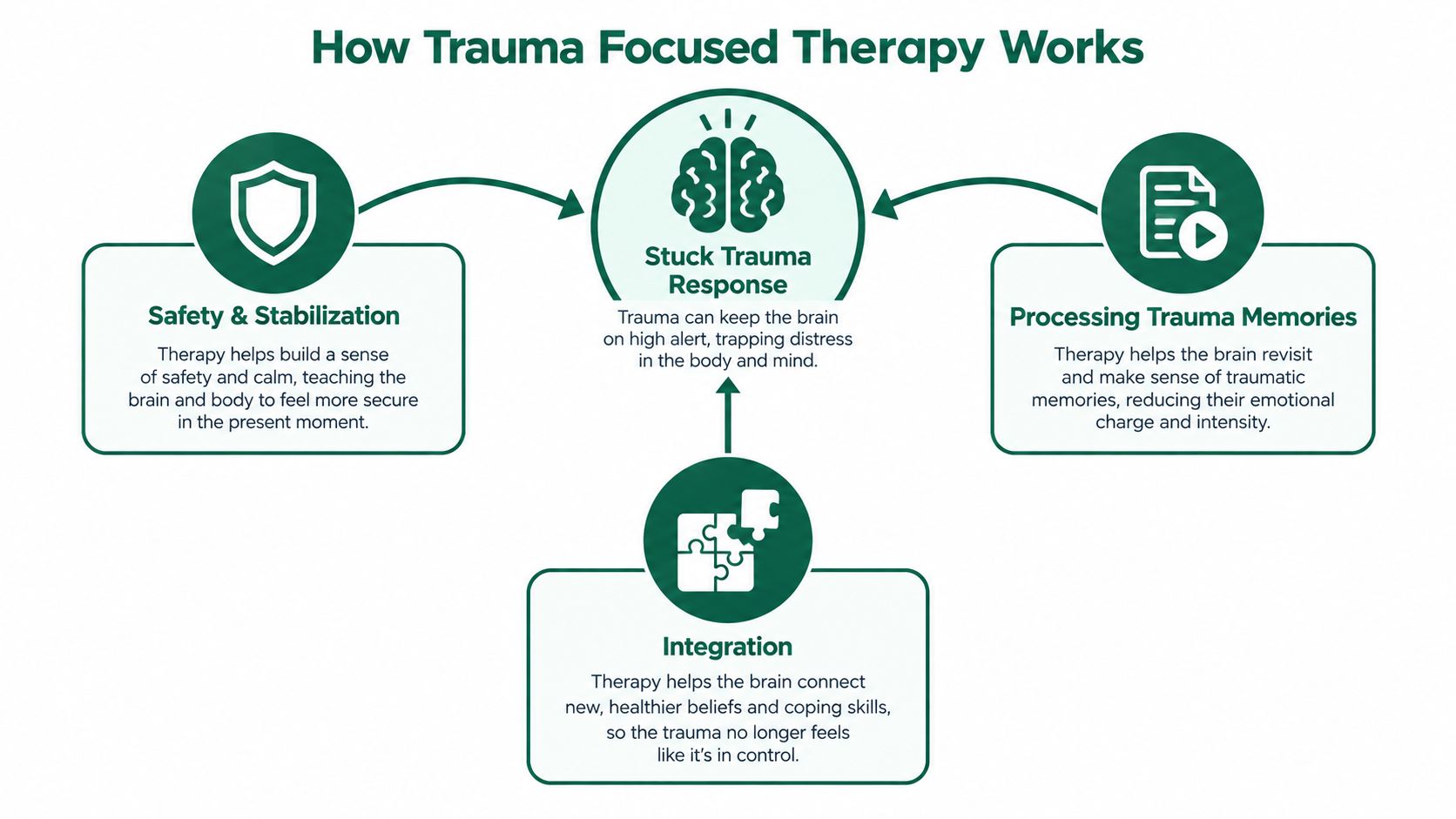
Supportive counseling can help you feel heard and strengthen coping. Trauma-focused therapy adds a direct method for changing trauma symptoms. You can explore nervous system regulation therapy as part of that foundation, while remembering that regulation skills and trauma processing serve different purposes.
Comparing TF-CBT EMDR And Somatic Approaches
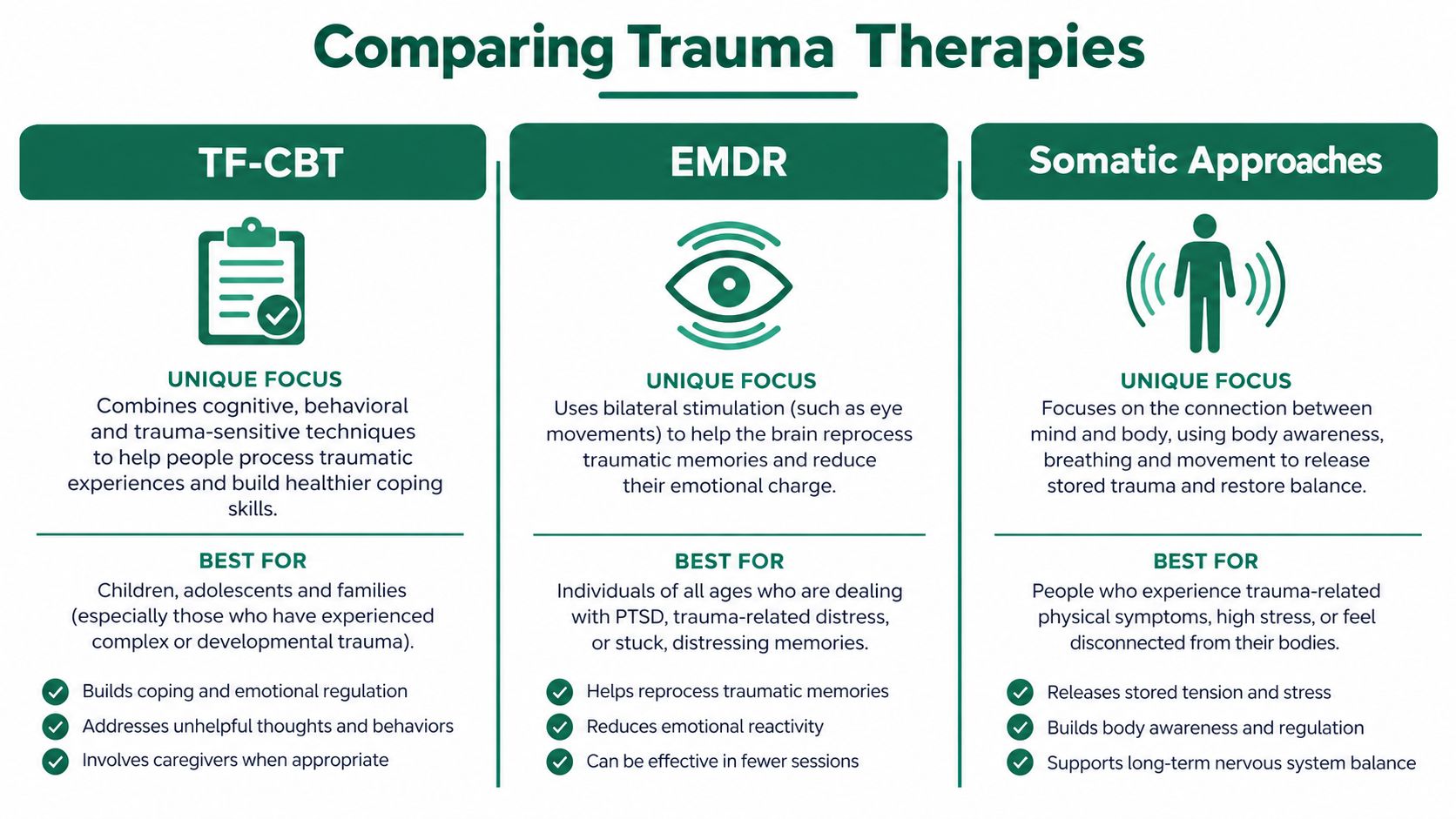
No single modality fits every trauma history. A single-event trauma with a clear beginning and end may call for a different starting point than years of neglect, repeated interpersonal harm, or a history involving dissociation. The right choice depends on your symptoms, age, goals, readiness, and the therapist's training.
TF-CBT offers structure and skills
Trauma-Focused Cognitive Behavioral Therapy, or TF-CBT, is especially associated with children and adolescents, often involving caregivers as part of treatment. It combines education, coping skills, emotional identification, cognitive work, and carefully paced trauma narration. A young person who experienced abuse, a serious accident, or another overwhelming event may benefit from having concrete tools and supportive adults involved.
TF-CBT is more than general CBT with the word trauma added. It directly addresses trauma-related memories and beliefs while helping the client build skills for managing distress. Its evidence base is strongest for PTSD-focused treatment, particularly with younger clients.
EMDR centers on memory reprocessing
Eye Movement Desensitization and Reprocessing, or EMDR, uses bilateral stimulation, such as guided eye movements or alternating taps, while the client attends to selected aspects of a traumatic memory. The therapist helps identify the image, emotion, body sensation, and belief connected with the event, then guides the reprocessing work.
Some adults prefer EMDR because they don't have to describe every detail in a long narrative. Others find the process unfamiliar and need time to understand how it works. A clear explanation of how EMDR therapy works can help you decide what questions to ask during a consultation.
Somatic approaches focus on body experience
Somatic approaches pay close attention to sensations, movement, posture, activation, and patterns of contraction or shutdown. They can be useful for clients whose trauma is difficult to describe verbally, including people with complex, relational, or repeated trauma. A therapist might help you notice the difference between tension that signals present danger and tension linked to an old protective response.
Somatic work can support stabilization and integration, but it shouldn't automatically be treated as a replacement for PTSD-specific protocols when trauma symptoms require direct treatment. The broader evidence base is strongest for approaches such as PE, CPT, and EMDR, while complex trauma often requires individualized sequencing.
Ask a prospective therapist:
Which trauma protocols do you use? Look for a clear answer rather than a general statement that they “work with trauma.”
How do you assess readiness? The therapist should explain how they decide whether to begin stabilization, processing, or both.
How do you adapt treatment? Complex histories may require attention to relationships, dissociation, grief, identity, and present-day safety.
How do you track progress? Your sleep, avoidance, functioning, emotional range, and trauma symptoms should inform treatment decisions.
What The Research Shows About Effectiveness
Trauma-focused therapy has a substantial evidence base in PTSD treatment. In a major review, Prolonged Exposure outperformed 86% of control-condition patients on PTSD symptoms at the end of treatment. Another review reported that 41% to 95% of PE participants no longer met PTSD diagnostic criteria after treatment. These findings show that structured trauma processing can produce meaningful change, not merely short-term emotional relief. The review of trauma-focused treatments also presents outcomes across different populations and treatment formats.
The figures don't mean every person will respond in the same way. Treatment outcome depends on factors such as the nature and duration of the trauma, current safety, other mental health concerns, therapeutic fit, and the ability to remain engaged with the work. A strong evidence base gives people a reason for hope, not a promise of identical results.
Military and chronic trauma require nuance
In military samples, trauma-focused approaches such as Cognitive Processing Therapy and Prolonged Exposure showed meaningful benefit, with 49% to 70% of patients achieving clinically meaningful symptom improvement. At the same time, 60% to 72% retained the diagnosis after treatment, according to the same review.
That combination matters. People can experience substantial improvement while still meeting diagnostic criteria. Severe, chronic, or repeated trauma may affect sleep, relationships, identity, physical health, and emotional regulation in ways that require ongoing, individualized care. Retaining a diagnosis doesn't erase progress, and improvement doesn't mean every difficulty has disappeared.
Research also supports TF-CBT. A review described its evidence base as resting on 10 randomized controlled trials, including 3 independent studies, and concluded that the research met a high level of evidence. A later systematic review of 28 randomized controlled trials and 33 uncontrolled studies involving 4,523 participants found large pre-post improvements in pediatric post-traumatic stress symptoms, with g = 1.14, and favorable results compared with control conditions, with g = 0.52. These findings are summarized in the research on TF-CBT evidence.
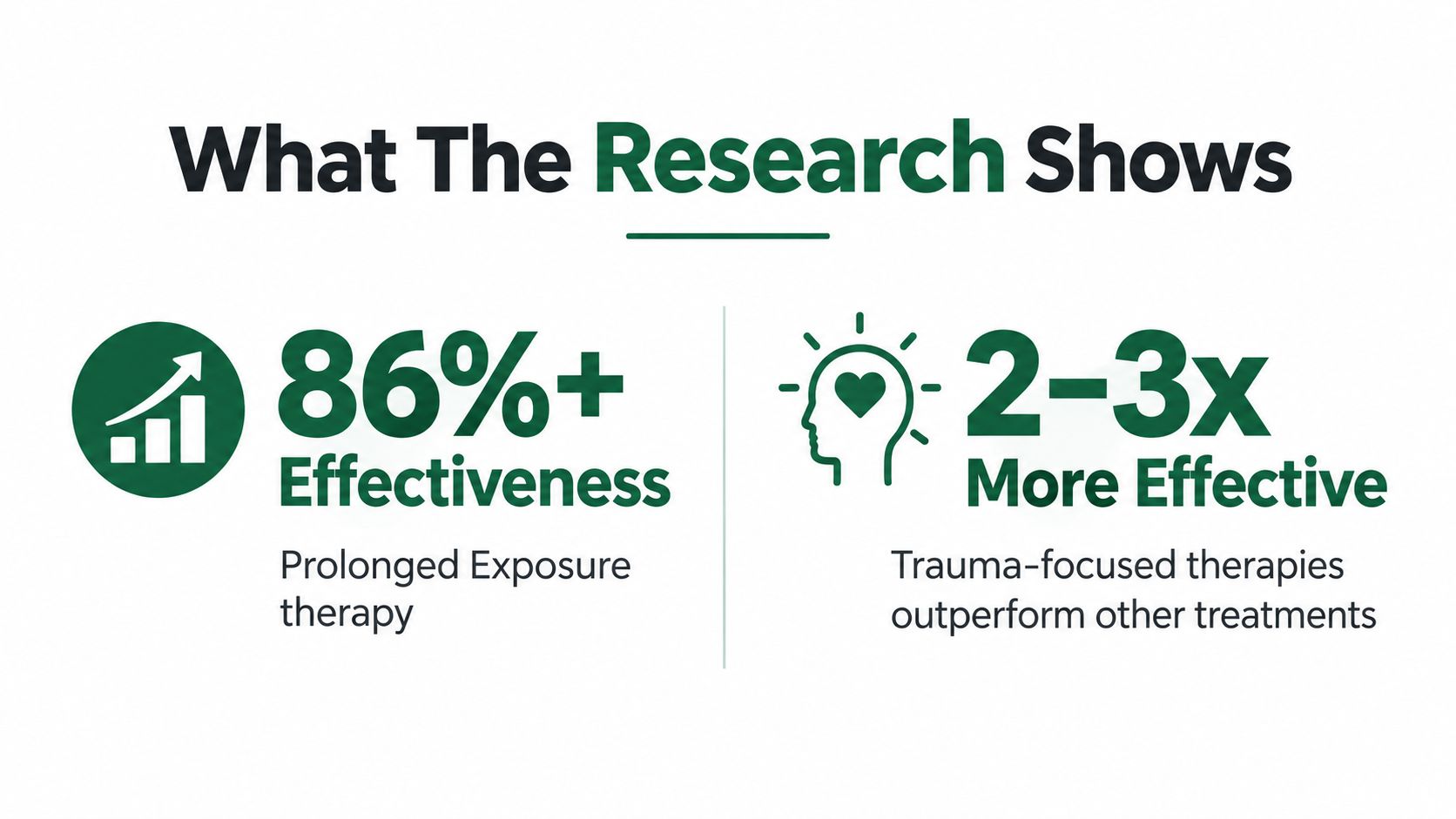
The central conclusion is measured and encouraging: evidence-based trauma-focused treatments help many people, while complex presentations deserve careful assessment rather than a one-size-fits-all promise. Reviews continue to support trauma-focused care as frontline treatment, alongside emerging evidence for individual, group, and remotely delivered formats. The current evidence discussion reflects why modality and treatment sequence matter.
What To Expect In A Typical Session
A trauma-focused session usually begins with a check-in. You and your therapist may discuss sleep, mood, body sensations, recent triggers, safety, and what you need from that appointment. This gives the therapist information about whether to focus on grounding, education, skills practice, or trauma processing.
You may then work with the treatment method selected for you. That could involve identifying a trauma-related belief, listening to a memory in a controlled way, practicing an exposure exercise, using bilateral stimulation, or tracking what happens in your body as you approach difficult material. You should know why you're doing the exercise and how to signal that you need to slow down.
Pacing is collaborative
Trauma therapy is not a test of how much pain you can tolerate. The therapist's role is to support effective engagement without pushing you beyond your capacity to remain present. You can ask for clarification, request a pause, name confusion, or discuss a different pace.
Some sessions may feel emotionally demanding. Others may focus almost entirely on stabilization, relationships, sleep, boundaries, or daily functioning. Progress isn't measured by how intensely you react. It's measured through changes such as fewer avoidance patterns, greater emotional flexibility, improved functioning, and a growing sense that memories belong to the past.
Sessions close with steadiness
A therapist should help you transition out of difficult work before the session ends. You might orient to the room, use breathing or sensory grounding, review support plans, or identify what you'll do after leaving. Confidentiality and its legal limits should be explained clearly at the beginning of care.
Treatment length varies because trauma histories and goals vary. Ask how the therapist monitors symptoms and decides whether to continue, adjust, or conclude treatment. Reading about what to expect in a first therapy session can make the first appointment feel less unknown.
Taking The Next Step Toward Healing
Trauma-focused therapy isn't one-size-fits-all. A single-event trauma may fit a direct protocol such as PE, CPT, EMDR, or TF-CBT, while complex or relational trauma may require a longer foundation of safety, body awareness, trust, and carefully sequenced processing. Your therapist should be able to explain the reasoning behind that plan.
Start with a consultation. Ask about trauma-specific training, experience with your type of trauma, how the therapist handles dissociation or overwhelm, and how progress will be reviewed. Notice whether you feel respected, informed, and able to make choices. A trauma-informed therapist should take your history seriously without treating you as fragile or defined by what happened.
Whole-person support can complement therapy through sleep care, movement, supportive relationships, spiritual practices, creative expression, and daily regulation habits. These practices don't replace evidence-based trauma processing, but they can help create the stability from which deeper healing becomes possible.
Be Your Best Self & Thrive Counseling, PLLC offers individual and couples counseling for trauma, anxiety, depression, stress, and life transitions through an evidence-informed, mind-body-spirit approach. Visit Be Your Best Self & Thrive Counseling, PLLC to explore therapy options and schedule a free initial consultation about your goals and fit.