
10 Mental Health Coping Skills That Work in 2026
Your chest tightens before a difficult conversation with your partner. You rehearse what to say, then worry about how they'll respond. Later, your mind is still restless at bedtime, even though you're exhausted.
You don't need the same response in both moments. Before the conversation, breathing or grounding may help you pause instead of reacting. At night, a written worry list and a predictable wind-down routine may be more useful than trying harder to relax.
Mental health coping skills work best when you match them to what's happening, rather than expecting a favorite technique to solve everything. Some help you through an immediate spike. Others require regular practice or help you change the habits and circumstances that keep distress going.
During a spike: Try gentle breathing, sensory grounding, or muscle relaxation.
During a daily routine: Build movement, mindfulness, sleep habits, and meaningful activity.
During conflict or reflection: Use balanced thinking, writing, and supportive connection.
Your preferences, physical health, culture, and access to privacy matter. So does whether you're practicing alone, alongside a partner, or with a clinician. If spiritual reflection helps you find hope amid anxiety and depression, it can complement practical skills without replacing needed treatment.
The useful question isn't whether you can make every uncomfortable feeling disappear. It's whether a skill helps you stay present, make a workable choice, or recover without creating another problem.
1. Diaphragmatic Breathing
Most useful when your stress feels physical, such as before a difficult conversation or between demanding appointments.
Diaphragmatic breathing, sometimes called belly breathing, involves allowing your abdomen to rise gently as you inhale and fall as you exhale. You're aiming for an easy, slower rhythm, not the biggest breath you can take. Forcing deep breaths can feel uncomfortable and make you more preoccupied with breathing.
The National Institute of Mental Health's stress guidance includes deep breathing among practical relaxation strategies and emphasizes that finding suitable coping methods can take trial and error.
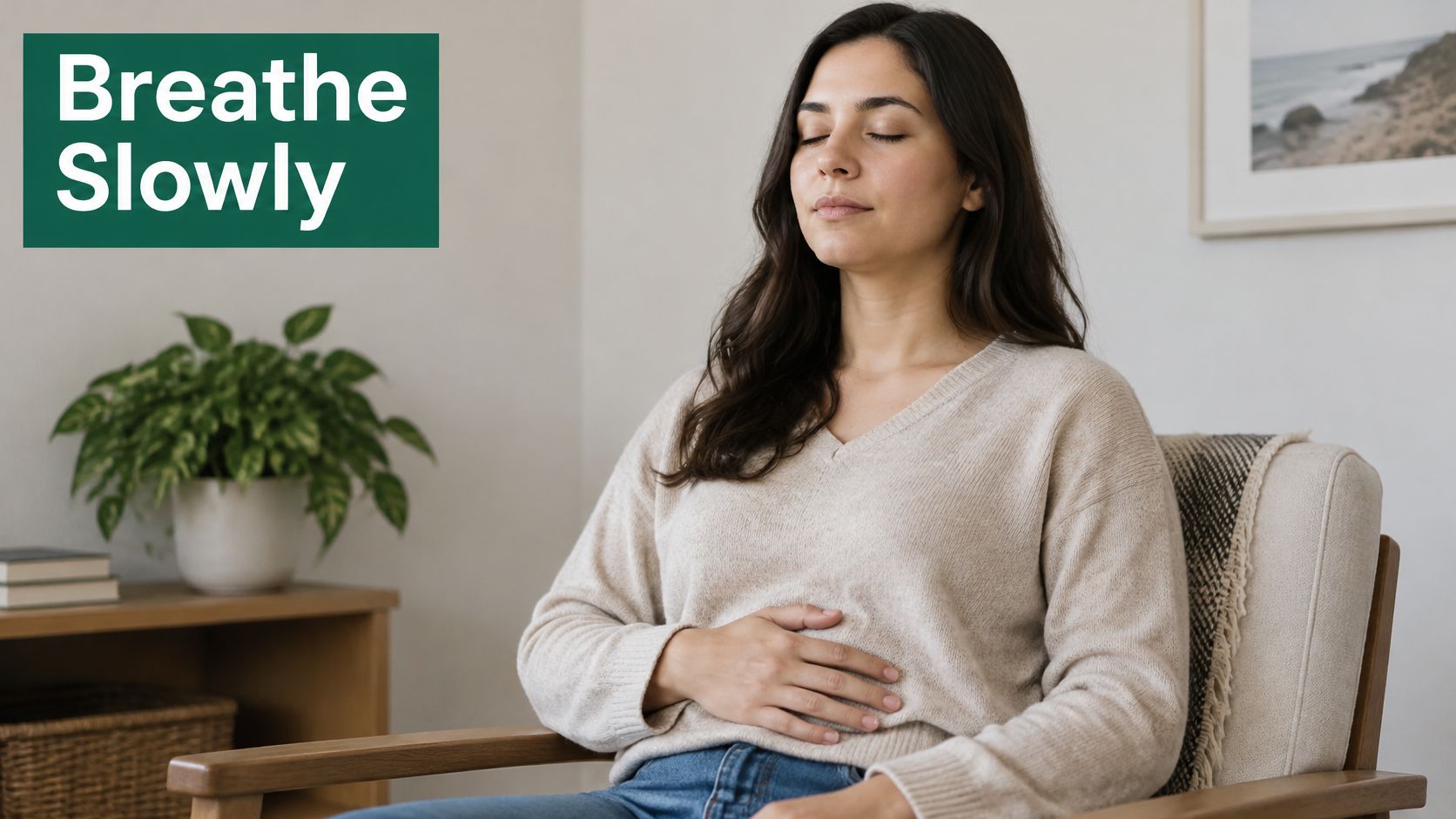
Caption: A supported seated position can make gentle breathing easier to practice.
Make the breath comfortable first
Rest a hand on your belly and another on your chest. Let your lower ribs and abdomen move naturally, then allow a soft, unhurried exhale. Skip breath holds, and return to ordinary breathing if you feel dizzy or increasingly anxious.
For individuals: Practice during a calm transition, such as after closing your laptop, before relying on it during panic.
For couples: Take a breathing pause before discussing the issue, but don't instruct an upset partner to calm down.
For clinicians: Offer visual pacing or an external sound if internal sensations feel overwhelming, particularly for trauma-sensitive or neurodivergent clients.
Say you're about to raise a concern about household responsibilities. Breathe gently before speaking, then state the concern directly. Breathing supports the conversation; it doesn't replace it.
2. Mindfulness Meditation
You sit down to meditate and immediately remember an unanswered email. Then you start judging yourself for getting distracted. That return from distraction, without scolding yourself, is part of mindfulness practice.
Most useful during a daily routine, mindfulness involves noticing present experiences without immediately arguing with them or acting on them. Choose an anchor such as your feet on the floor, nearby sounds, or your hands resting in your lap. When attention wanders, notice that and return.
A systematic review of mobile mindfulness interventions found improvement in at least one well-being measure in 68% of the included trials, but participation varied substantially. That supports cautious experimentation, not a promise that downloading an app will resolve distress.

Caption: Mindful attention can involve noticing the room around you rather than closing your eyes.
Choose an anchor you can tolerate
Structured approaches such as mindfulness-based stress reduction provide more guidance than being told to stay present. Still, a formal program isn't the only way to begin.
For individuals, try noticing sounds while your morning drink cools. Couples can practice listening without planning a rebuttal, then summarize what they heard before responding.
Clinicians should ask what happened during practice, not just whether someone completed it. If inward attention increases distress, use eyes-open practice, movement, or an external anchor. Staying with overwhelming sensations isn't a requirement for doing mindfulness correctly.
3. Grounding Techniques
Most useful when you feel flooded, panicky, disconnected, or pulled into a distressing memory, grounding redirects attention toward your current surroundings. Unlike meditation, it can be deliberately concrete and outward-facing.
At work, you might notice the pressure of your shoes against the floor, describe the color of your desk, and read the words on a nearby sign. The task isn't to persuade yourself that nothing is wrong. It's to become oriented enough to decide what to do next.
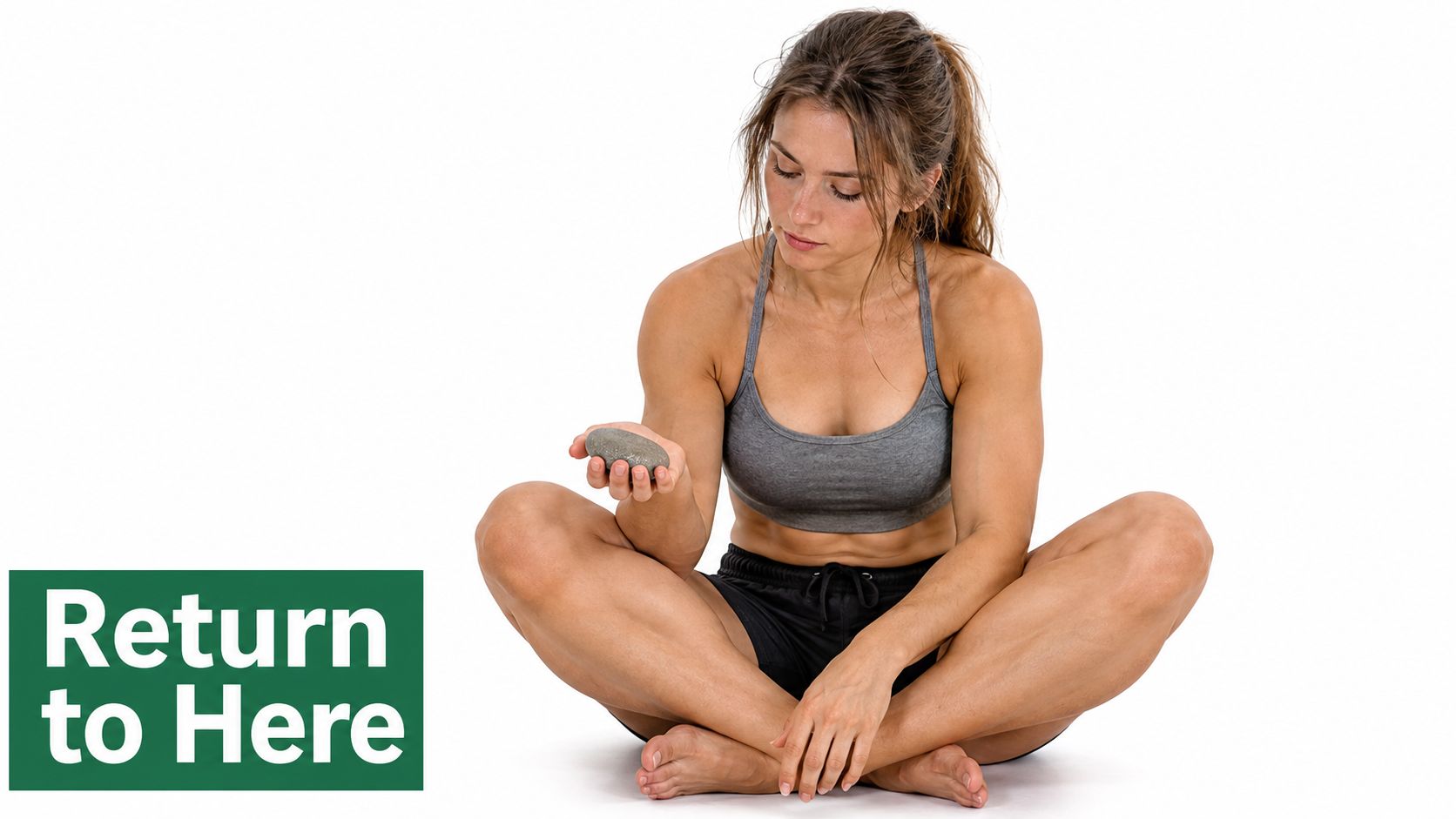
Caption: A smooth stone offers a portable sensory anchor when attention feels scattered.
Use details, not vague reassurance
Try describing an object's temperature, texture, weight, and edges. A sensory scan can also help: notice things you can see, feel, hear, smell, and taste, without treating completion as a test.
For individuals: Keep a familiar object accessible, but choose a neutral texture rather than an intense sensation.
For couples: Pause a heated exchange and orient separately. Agree on when you'll return so the pause doesn't become indefinite avoidance.
For clinicians: Offer choices and ask permission before directing attention toward the body. Don't assume touch, strong scents, or closed eyes feel safe.
Grounding helps you locate yourself in the present. It shouldn't be used to convince you to tolerate an unsafe situation.
If disconnection is frequent, frightening, or affects your awareness of what's happening, seek professional assessment rather than relying only on a pocket object.
4. Progressive Muscle Relaxation
Your workday is over, but your shoulders remain lifted and your jaw is clenched. Progressive muscle relaxation fits moments when physical tension lingers, especially during a lunch break or bedtime transition.
The method involves gently tightening and releasing muscle groups in sequence. The contrast helps you notice where you're holding tension. You can move from your feet upward, or use a shortened seated version focused on hands, shoulders, and face.
Practice release without straining
Settle into a supported position. Gently tense an uninjured muscle group, release it fully, and notice the difference before moving on. Keep breathing normally rather than holding your breath through the effort.
Skip painful, injured, or recently treated areas. You can also leave out the tightening step and invite each area to soften. A recorded guide may be easier than remembering a sequence when you're tired.
For individuals, this can provide a clear stopping ritual after work. For couples, practicing side by side can create a quiet transition before discussing logistics, provided neither partner feels monitored.
Clinicians can adapt the sequence for chronic pain, disability, sensory sensitivity, or discomfort with body-focused exercises. Ask whether the person feels more settled afterward, not whether they performed every step.
The trade-off is attention: some people appreciate a structured body exercise, while others find it frustrating or activating. Persistent pain, unexplained symptoms, or ongoing sleep difficulty deserve assessment. Relaxation is a coping tool, not a diagnosis or a complete treatment plan.
5. Cognitive Restructuring
A missed deadline becomes evidence that you're incompetent. A distracted partner becomes proof that they no longer care. Cognitive restructuring is most useful once you're settled enough to examine the interpretation, rather than during peak distress.
This cognitive behavioral therapy skill involves identifying a thought, examining the evidence, and developing a more balanced response. The National Institute of Mental Health's psychotherapy overview describes how therapy can teach coping and problem-solving strategies alongside mindfulness and relaxation methods.
A balanced thought isn't necessarily cheerful. After missing a deadline, it might acknowledge a real mistake while separating that mistake from your entire identity.
Separate the event from the conclusion
Write down what happened, what you told yourself it meant, and what information supports or challenges that conclusion. Then identify an action, such as updating your manager or clarifying an expectation.
For individuals: Start with a recurring pattern from these examples of negative self-talk, rather than analyzing every thought.
For couples: Check mind-reading through direct questions. A partner's silence might mean fatigue, frustration, distraction, or something else.
For clinicians: Validate the emotion before examining the thought, and account for discrimination, instability, and other real threats.
Practical distinction: A balanced thought makes room for facts. Positive thinking can become another way to dismiss them.
Don't use reframing to explain away mistreatment. Sometimes the accurate conclusion is that a boundary, repair, or practical change is needed.
6. Behavioral Activation
Most useful when low mood or burnout leaves you waiting to feel motivated, behavioral activation means planning manageable actions connected to care, enjoyment, responsibility, or meaning.
Say you've stopped replying to friends and your apartment feels impossible to manage. A realistic start could be clearing the chair beside your bed and sending a brief message to someone you trust. Completing a small action matters more than designing an impressive recovery schedule.
Lower the starting cost
Choose something specific enough that you'll know when it's done. Preparing a snack is clearer than taking better care of yourself. Stepping outside is more accessible than overhauling your fitness.
For individuals: Mix necessary tasks with something pleasant or meaningful. Don't make your plan entirely about productivity.
For couples: Offer companionship without taking over. Ask whether your partner wants company, practical help, or space.
For clinicians: Explore barriers before calling a missed task avoidance. Pain, executive-function difficulty, money, and caregiving responsibilities can change what's feasible.
A review of digital mental-health interventions in low- and middle-income countries identified unresolved issues involving usability, cultural adaptation, privacy, structural barriers, and the digital divide. The practical lesson extends beyond digital tools: a plan must fit the person's actual circumstances.
For ADHD, a visible reminder and an obvious starting cue may help more than another written intention. If even basic care feels unmanageable, reduce the task and seek support. Behavioral activation isn't a demand to push through exhaustion or treat depression as laziness.
7. Regular Physical Exercise
A walk around the block counts. So does stretching beside your desk, swimming laps, or gentle yoga in your living room. Most useful as a repeatable daily habit, movement works best when it fits your mobility, health, and schedule instead of an idealized routine.
The National Institute of Mental Health's self-care guidance says 30 minutes of walking each day can boost mood and improve health, and notes that shorter periods still add up. A day interrupted by weather, pain, or low energy is a reason to adapt the plan, not abandon it.
Someone in St. Petersburg might pick the Pinellas Trail or a waterfront path on a clear morning. On a stormy or draining day, an indoor option is more realistic. Flexibility is the habit.
Make repetition easier than avoidance
Choose an activity you enjoy enough to repeat, then set realistic goals for consistent training. Keep a lower-effort version ready for days when energy, weather, or symptoms interfere. Ten minutes of stretching still counts.
For an individual, the lowest-barrier start might be putting on walking shoes or doing a short routine beside a chair. For a couple, a side-by-side walk can feel less loaded than another face-to-face talk. For a clinician, the assessment comes first: ask about pain, exercise access, compulsive exercise, and whether performance goals feed shame. Movement should support coping, not become another measure of personal worth.
The useful plan is the one you can adapt without punishing yourself. Exercise supports coping skills; it doesn't replace treatment for persistent depression or anxiety, and rest remains part of caring for your health.
8. Sleep Hygiene and Consistent Sleep Routines
Most useful when evening rumination and irregular routines leave you depleted, sleep habits create a more predictable transition toward rest. They aren't a way to force yourself unconscious.
The World Health Organization's stress-management guidance recommends regular sleep and wake times, relaxation, physical activity, and limiting substances that impair sleep. Begin with the part of your evening you can influence, such as ending work or preparing tomorrow's essentials.
Separate winding down from solving problems
Set a work shutdown cue and write down unfinished tasks before leaving them. If worries follow you into bed, these approaches to helping anxiety at night can support a calmer transition.
Technology boundaries should be specific rather than absolute. The World Health Organization's digital-mental-health evidence review describes both beneficial and harmful effects of digital activity and recommends person-centered approaches rather than blanket restrictions.
For individuals: Notice whether a particular app leaves you connected, activated, or stuck checking. Preserve useful access while changing the disruptive habit.
For couples: Negotiate light, sound, temperature, and device use without treating different sleep needs as rejection.
For clinicians: Explore shift work, caregiving, sensory needs, trauma symptoms, and possible medical contributors before prescribing a rigid routine.
Blackout curtains or a comfortable sound environment may help some people. Others need a different adjustment. Persistent insomnia deserves targeted care, not an ever-longer list of bedtime rules.
9. Expressive Journaling
After a difficult conversation, you may know you're upset without knowing whether you feel hurt, ashamed, angry, or afraid. Journaling is most useful when you need space to name an experience before deciding what it means.
Write plainly about what happened, what you felt, and what you need now. You don't need polished sentences, a beautiful notebook, or an account of every detail. A private document, paper page, or accessible alternative can be enough.
End with orientation, not endless analysis
Useful journaling for mental health creates room for reflection without requiring you to revisit painful material beyond what feels manageable. Try prompts such as identifying the strongest feeling, separating facts from assumptions, and naming a next step.
Writing is useful when it helps you understand or contain an experience. Repeating the same accusation against yourself isn't a requirement for processing it.
For individuals, close the entry by looking around the room, stretching, or choosing a practical action. If writing increases distress, shorten it, switch to neutral observations, or stop.
Couples can write separately about unmet needs before talking. Share only what each person chooses, and don't use a partner's private journal as evidence in an argument.
Clinicians can offer drawing, brief notes, or spoken reflection when writing is inaccessible. Consider literacy, privacy, cultural fit, and whether a device is shared.
Journaling isn't a substitute for safety planning or trauma treatment. If it repeatedly leaves you overwhelmed, bring that response into therapy rather than assuming more emotional detail will help.
10. Building Supportive Social Connection
Most useful when you're carrying distress alone, connection means finding relationships where you can receive understanding, practical help, or companionship. It doesn't mean attending every gathering or telling everyone your personal history.
A quiet call, a shared errand, or a structured activity can be more manageable than an open-ended social event. Understanding loneliness versus solitude can help you distinguish restorative time alone from unwanted disconnection.

Caption: Writing down what you need can make reaching out feel more concrete.
Ask for a kind of support
Tell someone whether you want listening, advice, company, or practical assistance. A specific invitation is easier to respond to than a general statement that you should spend more time together.
For individuals: Choose a low-pressure setting with a clear purpose, especially if unstructured interaction feels draining.
For couples: Maintain supportive relationships beyond the partnership. A partner can matter a great deal without meeting every emotional need.
For clinicians: Help identify safe, accessible connection rather than assuming family or existing relationships are supportive.
Community groups, volunteering, and classes around Tampa Bay offer possible starting points. If music and movement appeal to you, you might ease stress with social dancing while choosing a beginner-friendly environment and your own participation limits.
Connection requires discernment. More contact isn't automatically better if the relationship leaves you belittled, pressured, or unsafe.
How the 10 Mental Health Coping Skills Compare
Item | Time Needed | Best Used For | Practice Setting |
|---|---|---|---|
Diaphragmatic Breathing | 5–10 minutes; brief use as needed | Stress and anxiety spikes | Anywhere, including before a difficult conversation or between appointments |
Mindfulness Meditation | Start with 5 minutes; practice regularly | Stress, anxiety, and noticing emotional patterns | Sitting practice or daily activities; at home or in a group program |
Grounding Techniques | 1–3 minutes | Acute distress, panic, flashbacks, or dissociation | Anywhere, including public settings |
Progressive Muscle Relaxation | 10–20 minutes for a full sequence | Muscle tension, stress, and sleep difficulties | Lying down, seated, or in bed |
Cognitive Restructuring | Ongoing practice; one thought record daily is suggested | Worry, self-criticism, and unhelpful thought patterns | Therapy, at home, or while navigating work and relationship challenges |
Behavioral Activation | Short activities of 5–15 minutes to start | Depression, low motivation, and avoidance | Scheduled into daily or weekly routines |
Regular Physical Exercise | Build toward about 150 minutes per week | Mood, anxiety, stress resilience, and sleep | Alone, with a partner, or in a group |
Sleep Hygiene and Consistent Sleep Routines | Ongoing daily routine | Emotional regulation and sleep support | Bedroom and evening routine |
Expressive Journaling | 10–20 minutes per session | Emotional processing, reflection, and recognizing patterns | Private writing at home or between appointments |
Building Supportive Social Connection | Ongoing; regular small interactions | Reducing isolation and strengthening support | Friendships, family, community, or peer-support settings |
Building Your Personal Coping Toolkit, Starting With One Skill
Choose a skill to practice over the next seven days, matched to the stress pattern you encounter most often. If you become physically tense before conversations, try breathing or grounding. If you withdraw when your mood drops, choose a manageable meaningful activity. If you replay interactions at bedtime, experiment with a written worry list before your wind-down routine.
Keep the experiment modest. You're learning what fits, not taking a test of commitment. Practice in an ordinary moment as well as a difficult one, so the technique becomes familiar without requiring you to perform it perfectly under pressure.
Track usefulness rather than perfection
A short note after practice can reveal whether the skill is practical and tolerable. Pay attention to function as well as feelings, because progress may mean making a clear request while still feeling nervous.
Notice the situation: Record what was happening and what you needed.
Notice the response: Did the skill help you pause, orient, act, or recover?
Notice the cost: Did it feel manageable, frustrating, exhausting, or activating?
Choose an adjustment: Make it shorter, change the anchor, or try a different approach.
Accountability can help, especially with self-guided tools. A systematic review of web-based mindfulness studies found mean participant compliance of 56%, reinforcing why access to an exercise isn't the same as sustained practice.
For couples, agree that skills are invitations, not commands. A pause should include a plan to reconnect, and breathing shouldn't become a way to silence a legitimate concern. Clinicians can collaboratively review what someone experienced and adapt the practice instead of repeatedly assigning the same exercise.
Recognize when self-help needs support
Persistent symptoms, trauma responses, or recurring relationship conflict often benefit from individualized care. Seek assessment when distress interferes with sleep, work, basic care, or relationships, or when practicing alone repeatedly makes things worse. If you're in immediate danger or unable to stay safe, contact emergency services or go to an emergency department rather than waiting for a routine consultation.
You can explore your goals through a free initial consultation with Be Your Best Self & Thrive Counseling. Clinicians interested in integrating these approaches into practice can also explore the BYBS Training Institute, which provides experiential education, online courses, and group consultation.
You don't need to master every mental health coping skill. Start with a tolerable practice, notice its effect, and get support when the next step is difficult to identify alone.
Be Your Best Self & Thrive Counseling, PLLC offers individual and couples counseling that combines practical coping tools with personalized, mind-body-spirit care. Visit Be Your Best Self & Thrive Counseling, PLLC to request a free initial consultation and explore which skills fit your stress patterns, relationships, and goals.