
CPTSD vs PTSD: Key Differences, Symptoms and Treatment
Does a CPTSD diagnosis really require years of childhood abuse, or can one terrible night in adulthood produce the same pattern?
That question sits beneath most conversations about CPTSD vs PTSD, and the honest answer surprises people. The international definition that created the diagnosis in the first place doesn't require any particular kind of trauma. What separates the two conditions isn't how bad the event was. It's whether three specific areas of functioning, emotion regulation, self-concept and relationships, have been persistently disrupted alongside the trauma symptoms.
Two rulebooks are in play. The DSM-5, used across the United States, recognizes PTSD and does not list CPTSD as a separate diagnosis. The ICD-11, used internationally and heavily in research, recognizes both. Which system your clinician works from shapes the label you walk out with.
Only a qualified mental health professional makes either diagnosis. A checklist is a starting point for a conversation, never a substitute for an assessment.
Why CPTSD and PTSD Are Often Confused
Why do PTSD and CPTSD sometimes look like competing labels for the same experience? They share a central set of trauma-related symptoms, so the distinction can be easy to miss. A useful analogy is overlapping circles: both conditions involve the PTSD symptom pattern, while CPTSD also includes broader difficulties in how a person relates to themselves and others.
One U.S. study using DSM-5 criteria drew on data from more than 36,000 adults surveyed in 2012–2013 and estimated that about 6% had experienced PTSD during their lifetime, or roughly 6 in 100 adults (National Center for Biotechnology Information's study of PTSD prevalence). That estimate describes PTSD under one diagnostic system; it does not tell us how many people meet ICD-11 criteria for CPTSD.
ICD-11-based research suggests CPTSD prevalence can be comparable to, or higher than, PTSD prevalence, depending on the population and assessment method. Those findings do not establish a single rate that applies everywhere. Estimates can vary with who is studied, the trauma experiences considered, the assessment tool, and the time period.
The shared symptoms help explain why the diagnoses are often confused. The difference lies in the pattern around them: PTSD centers on trauma symptoms, while CPTSD includes those symptoms along with difficulties in areas such as emotional regulation, self-concept, and relationships. Neither label is a measure of how severe the trauma was.
A clinician considers the diagnostic system, the person's symptoms, and their effects on daily life. A comparison chart can clarify the terms, but it cannot determine which diagnosis fits an individual.
CPTSD vs PTSD at a Glance
Table 1. PTSD and CPTSD criteria compared
Feature | PTSD | CPTSD |
|---|---|---|
Recognition | Recognized in DSM-5 and ICD-11 | Separate diagnosis in ICD-11 since 2018; not separate in DSM-5 |
Core symptom clusters | Re-experiencing the trauma, avoidance of reminders, persistent sense of current threat | All three PTSD clusters plus the three self-organization domains |
Self-organization domains | Not required | Difficulty regulating emotions, persistently negative self-concept, ongoing relational difficulties |
Trauma type required | DSM-5 requires a specified exposure to death, serious injury or sexual violence | ICD-11 does not require a specific trauma type |
Relationship between diagnoses | Diagnosed on its own | In ICD-11, given instead of PTSD rather than alongside it |
Functional impairment | Clinically significant distress or impairment required | Meaningful impairment in functioning required |
Typical clinical focus | Trauma memories, avoidance and threat responses | Emotion regulation, self-concept and relationships alongside trauma symptoms |
Read the rows as diagnostic criteria, not as a severity ladder. A person can meet the CPTSD pattern after a single event, and a person can meet PTSD criteria after years of harm without ever crossing into the self-organization domains.
The Two Rows Readers Misread
The first is recognition. People assume that because CPTSD isn't in the DSM-5, it isn't real in the United States. In practice, a U.S. clinician working from DSM-5 documents PTSD and describes the emotion-regulation, identity, dissociation or interpersonal features in the clinical picture. The distress gets recorded; only the label differs.
The second is the relationship between diagnoses. ICD-11 treats the two as alternatives, so the assessment produces one or the other, not both stacked together. That single rule explains why two people with similar symptoms can walk away with different paperwork depending on where they were assessed.
CPTSD is not simply more severe PTSD. It's a pattern with additional, persistent disturbances in emotion regulation, self-concept and relationships layered on the trauma symptoms.
Use the table the way you'd use a map legend. Find the row that matches the concern you're carrying, then read the section that explains it. A match tells you what to ask about, nothing more.
Symptoms That Set CPTSD Apart from PTSD
The shared core comes first. Intrusive memories, flashbacks and nightmares bring the event back as though it were happening now. Avoidance steers you away from people, places, conversations and feelings that carry the memory. A persistent sense of current threat keeps the body braced, with hypervigilance, an exaggerated startle response and sleep that never fully settles.
ICD-11 calls the three additions disturbances in self-organization, and the distinction became formal in 2018, when the World Health Organization's 11th revision of the International Classification of Diseases recognized CPTSD as a separate diagnosis alongside PTSD (U.S. Department of Veterans Affairs National Center for PTSD).
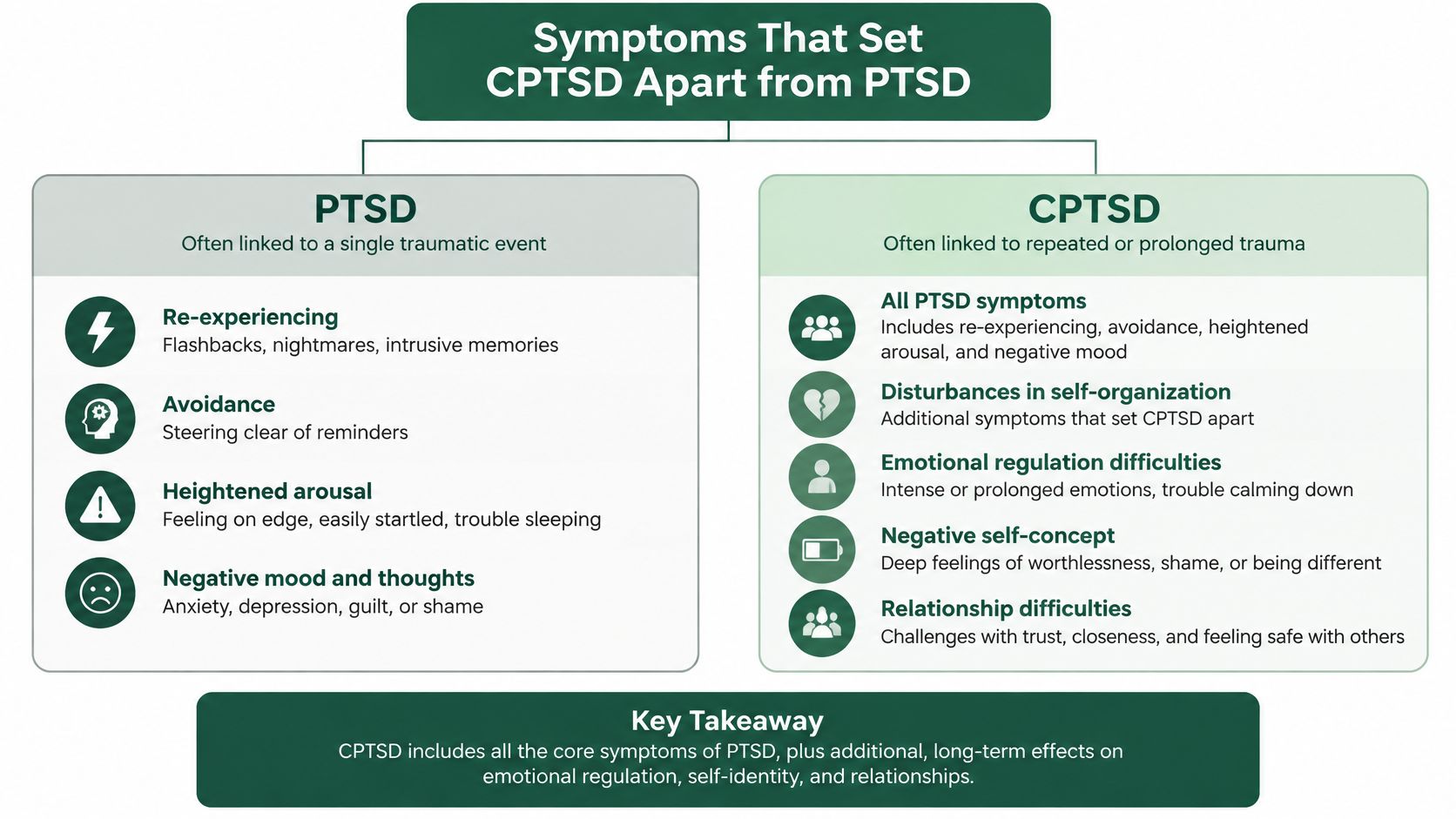
Figure 1. The shared PTSD core sits at the base, with the three self-organization domains layered above it.
What Each Domain Looks Like in Daily Life
Affect dysregulation. Anger arrives fast and overshoots the situation, or sadness settles in for days with no clear trigger. Numbness counts too, especially when it flattens whole weeks.
A persistently negative self-concept. Shame that outlasts the event, a settled belief of being worthless or permanently damaged, guilt that doesn't ease when someone reassures you.
Relational difficulty. Trouble staying close, withdrawing after any conflict, or distrust that persists even when the other person has given no reason for it.
The window of tolerance explained frame helps here: it describes the band where you can feel emotion without flooding or shutting down, and that's precisely the band affect dysregulation narrows. Sleep and daily stress routines shape the same band, and stress regulation advice for shift workers covers grounding and wind-down practices that translate well into trauma recovery work.
ICD-11 requires at least one symptom from each of the three domains, plus meaningful impairment in functioning, before CPTSD applies. One item on a checklist proves nothing on its own.
A Pattern Worth Describing Out Loud
Someone with nightmares who also describes years of shame and repeated breakdowns in friendships has a pattern worth discussing with a clinician. That doesn't confirm a diagnosis. The full assessment decides.
Three questions are worth writing down before that conversation:
Has my startle response or sleep changed since the trauma, and when?
Do I recognize myself in the shame and self-blame, or did that start with the event?
Which close relationships have changed in the past year, and how?
Does Trauma History Decide Which Diagnosis Fits
Search long enough and the same sentence repeats: CPTSD comes from prolonged, repeated trauma, usually in childhood. The implication is that a single car crash, a one-time assault or a traumatic loss in your thirties puts you in the wrong queue entirely.
That's not how the current definition works. ICD-11 distinguishes CPTSD from PTSD by adding three symptom domains to the core trauma symptoms, and it does not require a specific trauma type. Repeated or early interpersonal trauma is a recognized risk factor, not a mandatory condition.
DSM-5 does define what counts as an exposure. It requires actual or threatened death, serious injury or sexual violence through at least one pathway: direct experience, witnessing the event, learning that it happened to a close family member or friend, or repeated extreme exposure to aversive details in professional work. Symptoms must last longer than one month and cause clinically significant distress or impairment (VA's DSM-5 PTSD criteria reference).
Two People, Two Histories, One Lesson
Consider a man in his forties who survives a highway collision. Months later he's avoiding driving, sleeping badly and reliving the impact. He also carries a steady belief that he's damaged beyond repair and has stopped seeing the friends he used to lean on. That's a CPTSD-shaped picture emerging from a single adult event.
Now consider a woman who grew up with years of unpredictable violence at home. She has intrusive memories and avoids her hometown, yet her sense of self holds steady and her friendships are largely intact. She may meet PTSD criteria without the additional domains.
Neither outcome is a failure of courage or an oddity. Pattern and diagnosis don't line up one to one, and evidence summarized by the U.S. Department of Veterans Affairs notes exactly this mismatch: some people develop CPTSD after a single trauma, while others experience PTSD without CPTSD after prolonged early trauma.
The question to ask isn't "was my trauma bad enough?" It's "which symptom domains am I living in now?" Duration and severity shape risk; they don't issue the diagnosis.
There's a genuine debate inside the field about whether these are wholly separate conditions or partly a matter of severity and impairment. That debate belongs with clinicians and researchers. For anyone reading this at 2 a.m., the practical point is simpler: a single trauma or an adult trauma doesn't disqualify you from being assessed. If early harm is part of your history, childhood trauma healing work often centers on safety, identity and relationships rather than on relabeling the past.
How a Clinician Tells Them Apart
Assessment isn't a single questionnaire. It's a sequence, and each step narrows the possibilities.
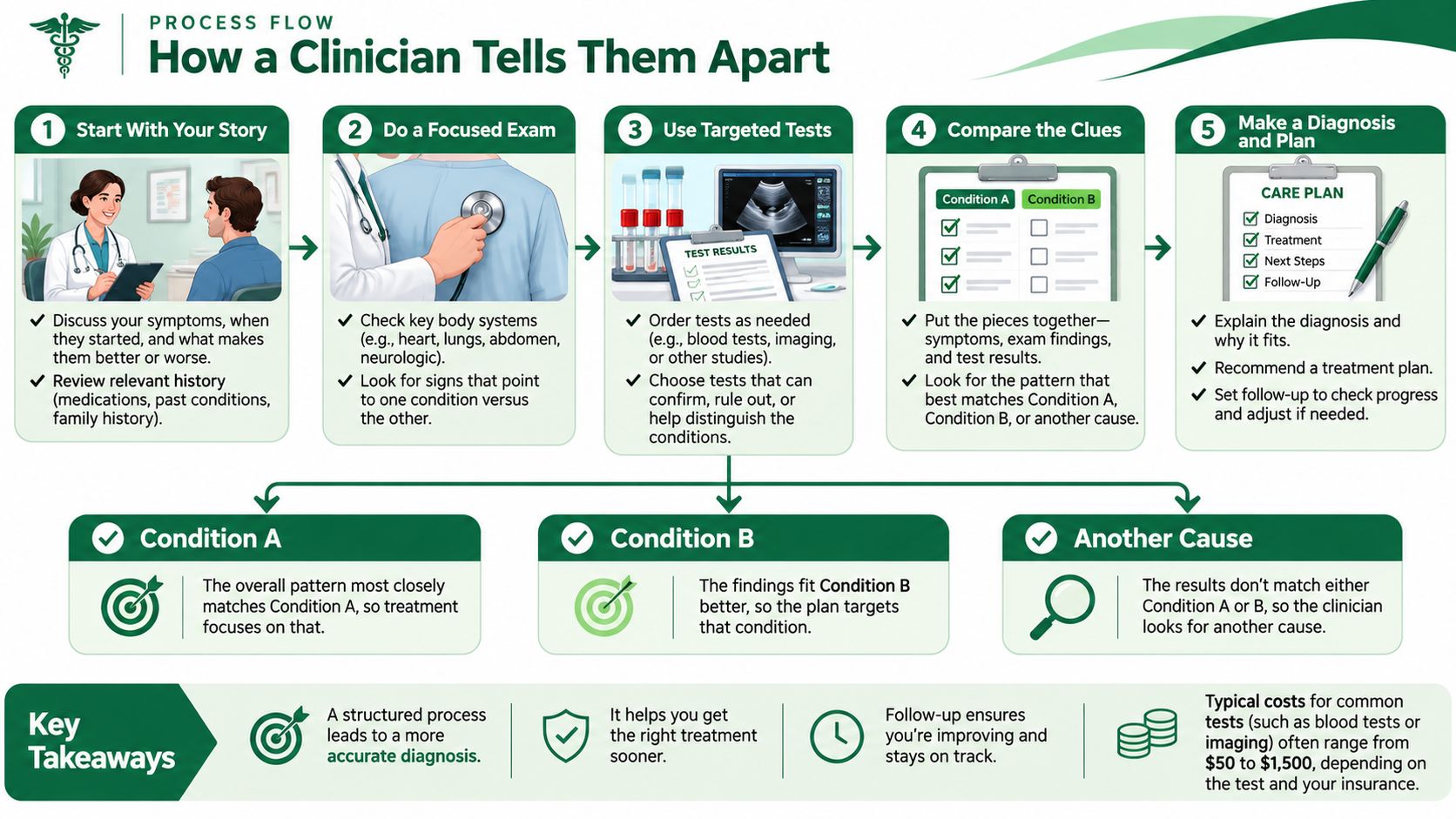
Figure 2. The assessment sequence, from confirming a qualifying exposure through to documenting the diagnosis.
Confirm the qualifying exposure. The two systems don't define it identically, so the clinician first establishes which manual the service works from. Getting this wrong at the start produces a label the paperwork won't support later.
Map the PTSD core clusters. Re-experiencing, avoidance and persistent threat get assessed in detail. These are the entry requirements, and everything else builds on them.
Screen the self-organization domains. A structured tool helps, and the International Trauma Questionnaire (ITQ) was developed specifically to assess ICD-11 PTSD and CPTSD by separating the PTSD clusters from the three self-organization domains. Research summarized by the U.S. National Center for PTSD reports that latent-profile analysis in 302 treatment-seeking individuals supported a meaningful distinction between the two conditions.
Check functional impairment. Work, relationships and daily routines are where a diagnosis earns its keep. A symptom count without impairment is an incomplete picture.
Document the result. ICD-11 produces one diagnosis or the other, while the National Center for PTSD's comparison of ICD-11 and DSM-5 explains how a U.S. clinician instead records PTSD with the relevant emotion-regulation, identity, dissociation or interpersonal features.
Address what overlaps. Depression, anxiety, dissociation and substance use all mimic or mask trauma symptoms. Ruling them out, or treating them alongside, changes what the plan looks like. If you're unsure what a testing appointment involves, this walkthrough of how long a psych evaluation takes answers the practical questions.
A high PTSD score is not evidence of CPTSD. Domain coverage is the benchmark, which is why a two-stage approach works: establish the trauma core first, then assess emotion regulation, shame and worthlessness, relational disconnection and functional impact.
What to Bring to the Appointment
Come with a rough timeline of what happened, a current symptom list written in your own words, and two or three concrete examples of how symptoms interfere with daily life. "I've cancelled on my sister four times since March because I couldn't face the drive" tells a clinician more than "I'm avoidant."
Screening questionnaires support clinical judgment. They don't replace it.
Treatment Options and What the Evidence Shows
Two assumptions need clearing away. The first is that CPTSD always demands a fixed march through stabilization first and trauma processing much later. The second is that standard PTSD treatments are inappropriate for complex presentations.
Neither holds up cleanly. A 2025 review reports that psychological therapy can improve PTSD, anxiety, depression and sleep in people with complex trauma, and that multicomponent approaches may be especially useful, while noting that the evidence remains limited by inconsistent protocols and symptom measurement (2025 review in the British Medical Bulletin).
Table 2. Psychological treatments studied for complex trauma
Approach | Evidence reported | Practical note |
|---|---|---|
Psychological therapy (general) | Improves PTSD, anxiety, depression and sleep in people with complex trauma (2025 review) | Evidence limited by inconsistent protocols and symptom measures |
STAIR, narrative approaches, prolonged exposure | No significant difference in CPTSD symptom reduction among the three | Choice depends on fit; ask how progress will be measured |
EMDR vs trauma-focused CBT | No significant difference in PTSD, depression or anxiety at three- and six-month follow-ups; no clear dropout advantage for EMDR | Choice depends on fit and client preference |
Multicomponent approaches | May be especially useful for complex trauma | Evidence still limited; ask how progress will be measured |
The comparisons are worth sitting with. Studies comparing STAIR, narrative approaches and prolonged exposure found no significant differences in CPTSD symptom reduction across conditions. Reviews comparing EMDR with trauma-focused cognitive behavioral therapy found no significant differences in PTSD, depression or anxiety outcomes at three and six months, and no clear dropout advantage for EMDR over other trauma-focused treatments.
Individual Factors That Change the Plan
Treatment should be built around the person, not the label. Safety comes first, because processing trauma while still living inside an unsafe relationship tends to backfire. Emotion regulation skills, relational work and identity work each get weighted differently depending on what's most impaired.
Dissociation can slow pacing and change how memory work is introduced.
Neurodivergence affects sensory tolerance, session length and how instructions land.
Depression drains the energy therapy requires, so it often gets addressed in parallel.
Ongoing unsafe relationships make stabilization a moving target rather than a finished phase.
CPTSD doesn't automatically mean years of therapy. Ask at the first session how progress will be tracked, what would count as improvement, and when the plan gets reviewed.
Shared decision-making and outcome tracking matter more than the acronym on the file. If a therapist mentions complex trauma therapy, ask which components it includes and how they'll know it's working.
Book a Professional Assessment for Your Symptoms

A first appointment can help clarify whether an assessment makes sense and what questions to address. Bring a brief description of the symptoms affecting you, any safety concerns, and questions about how the clinician will assess your needs.
Four questions can help you understand the process:
Which diagnostic system do you use, DSM-5 or ICD-11? Ask how that choice may affect the diagnosis recorded.
Do you use a structured measure such as the ITQ? Ask how the clinician interprets the results and whether they inform the treatment plan.
How will treatment be chosen? Ask when trauma processing might begin, whether stabilization comes first, and how progress will be reviewed.
What else should I mention? Share concerns about dissociation, substance use, safety, or an ongoing unsafe relationship so they can be considered in the assessment.
Figure 3. A person preparing for a counseling appointment, notes and questions in hand, ready to describe symptoms in their own words.
For a UK perspective on private assessments, see XO's guide to private assessments.
Be Your Best Self & Thrive Counseling, PLLC is a mental health counseling practice based in St. Petersburg, Florida, with in-person counseling in St. Petersburg and Sarasota and online counseling. Its approach blends Eastern and Western practices, and a free initial consultation can help you discuss your concerns and goals. Learn about what a trauma-informed therapist does to understand how trauma-informed care may shape counseling.
Only a qualified mental health professional can diagnose PTSD or CPTSD. An initial conversation can help you decide whether to pursue an assessment and discuss what you have been experiencing.
