
10 ADHD Coping Strategies for Adults That Work
You already know the feeling. You sit down to answer one email, pay one bill, or start one report, and your brain seems to stall at the first step. You know what needs to happen, but starting, sequencing, remembering, transitioning, and staying with the task all take more effort than they should. That's why the best ADHD coping strategies for adults don't depend on willpower alone. They build external structure, change the environment, support body regulation, use relationships wisely, and bring in professional care when needed.
Key takeaways, in plain language: the most helpful supports usually make the next step visible, smaller, and easier to repeat. Try one change at a time, keep what lowers friction, and don't treat medication, therapy, mindfulness, or productivity tools as one-size-fits-all fixes. Medication decisions belong with qualified clinicians, and if you want to test ideas safely, start small and keep the system that works in real life. Captions are included for every image in the article.
1. Time Blocking And Structured Scheduling
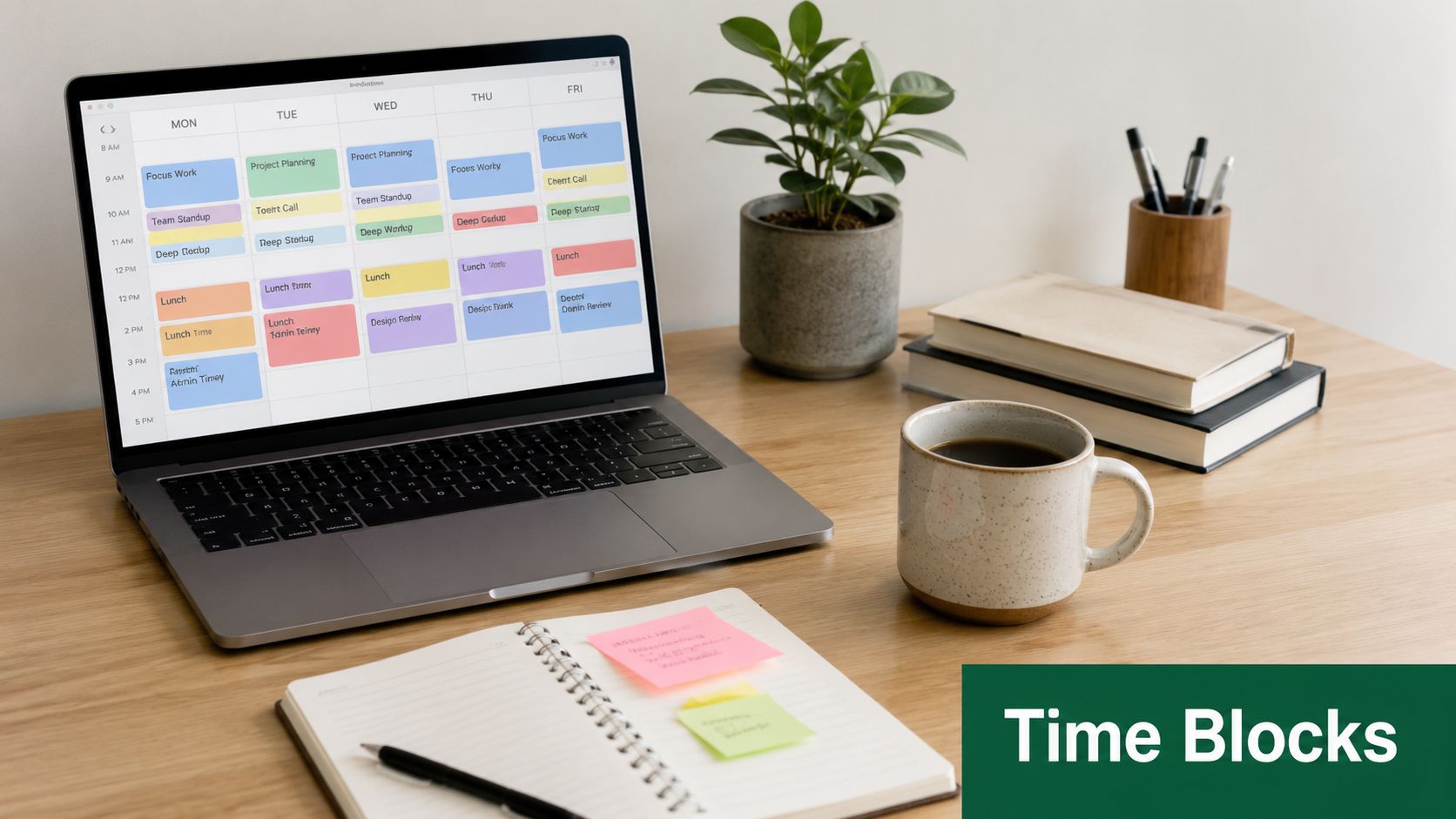
A packed day can feel like a room with too many open tabs. Time blocking gives each task a clear place to live, so you spend less energy deciding what to do next and more energy doing it. For adults with ADHD, that kind of outside structure helps with initiation and with the move from one task to another, which are often the hardest parts.
A workday can be divided in a way that matches real life. 9 to 11 a.m. can hold focused project work, 11 a.m. to noon can be reserved for email and messages, and 1 to 2 p.m. can be set aside for meetings. A parent may need separate windows for household tasks, paid work, and family time. An entrepreneur may keep Monday mornings for strategy and Friday afternoons for admin. The exact schedule matters less than having a schedule that you can return to.
Make the blocks work for your brain
Start with large blocks of 2 to 3 hours before you try to fine-tune the day into tiny pieces. Bigger blocks reduce the number of transitions, and transitions are often where ADHD momentum slips away. A calendar with clear color labels can also make the day easier to read at a glance, especially when work, home, health, and social commitments all compete for attention.
A schedule gets stronger when it is supported by tools you use. Harvard Health recommends lists and calendars, reminders, and scheduling daily updates to those systems, which fits well with time blocking because the plan stays visible instead of drifting into memory (Harvard Health). Set 5 to 10 minute reminders before a block ends so the transition does not arrive as a surprise. Review the week once a week, then adjust the blocks that did not match reality.
If you want another practical way to think about balancing your time effectively, use it as a guide for shaping your calendar around the demands of your week instead of forcing the week to fit a rigid plan.
2. The Two-Minute Rule
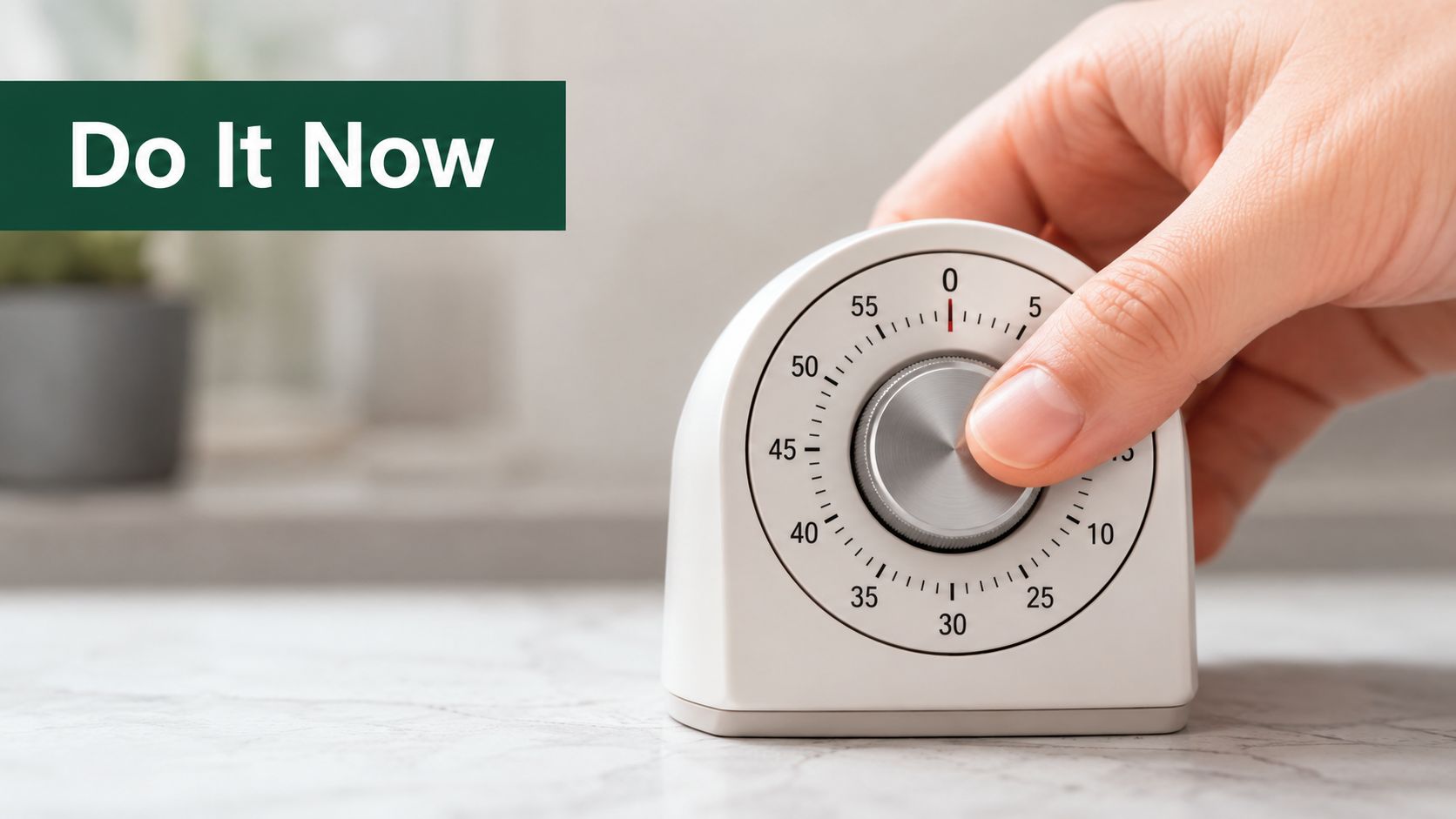
Small tasks often become big because they stay mentally open. A quick reply, a dish in the sink, or a form that takes almost no time can sit in your head all day and drain attention. The Two-Minute Rule lowers that noise by giving you a simple threshold: if it takes two minutes or less, do it now.
That helps with ADHD because the mind doesn't have to keep re-processing the same tiny task. It also protects momentum. If you answer the message, file the paper, or pay the bill right away, the task is gone instead of becoming one more item in a list already full enough.
Use it without letting it take over
The rule works best when you're honest about the time. Set a phone timer if you're not sure whether a task is short, because ADHD can make “quick” tasks expand fast. That keeps you from slipping into accidental task sprawl.
Practical rule: protect your focused work blocks from tiny interruptions, then group the short tasks into a 15-minute quick-wins session later in the day.
A few examples make the pattern easier to see. You answer a text while it's fresh. You put the dishes in the dishwasher instead of leaving them in the sink. You create a quick-action folder for things that take a little longer than two minutes but still deserve fast handling. If procrastination is the bigger problem, this resource on how to stop procrastinating with ADHD offers a useful companion perspective.
3. External Accountability Systems
Many adults with ADHD don't need more self-criticism. They need other people, visible progress, and regular check-ins. External accountability works because it replaces vague private intentions with a structure that's harder to ignore and easier to follow.
A weekly coaching call can keep a project moving. A friend can text check-ins about fitness goals. A business owner can share daily progress updates with a peer. An ADHD-specific group, whether online or in person, can create enough social presence to make follow-through feel real instead of theoretical.
Choose the kind of accountability that fits
The best partner is usually someone who's steady, non-judgmental, and clear. If the other person reacts with shame or lectures, the system often collapses. If they can ask, “What's the next step?” without making you defend your struggle, the structure becomes useful.
Direct statement: accountability works best when it's specific, scheduled, and small enough to report honestly.
You can mix formats too. Use one person for emotional encouragement, an app for visible progress, and a group for consistency. The point isn't to perform productivity. The point is to make follow-through easier to see and easier to return to after a rough day.
4. Gamification And Reward Systems
ADHD tasks often fail because the reward feels too far away. Gamification helps by making progress more visible and rewards more immediate, which can make boring or repetitive work feel more reachable. It doesn't make the work glamorous. It just gives your brain a reason to stay engaged long enough to finish.
A Habitica-style app can turn tasks into quests. A point system can let you earn coffee, gaming time, or a walk after a focus block. A habit tracker can show streaks and completed goals, which matters when your brain needs proof that effort is adding up.
Keep the game simple enough to keep playing
Start with small tasks so you can get early wins. If the system is too elaborate, it becomes one more project to manage, and that defeats the purpose. Keep the rewards varied so they don't stop mattering, and mix intrinsic rewards like visible progress with extrinsic rewards like treats.
A team member might build a small point competition around completed daily tasks. A solo worker might earn a favorite snack after two focus blocks. If you want a broader look at how reward systems support follow-through, this piece on staying on track with ADHD tools is a useful complement.
5. Body-Based Movement And Sensory Regulation
Movement helps because it gives the nervous system something to do, making sitting still easier afterward. For many adults with ADHD, that extra input is the difference between focus and restlessness.
A brisk walk before a work session can make the next 45 minutes more manageable. A standing desk with a wobble cushion can soften restlessness without turning the day into a gym workout. Fidget tools can help during calls or long meetings because the hands get quiet movement while the mind listens.
Use movement as a tool, not a moral test
The best movement is the kind you'll repeat. If running feels unpleasant, leave it out of the plan. If music helps you start, pair movement with music or a podcast. If transitions are hard, use short movement breaks between tasks so your body gets a reset before the next demand starts.
A simple walk, a stretch routine, or a few minutes of paced movement can work like a pressure valve. The point is not to force exercise into every gap. The point is to give the body enough sensory input so attention has a better chance to settle.
Adults are also using telehealth at scale for ADHD-related services, which makes remote coaching or check-ins a realistic way to build movement routines into daily life. The CDC reported that about one half of adults with ADHD have ever used telehealth for ADHD-related services, and it also found that 71.5% of adults taking stimulant medication had difficulty filling prescriptions because of availability problems, a reminder that non-medication supports need to hold up during access disruptions (CDC MMWR PDF).
If you want a broader framework for body regulation, this article on how to regulate your nervous system can support the movement piece without making it feel abstract.
6. Breaking Tasks Into Micro-Steps
Big projects can freeze ADHD brains because the first move isn't obvious. Breaking work into micro-steps lowers the mental load by replacing a massive vague task with a clear sequence of tiny actions. That makes starting easier because the brain doesn't have to plan the whole road before taking the first step.
Instead of “write report,” you might open the template, write the introduction, add section one, gather visuals, and edit. Instead of “organize the office,” you might clear one desk corner, sort papers into piles, and file what needs to be kept. Each step gives the brain a smaller target and a chance to feel progress.
Use this rule: if you can't picture the first physical action, the task is still too big.
Make the steps concrete
Write steps as actions, not intentions. “Find three sources” is better than “research.” “Open the inbox and reply to the top two emails” is better than “catch up on email.” Number the steps so the order is visible, and estimate the time for each one so the day feels more realistic.
This approach also fits the research pattern that adults with ADHD often use less structured problem-solving than adults without ADHD, while coping research points toward external structure, planning, and environmental supports as better fits for daily functioning (comparative ADHD coping review). A later literature review also found that 143 studies had been synthesized and none evaluated workplace interventions, which shows how much adults still need practical, real-world tools in work settings (same review).
7. Environmental Design And Reducing Friction
Your environment sets the stage for how easily you can focus, and it can support your habits or make every task harder than it needs to be. ADHD often feels more difficult to manage when everything is visible, noisy, and asking for attention at the same time. Environmental design works by lowering the number of choices your brain has to make and making helpful actions easier to start.
That might mean moving social media apps off your phone, using website blockers during focus time, or setting up one dedicated desk with only the supplies you need. It might mean keeping healthy snacks visible and putting processed snacks out of sight. It can also mean creating a visual command center for calendars, tasks, and documents so important information stays in one place instead of getting scattered around the house.
Remove friction before the day starts
Small setup changes can do a lot of quiet work in the background. Harvard Health notes that a quieter workstation, fewer smartphone and email alerts, and a timer can help make work feel more manageable, while Mayo Clinic recommends visible notes, a calendar for deadlines, and a fixed place for essentials like keys and wallets (Harvard Health), (Mayo Clinic).
That matters because each setup choice removes a small bit of friction. If the desk is ready, the notes are visible, and the items you use every day have a home, the task begins with less searching and less self-reminding. For a closer look at how the body and workspace interact, this guide on the importance of ergonomics in holistic wellness and mental health is a useful place to start.
8. Mindfulness And Present-Moment Awareness
Mindfulness helps some adults with ADHD because it trains attention without demanding perfection. The goal isn't to stop your mind from wandering. The goal is to notice when it wanders, then come back without spiraling into self-judgment.
That can help with overwhelm, future anxiety, and emotional reactivity. A five-minute body scan, a short guided meditation, or a mindful breathing break between meetings can create a pause before the next reaction. For many adults, that pause is enough to make the next choice feel less chaotic.
Keep the practice short enough to actually do it
Start with 5 to 10 minutes, not an hour-long commitment you'll avoid. Guided practices usually work better than silent meditation at the beginning because they give your attention something to follow. If sitting still feels hard, try mindful walking or pair mindfulness with movement.
A recent review of adult ADHD management highlighted cognitive-behavioural treatment, mindfulness-based approaches, psycho-education, and dialectical-focused therapies as useful non-pharmacological options, while another study found maladaptive coping strategies were common and social withdrawal was linked with greater life impairment (PMC review on adult ADHD approaches). That doesn't mean mindfulness fixes everything. It means mindfulness can be one useful layer in a broader support system.
If you want a simple entry point, this resource on mindfulness-based stress reduction can help make the practice feel more approachable.
9. Systems For Important Information And Follow-Through
A lot of ADHD stress comes from trying to remember everything with a memory system that's already overloaded. Reliable capture systems solve that by moving dates, bills, contacts, and tasks into one place you trust. You stop relying on “I'll remember later” and start relying on a process that catches things for you.
One calendar can hold both work and personal commitments with color-coding. A notes app or Notion workspace can store documents, contacts, and reminders. A phone with recurring alerts can handle bills, deadlines, and routine chores that are easy to forget but costly to miss.
Build one system you can return to
Choose one primary tool first. Too many systems create more confusion, not less. Then set a weekly review so you can clear the inbox, check upcoming commitments, and update anything that changed.
Recurring reminders work especially well for tasks that are easy to overlook, like monthly bills or regular follow-ups. A CRM system can do the same thing for client work, and that kind of automated follow-through is exactly why digital support is so useful for ADHD brains. If you want a task-tracking example, this overview of Eztrackr Job Tracker shows how organized tracking can reduce mental clutter.
10. Seeking Professional Support And Personalized Treatment
A person may keep a planner, use reminders, and still feel stuck when ADHD shows up as missed deadlines, emotional overload, or conflict at home. Professional support can add another layer to the support system, one that is shaped around how attention, emotions, habits, and relationships interact in daily life. That support may include medication evaluation, ADHD-informed therapy, coaching, or help with anxiety, depression, trauma, and relationship strain.
Personalization matters because ADHD does not look the same in every adult. Someone dealing with work burnout may need help building routines and easing shame around inconsistency. A couple may need support with communication and the division of labor. An entrepreneur may need practical strategies for attention, delegation, and time boundaries that fit a less structured workday.
Find help that fits the specific problem
The right provider should understand adult ADHD, not only general stress. A useful first conversation often includes questions about medication, behavioral support, and practical skill-building. If anxiety, depression, trauma, or relationship problems are part of the picture, therapy can make the coping plan easier to use in real life.
Adult ADHD care matters because many people are diagnosed after years of trying to make self-management tools do all the work. The American Psychiatric Association summary of CDC data notes that 6.0% of U.S. adults, about 15.5 million people, currently have ADHD, and more than half were first diagnosed in adulthood. The same source also says about one-third of adults with ADHD are receiving no treatment at all, which makes accessible, personalized care especially important.
A good next step is a brief consultation that helps you see whether the fit feels practical and respectful. For adults who want a therapy option centered on ADHD, Be Your Best Self & Thrive Counseling offers a free initial consultation to explore whether adult ADHD therapy matches your needs.
10-Point Comparison: Adult ADHD Coping Strategies
Strategy | Implementation complexity | Resource requirements | Expected outcomes | Ideal use cases | Key advantages |
|---|---|---|---|---|---|
Time Blocking And Structured Scheduling | Moderate, initial setup and weekly tweaks | Calendar/planner, scheduling time, reminders | Predictable routine, reduced decision fatigue, better deadlines | Project work, busy days, meeting-heavy schedules | External structure, clear priorities, visual boundaries |
The Two-Minute Rule | Low, simple decision threshold | Minimal, timer or phone, discipline | Fewer small tasks piled up, quicker task initiation | Emails, quick chores, inbox management | Immediate action, quick wins, reduced list clutter |
External Accountability Systems | Moderate, coordinating partners or groups | People/apps, scheduled check-ins, possibly fees | Increased follow-through, sustained motivation | Long-term goals, habit formation, accountability needs | Social motivation, regular reporting, support |
Gamification And Reward Systems | Moderate–High, design and customization | Apps/tools, time to set up, meaningful rewards | Higher engagement, sustained task completion | Repetitive tasks, low-intrinsic-motivation activities | Immediate feedback, dopamine boost, fun incentives |
Body-Based Movement And Sensory Regulation | Low–Moderate, scheduling and routine | Exercise space/tools, fidget or sensory items | Improved focus, reduced restlessness, mood lift | Pre-work routines, breaks, energy regulation needs | Neurochemical support, immediate attention benefits |
Breaking Tasks Into Micro-Steps | Moderate, upfront planning effort | Task manager or notes, planning time | Less overwhelm, clearer next steps, momentum | Large projects, task initiation, complex tasks | Granular clarity, frequent quick wins, easier estimates |
Environmental Design And Reducing Friction | Moderate–High, redesign and maintenance | Organizers, blockers, possible cost/time investment | Fewer distractions, easier habit adherence | Shared spaces, digital-distraction prone workflows | Lowers decision load, persistent behavioral cues |
Mindfulness And Present-Moment Awareness | Low–Moderate, regular practice needed | Guided apps or teachers, short daily time | Better attention control, reduced anxiety, self-awareness | Emotional regulation, attention training, complementing strategies | Improves awareness, aids redirection of attention |
Systems For Important Information And Follow-Through | Moderate, setup and regular reviews | Centralized calendar/notes, review time, tools | Fewer missed commitments, reliable external memory | Busy schedules, multi-project management, forgetfulness | Trusted single source of truth, frees cognitive load |
Seeking Professional Support And Personalized Treatment | High, assessments, finding right providers | Clinicians/coaches, cost, appointment time | Diagnosis, tailored treatment, often greater symptom improvement | Severe symptoms, comorbid conditions, treatment-resistant cases | Personalized care, medication/therapy options, expert guidance |
Choose One Support to Test This Week
The easiest way to start is to find the bottleneck that shows up again and again. Maybe you don't start tasks. Maybe you lose track of details. Maybe you get derailed by your environment, or you have plenty of plans but no follow-through. Pick one strategy that fits that exact problem, then make the first step obvious and low effort.
If starting is the issue, try micro-steps or the Two-Minute Rule. If follow-through is the issue, use a calendar plus reminders, or add an accountability partner. If overwhelm is the issue, try a shorter mindfulness practice, a movement break, or a cleaner workspace. If transitions are the issue, time blocking with built-in buffer time may help more than another to-do list ever will.
Review the experiment after a few days, not after you've made it perfect. Inconsistent use doesn't mean the strategy failed. It may only mean the cue wasn't visible enough, the step was too big, or the tool didn't match the task. Adjust it, don't shame yourself out of it.
The strongest systems usually combine supports instead of relying on one. A calendar works better with micro-steps. Movement breaks work better when your desk setup makes them easy to take. Accountability works better when it's scheduled and specific. Workplace accommodations and relationship support can also be discussed openly and respectfully, especially when ADHD is affecting deadlines, communication, or shared responsibilities.
If medication, diagnosis, or treatment changes are part of your decision, bring them to a qualified healthcare professional. If anxiety, depression, trauma, emotional regulation, or relationship strain are complicating ADHD management, therapy can help you build something more stable and more humane. The goal is not a flawless routine. The goal is a support system you can live with.
If you're in the St. Petersburg or Tampa Bay area and want personalized, evidence-informed counseling, Be Your Best Self & Thrive Counseling, PLLC offers holistic support for adults working through stress, stuck patterns, and attention-related challenges. Their free initial consultation can help you decide what kind of care fits your goals and daily life.
Be Your Best Self & Thrive Counseling, PLLC offers counseling that can support adults building practical ADHD coping strategies, including routines, emotional regulation, and more sustainable day-to-day structure. If you want personalized, evidence-informed help that fits your life, visit Be Your Best Self & Thrive Counseling, PLLC to explore services and book a free initial consultation.