
10 Anxiety Therapy Worksheets for Practical Care
Anxiety can make even a small task feel hard to start. Maybe your thoughts are racing before a meeting, you're avoiding a place that triggers panic, or you're trying to understand why worry keeps returning. Anxiety therapy worksheets can turn an abstract coping goal into a concrete practice: recording a thought, noticing a body sensation, or planning a gradual approach to something you've been avoiding.
The best starting point depends on what you need right now. A grounding or breathing exercise may help when you're overwhelmed; a thought record may be easier to use once you're calm enough to reflect; and an exposure plan is better approached with care, especially when anxiety is severe or the trigger involves trauma. Worksheets can support self-help or therapy, but they don't replace assessment, diagnosis, or individualized care.
NICE describes CBT-based self-help as materials users work through systematically, while guided self-help adds practitioner review and support. That distinction matters: structured practice and feedback are different from downloading a page and being left to figure it out alone (NICE guidance for generalized anxiety disorder).
1. Centre for Clinical Interventions General Anxiety Worksheets
If you're looking for a flexible starting point, the Centre for Clinical Interventions (CCI) offers a collection of printable CBT resources for adults. The materials bring together educational information and practical exercises, so you can choose a worksheet for the problem you're noticing rather than committing to a full workbook.
The collection includes thought diaries and symptom tracking, as well as exposure diaries and behavioral experiment worksheets. Resources on avoidance and safety behaviors can help you notice how attempts to prevent anxiety sometimes keep a fear going. Breathing retraining and progressive muscle relaxation offer a different kind of practice when you're more focused on physical tension than on anxious thoughts.
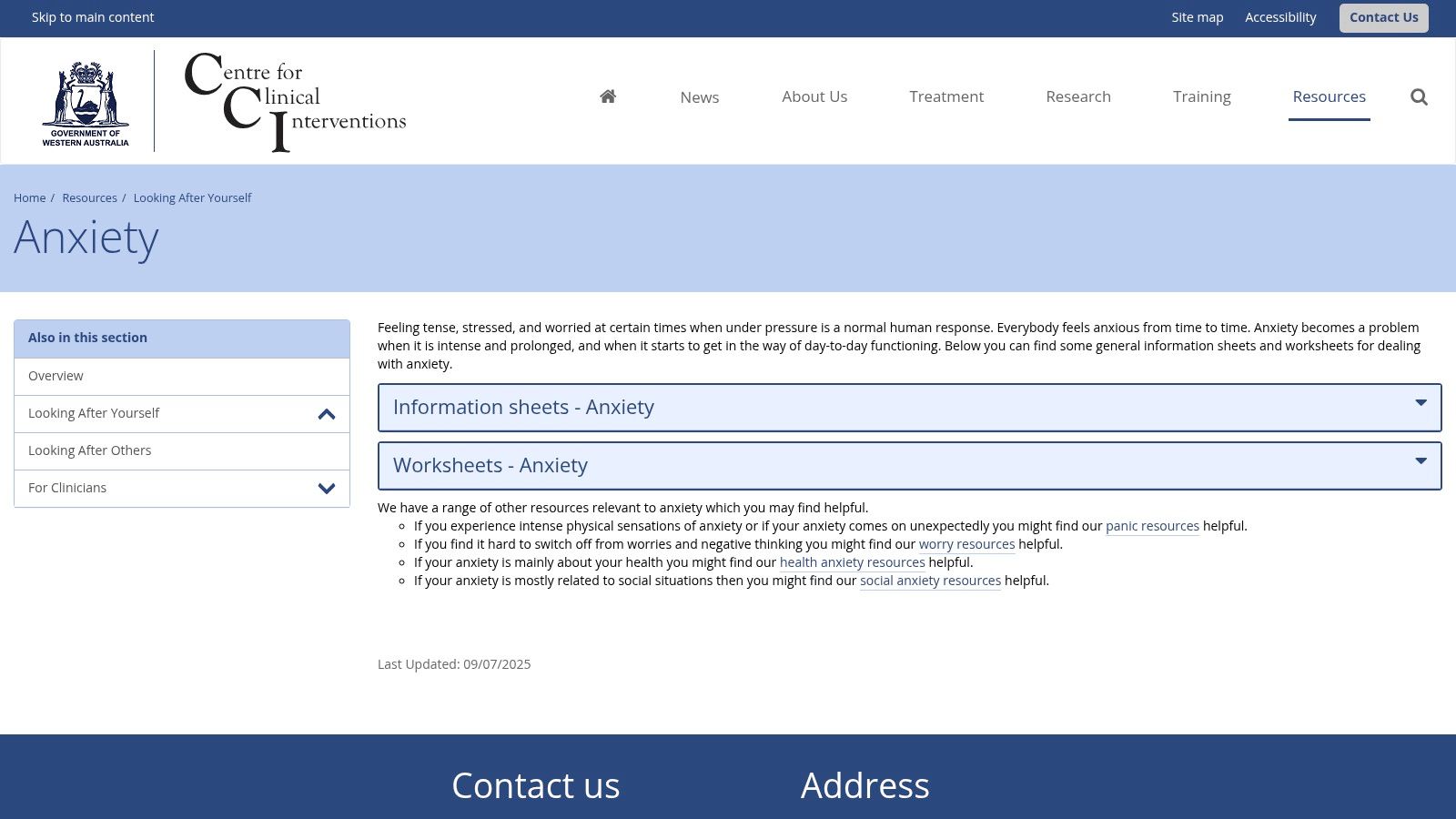
CCI's anxiety resources include CBT information and practical exercises for tracking symptoms, examining thoughts, and practicing skills.
A flexible collection, not a treatment plan
CCI's strength is breadth: you can find core CBT tools in one place and pair an exercise with reading that explains its purpose. That makes the resource useful for someone exploring self-help and for a therapist selecting between-session practice. For readers comparing care options, this guide to anxiety treatment options can help put worksheet use in a broader context.
The trade-off is that the collection is primarily CBT-focused, rather than a whole-person or somatic program. Self-guided exposure can also be challenging without support. Start with a manageable task, and consider reviewing exposure plans with a qualified therapist if anxiety is persistent or the exercise feels difficult to sustain.
Best fit: People who want to choose among practical CBT exercises.May be insufficient: Anyone looking for a therapist-guided, individualized plan in the worksheets themselves.
2. CCI Mastering Your Worries Workbook
When worry keeps returning across different parts of life, a loose set of worksheets can feel scattered. CCI's Mastering Your Worries is a more organized workbook for people who want to work through persistent worry step by step, with material on attention, problem-solving, helpful thinking, uncertainty, and maintaining progress.
The exercises address beliefs such as “I can't control my worrying,” and invite readers to consider how worry functions in their lives. Attention-training and problem-solving activities offer alternatives to going over the same concern repeatedly. The workbook also includes strategies for tolerating uncertainty, a common sticking point for people who feel they need reassurance before moving forward.
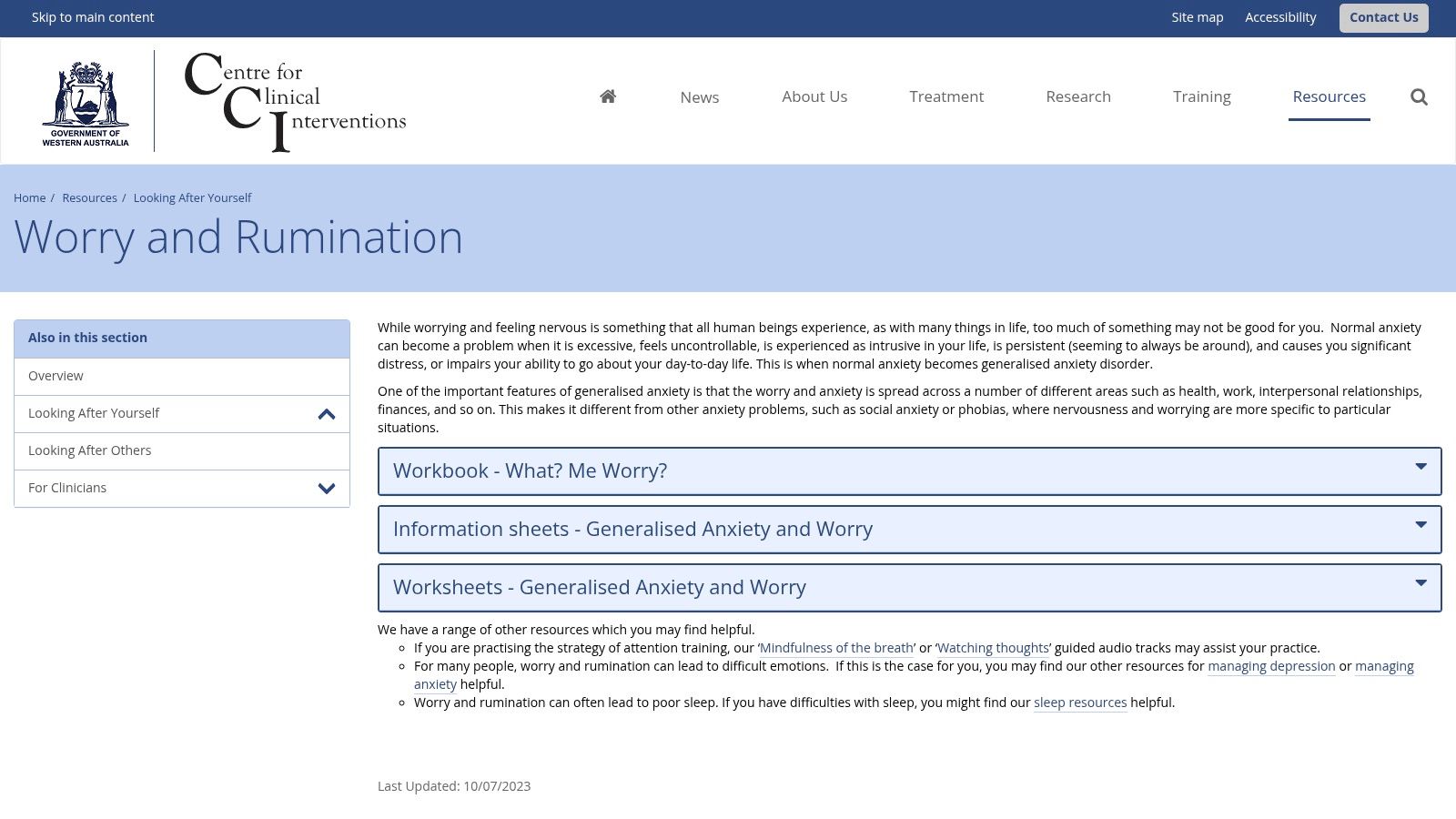
The workbook organizes exercises around worry patterns, attention, problem-solving, and uncertainty.
Structure helps, if you can use it consistently
A sequenced workbook can make it easier to build skills in context instead of picking exercises at random. It also provides a self-management component, so the work isn't limited to understanding worry in the moment. The drawback is the commitment: a structured program asks for time and follow-through, and its focus is generalized worry rather than every form of anxiety.
Keep the pace realistic. You don't need to complete several exercises at once to make the workbook useful. Choose a section that matches a current pattern, try its practice, and note whether it helps you respond differently to worry. If you find yourself using the material to analyze every thought at length, pause and consider working through it with a clinician.
Best fit: Adults seeking a more organized approach to persistent, broad-ranging worry.May be insufficient: People whose main difficulty is a specific fear, panic, or social anxiety rather than generalized worry.
3. CCI Social Anxiety Workbook and Worksheets
Social anxiety often involves more than feeling nervous before an interaction. Fear of judgment may lead someone to avoid situations, monitor themselves closely, or rely on safety behaviors that make the interaction feel more manageable in the moment. CCI's social anxiety resources address those patterns with a workbook and individual worksheets.
The materials include thought diary, core-belief, and goal-setting exercises. A stepladder helps break an avoided social situation into gradual practice steps, rather than expecting someone to jump straight into the hardest scenario. The workbook also addresses safety behaviors and attention habits, so the practice can include noticing where attention goes, not only what someone thinks.
CCI's social anxiety materials pair thought-focused exercises with gradual practice approaching feared situations.
Pair reflection with real-world practice
This resource is more targeted than a general stress handout because it links cognitive work with behavioral practice. You can use a single worksheet for a specific challenge or follow the workbook sequence. For more context about individualized support, see this overview of therapy for social anxiety.
The trade-off is that approaching a feared social situation can feel exposing. A step that looks modest on paper may be overwhelming for a particular person, and the full workbook may be more than someone needs for occasional social nerves. Keep steps specific and personally chosen, and involve a therapist if practice leads to escalating distress or repeated avoidance.
Practice principle: Choose a step that lets you learn something, not one that forces you to prove you can tolerate the hardest situation.
Best fit: People who want structured support for fear of judgment and social avoidance.May be insufficient: Someone who needs personalized help setting a safe, realistic pace.
4. CCI When Panic Attacks Workbook
A pounding heart in a grocery store line can feel like an emergency, and the next trip can start to feel like a risk. CCI's When Panic Attacks workbook is built for that pattern: it explains the panic cycle, tracks symptoms, and addresses fear of bodily sensations along with avoidance of places and activities. Within this list, it sits at the stabilization-to-practice end of the sequence, moving from symptom education into exposure work and then into maintaining progress.
That ordering matters. Someone who has begun skipping driving, exercise, or crowded spaces can use the tracking and exposure sheets to map what changed after each episode, rather than starting over every time panic shows up. The maintenance material extends the work past the first few calmer weeks.
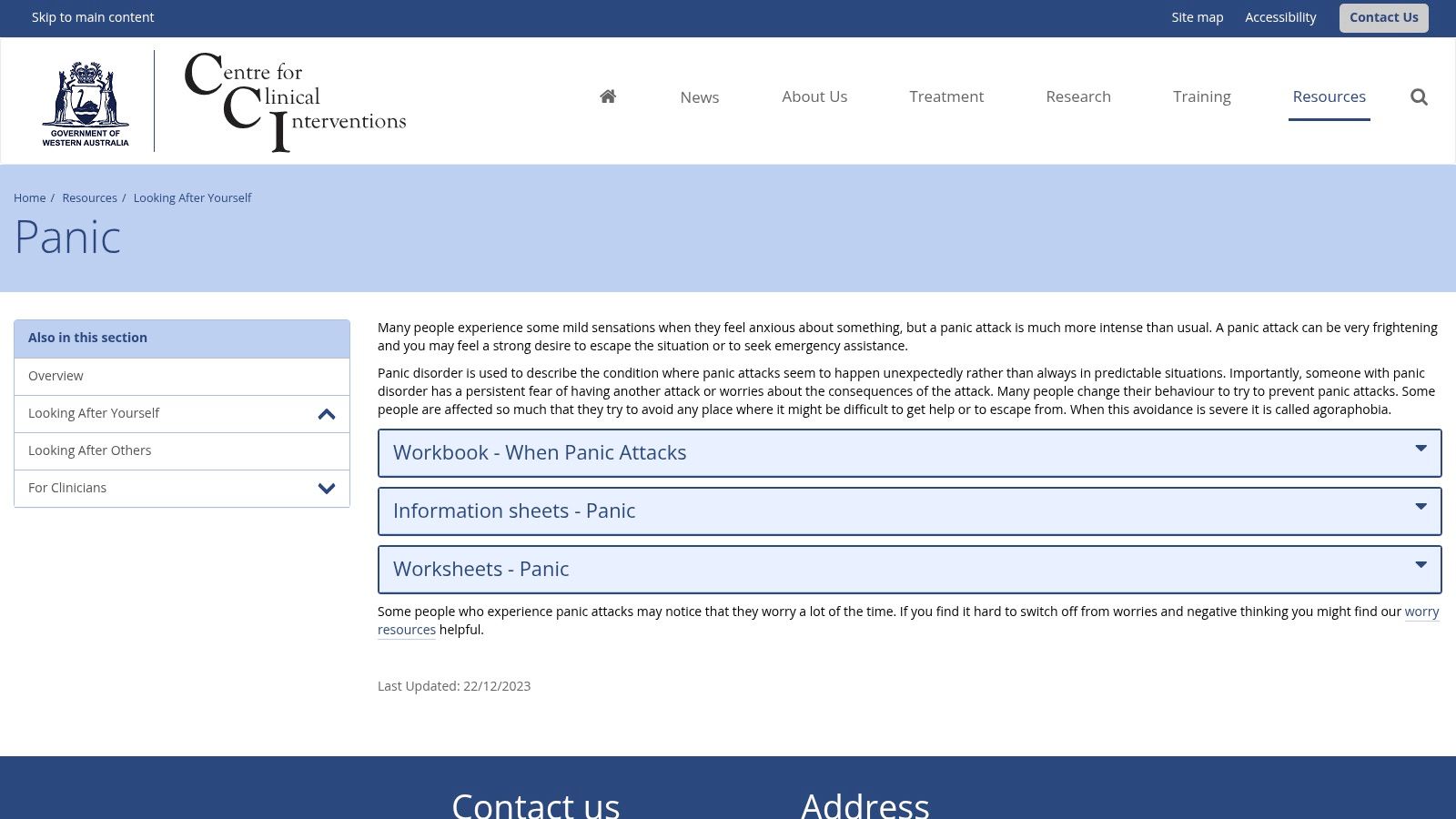
The workbook covers panic education, symptom tracking, exposure practice, and maintaining progress.
Plan body-focused exercises carefully
Exposure involving body sensations is often best planned with a therapist, especially when medical questions or trauma are part of the picture. A worksheet cannot judge whether a new symptom needs a medical exam, and anxiety exercises should not be used to wave away symptoms that deserve professional assessment. Guided self-help typically includes reviewing progress with a practitioner, and that review is part of what separates guided work from downloading materials.
For immediate coping between practice sessions, these panic attack coping strategies pair well with the workbook's longer-term exercises. If panic keeps disrupting daily life, bring the workbook to a clinician instead of relying on it alone.
Best fit: People seeking structured material about recurring panic, fear of sensations, or avoidance.May be insufficient: Anyone needing medical assessment or individualized guidance for exposure.
5. CCI Helping Health Anxiety Workbook
Health anxiety can involve intense attention to bodily sensations, frightening interpretations of symptoms, repeated checking, or frequent reassurance seeking. CCI's Helping Health Anxiety focuses on these patterns without requiring readers to assume that their physical symptoms aren't real. That distinction is important: the aim is to examine anxious responses, not to dismiss a health concern.
The workbook's exercises address body-checking and reassurance seeking, along with thought reevaluation and exposure-related strategies. Its self-management material can help readers connect what they notice to what they do next, such as searching for reassurance or avoiding an activity. Used thoughtfully, that can make a familiar cycle easier to discuss with a health professional.
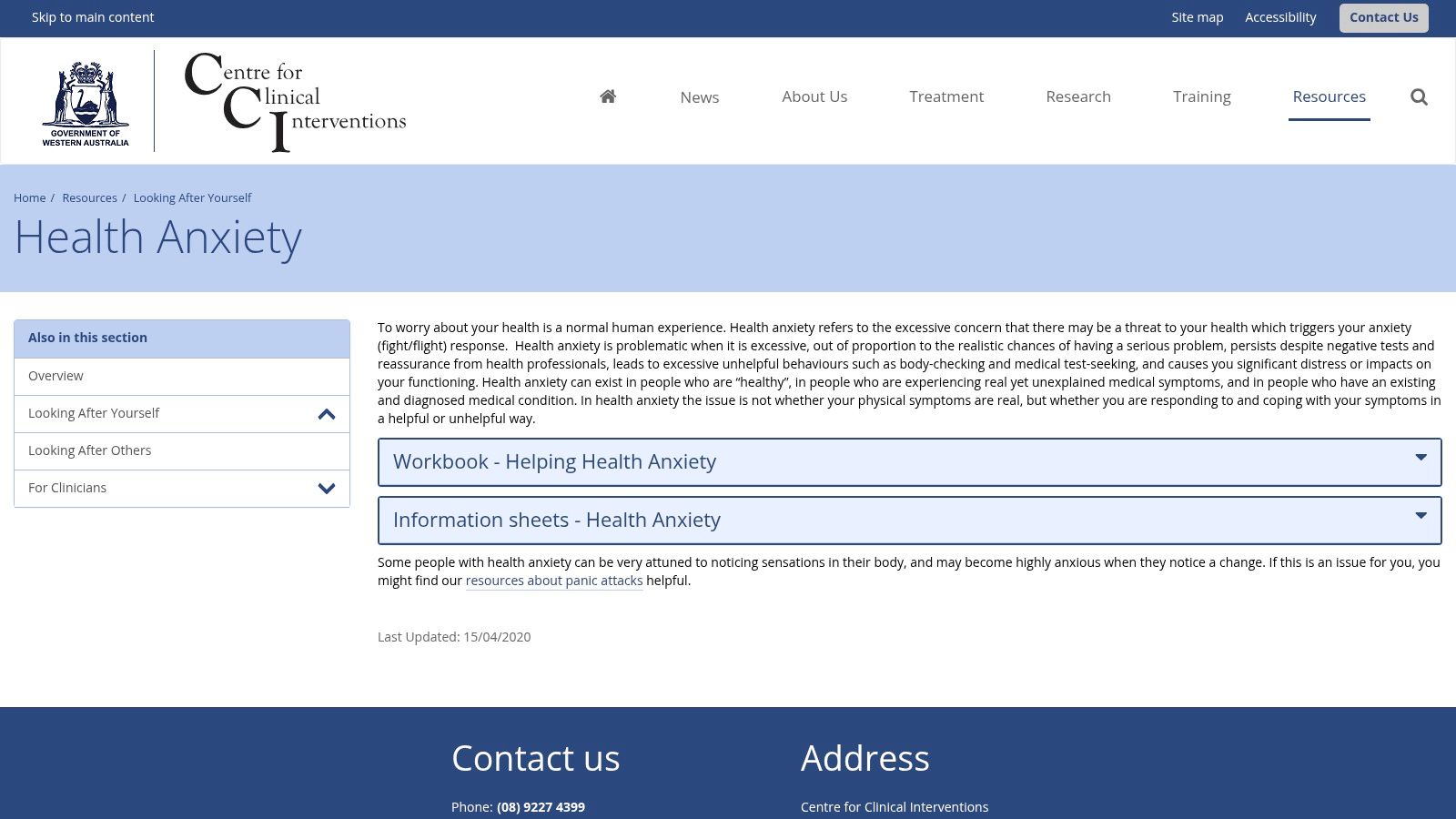
CCI's health anxiety materials address checking, reassurance seeking, thoughts, and self-management.
Don't turn the worksheet into another checking ritual
Some people caught in repeated checking or reassurance cycles may find these exercises difficult to use alone. A worksheet can become one more place to seek certainty if every sensation is repeatedly recorded and analyzed. Set a clear purpose for the exercise, and discuss it with a clinician if it increases monitoring rather than helping you respond more flexibly.
New or unexplained symptoms that merit medical evaluation shouldn't be waved away as anxiety. The workbook is intended to help examine patterns in anxiety, not to replace medical care. Be Your Best Self & Thrive Counseling also publishes a practical guide to therapy for health anxiety with a worry-container exercise for putting fears into plain language.
Best fit: Adults who recognize patterns of checking, reassurance seeking, or worry about illness.May be insufficient: Someone who needs medical evaluation or support interrupting repetitive checking.
6. Therapist Aid Anxiety Worksheet Library
A client leaves a session wanting something to practice before next week, and the therapist needs a handout on worry, panic, or avoidance without building one from scratch. Therapist Aid suits that moment. It is a browsable library of short worksheets on specific anxiety topics, covering education, coping skills, worry, panic, and avoidance. Its Coping Skills: Anxiety worksheet introduces breathing, muscle relaxation, imagery, and thought-challenging in one place, so readers can compare several approaches instead of committing to a single exercise.
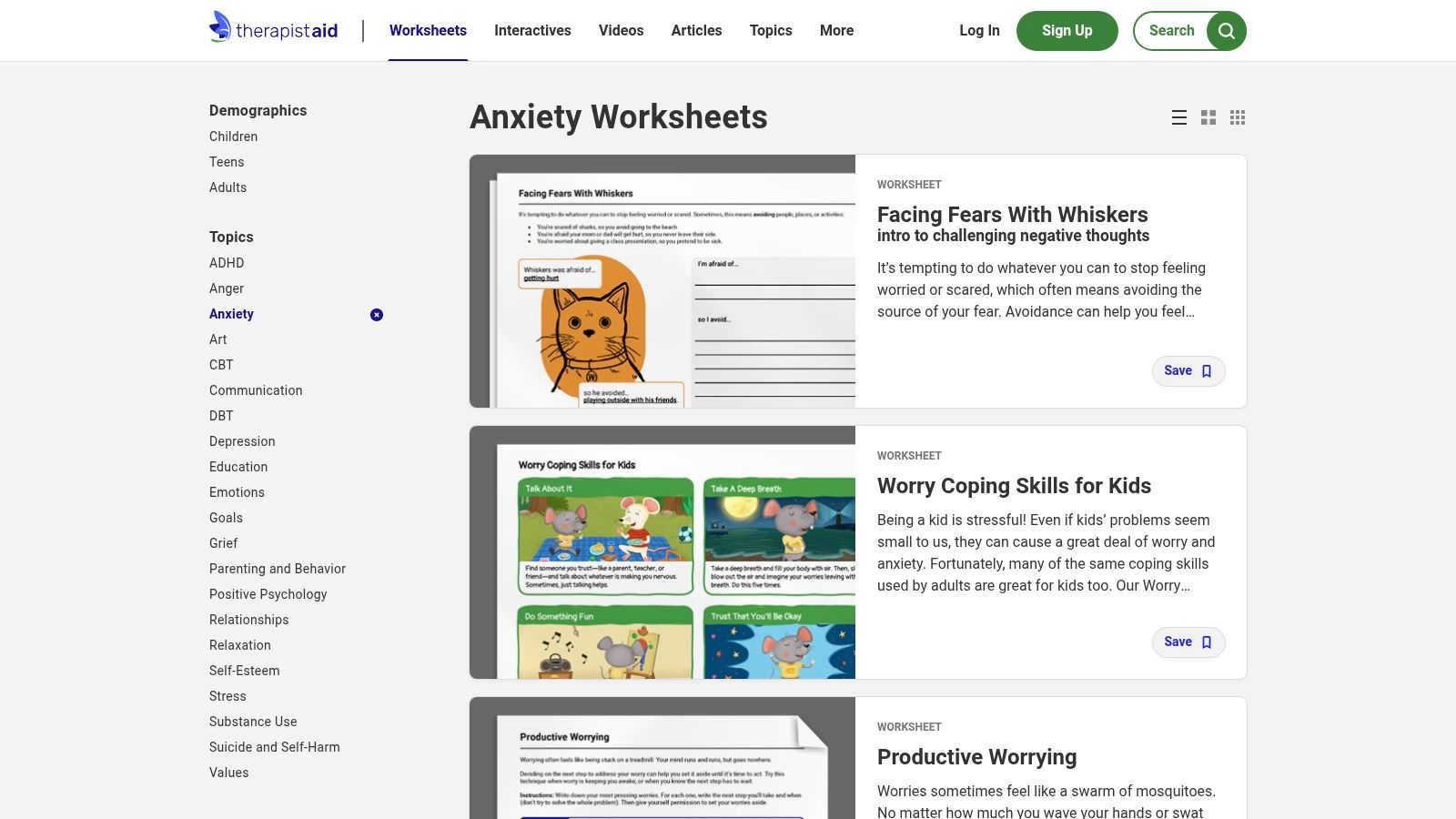
Therapist Aid provides handouts and other anxiety-related learning materials.
Convenient handouts need clinical context
Searching the library by topic makes a focused handout easy to find, and some PDFs are fillable for on-screen use. Articles, audio, and interactive tools sit alongside the worksheets, which helps people who work better off paper. Customization and some professional features require a paid plan.
The trade-off is selection. A short worksheet can carry a skill between sessions, but a reader sorting the library alone may not know whether a coping exercise, a thought-challenging prompt, or an exposure-related tool fits their presentation. Guided self-help includes practitioner review of progress and outcomes, which distinguishes guided work from downloading materials. That review is what turns a convenient handout into part of a plan.
Best fit: Therapists and clients who know which skill they want to practice and need a focused handout to support it.May be insufficient: People still working out which exercises match their anxiety or building a broader care plan.
7. University of Michigan Health CBT Basic Group for Anxiety Manual
Some readers prefer one treatment-oriented guide to a collection of unrelated handouts. The University of Michigan Adult Anxiety Disorders Program offers a patient manual organized around core CBT skills, including understanding anxiety, cognitive strategies, exposure, and relaxation. Readers can use the full manual or select individual topic chapters.
The materials also include separate thought-record and thought-examination worksheets. That gives readers a way to connect the explanatory material with a specific practice, rather than trying to complete a worksheet without knowing what it's meant to help them notice.
A structured educational resource
The manual's sequence can be helpful if you want a clearer path through CBT topics. It includes exposure and relaxation alongside cognitive strategies, rather than treating anxiety only as a problem of thoughts. The University of Michigan anxiety program is the place to access its patient resources.
An educational manual doesn't establish a therapist-client relationship or assess whether a particular exercise fits your circumstances. Exposure may be easier to use with clinical support, especially when distress is persistent or the exercise feels hard to scale. Treat the manual as a learning aid and a possible conversation starter with a clinician, not as an individualized treatment plan.
Best fit: Readers who want a CBT guide with distinct topic chapters.May be insufficient: People who need a clinician to tailor the practice or support them through exposure.
8. University of Arkansas Anxiety and Depression Student Workbook
The University of Arkansas workbook combines anxiety and depression skills with relaxation strategies. It was developed for a university counseling context and is paired with self-guided workshop recordings. For people who learn better by hearing an explanation as well as reading instructions, that combination can make the exercises easier to approach.
The University of Arkansas resource pairs a downloadable workbook with recorded self-guided workshop material.
Written practice with recorded instruction
The workbook and its linked recordings support a sequence of learning, rather than offering only an isolated page. Readers can work through the materials independently and revisit a recorded explanation when an exercise feels unclear. The university makes the workshop workbook and related resources available online.
The context is also a limitation. Examples designed for students may not match the pressures or responsibilities of every adult, and the in-person workshop is campus-based. The self-guided materials are more broadly accessible, but they still don't provide individualized assessment. Adapt examples to your own life instead of assuming that every prompt will fit as written.
Best fit: People who want workbook exercises paired with recorded instruction.May be insufficient: Adults who need examples suited to circumstances outside student life.
9. Queen's University Your Best You Managing Your Anxiety
Queen's University's Your Best You: Managing Your Anxiety is a practical self-help workbook created for students, with material that can also be useful to other readers. Its explanatory sections help set up the exercises, while a separate appendix collects worksheets that can be printed or copied. That layout makes it easier to work through the guide or return to an individual practice.
The workbook offers a single document rather than a set of scattered downloads. That can help readers who want to follow a guide from beginning to end, while the worksheet appendix suits someone who wants to revisit a particular exercise.
Useful for independent learning
The combination of explanations and printable worksheets is a practical strength. Queen's makes its self-help workbooks and counseling resources available online at no cost.
As with other self-help materials, the workbook doesn't provide individualized therapy or replace clinical assessment. Some examples may also feel less relevant to someone outside a university setting. Adapt the prompts to the situation you're facing, and consider professional support if anxiety is persistent, severe, or disrupting everyday functioning.
Best fit: Readers who want a single workbook with a separate set of printable exercises.May be insufficient: Anyone needing personal guidance or examples closely matched to their circumstances.
10. Psychology Tools Anxiety Resources and Worksheets
Psychology Tools offers a collection of therapist-oriented resources, including worksheets, explanatory handouts, exercises, and guided materials. Its topics include anxiety self-monitoring, exposure, fear ladders, and worry. That range can help a clinician choose a tool for a particular stage of work, from noticing anxiety patterns to planning between-session practice.
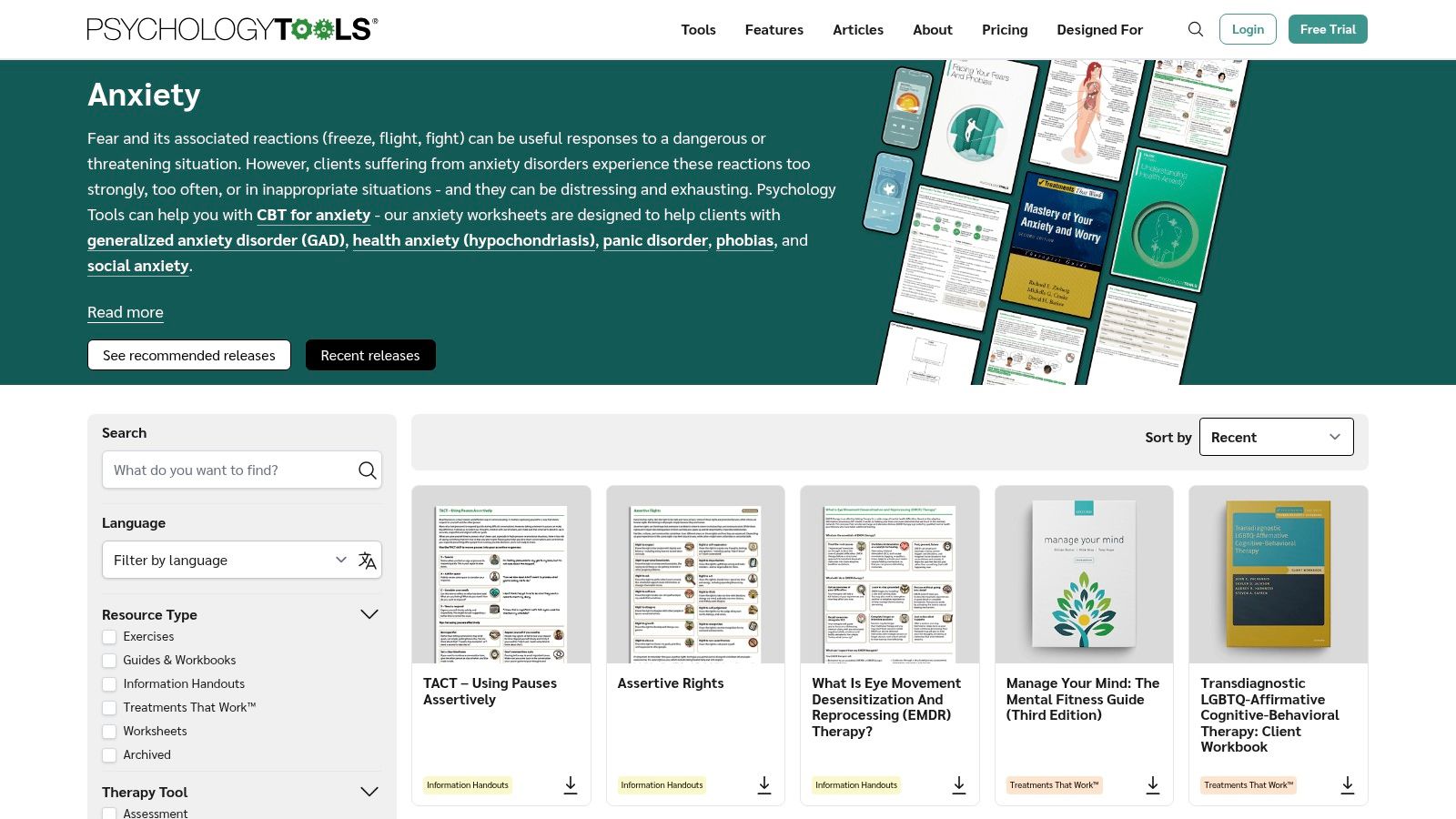
Psychology Tools offers clinician-focused anxiety materials, including exercises and explanatory handouts.
Detail for clinical work, with a learning curve
Compared with a basic coping-skills handout, the collection is more clinically detailed and covers specific treatment tasks. Some content can be explored online, while broader professional-library access requires a subscription. The Psychology Tools anxiety resources are primarily aimed at professionals, so independent readers may find it less straightforward to decide which exercise to use.
Exposure materials are often best used with clinical guidance. A fear ladder is only helpful if its steps reflect the person's circumstances and can be approached at a workable pace. For therapists, the resource can support more targeted between-session practice; for clients, it may be most useful when a clinician selects and explains the material.
Best fit: Clinicians seeking detailed resources for specific anxiety-related tasks.May be insufficient: Independent readers looking for a simple, self-explanatory workbook.
Top 10 Anxiety Therapy Worksheets: Resource Comparison
Resource | Focus and Format | Best For | Key Strengths | Cost and Access |
|---|---|---|---|---|
CCI: General Anxiety Worksheets | Printable CBT worksheets for tracking, thoughts, exposure, and relaxation | Adults seeking practical tools for general anxiety | Broad range of exercises; usable alongside therapy | Free; self-guided exposure may benefit from therapist support |
CCI: Mastering Your Worries Workbook | Ten-module program for worry, attention, problem-solving, and uncertainty | Adults with persistent or generalized worry | Structured progression and self-management planning | Free; requires time and follow-through |
CCI: Social Anxiety Workbook and Worksheets | Ten-module workbook plus worksheets for beliefs and gradual social practice | Adults experiencing fear of judgment or social avoidance | Combines cognitive exercises with gradual exposure | Free; exercises can feel challenging without support |
CCI: When Panic Attacks Workbook | Seven-module guide to panic, body sensations, exposure, and maintenance | Adults with recurring panic attacks or panic disorder | Focused skills and relapse-prevention guidance | Free; not a substitute for medical assessment of new symptoms |
CCI: Helping Health Anxiety Workbook | Nine-module program addressing checking, reassurance, and health-related thoughts | Adults whose anxiety centers on illness or physical symptoms | Targeted exercises and self-management plan | Free; seek medical evaluation for new or unexplained symptoms |
Therapist Aid: Anxiety Worksheet Library | Short handouts on coping, worry, panic, avoidance, and related topics | Clients and therapists seeking topic-specific materials | Easy-to-browse selection; some fillable PDFs and varied formats | Some materials free; advanced features require a paid plan |
University of Michigan Health: CBT Basic Group for Anxiety Manual | Patient manual and worksheets covering CBT, exposure, and relaxation | Readers preferring a comprehensive, treatment-oriented guide | Clear structure from an academic health system | Free; may be easier to use with clinical support |
University of Arkansas: Anxiety & Depression Student Workbook | Workbook paired with self-guided workshop recordings | Students and others seeking anxiety and mood-management skills | Combines written exercises with recorded instruction | Free; some examples are student-focused |
Queen's University: Your Best You, Managing Your Anxiety | Self-help workbook with a separate printable worksheet appendix | Students and adults seeking a practical guide | Explanations and exercises in one resource | Free; not individualized therapy |
Psychology Tools: Anxiety Resources and Worksheets | Clinical worksheets, handouts, and exercises for anxiety treatment | Therapists and people working with clinical guidance | Detailed resources for monitoring, exposure, and worry | Some content available online; broader library may require a subscription |
Build a Worksheet Routine That Fits the Anxiety
A worksheet is most useful when it matches your state and your goal. During heightened anxiety, it may be hard to examine thoughts or plan a behavioral experiment. Start with a simple grounding or paced-breathing practice if that feels manageable, then move to tracking thoughts or sensations when you have enough space to reflect. Planned behavioral practice can come later, ideally with suitable support if the fear is intense or the trigger is complicated.
Choose one worksheet, not a whole library. Give yourself a realistic time limit, follow the instructions, and write down what you noticed: what felt useful, what confused you, and whether the exercise increased distress or helped you respond differently. If writing feels like too much, shorten the answers or talk through the prompts with a therapist. A worksheet should be usable, not another task you can fail.
Guided support can matter. In a systematic review of anxiety-focused self-help interventions, self-help performed better than waiting-list controls, guided self-help performed better than unguided self-help, and therapist-administered treatment remained superior to self-help. Those findings support a practical role for worksheets as between-session skill-practice tools, not substitutes for assessment or therapy (systematic review of anxiety self-help interventions).
Fit matters too. A standard thought record may not account for a realistic external threat, sensory overload, burnout, or difficulty identifying emotions. You can adapt the format: use visual prompts, record body sensations, write less, or discuss what safety and responsibility mean in your own context. Personalization should be led by the person using the worksheet, not assumed from identity or diagnosis.
If a worksheet makes you ruminate, feel confused, or unable to continue, pause rather than push through. Try a smaller version, return to a calming exercise, or bring the page to a qualified professional. Seek support when symptoms are severe or persistent, interfere with daily functioning, involve trauma, or raise medical concerns. A clinician can help you decide whether the exercise fits, adjust its difficulty, and review what you learned.
Be Your Best Self & Thrive Counseling, PLLC offers individualized counseling for anxiety and related concerns, with practical tools shaped around each person's needs. If you're in St. Petersburg or the Tampa Bay area and want support choosing an approach that fits, visit Be Your Best Self & Thrive Counseling, PLLC to explore services and request a free initial consultation.